 1 citations
,
January 2024 in “Scientific reports (Nature Publishing Group)”
1 citations
,
January 2024 in “Scientific reports (Nature Publishing Group)” Human hair was used to make biodegradable plastic films that could be useful for packaging and disposable products.
 November 2024 in “Polymers for Advanced Technologies”
 The hydrogel effectively heals wounds and kills bacteria.
Polyglutamic acid is a valuable, sustainable ingredient for skincare and haircare products.
 December 2025 in “Frontiers in Medicine”
 Biofibre ® 4.0 hair implants are safe and satisfy most patients with hair loss.
8 citations
,
January 2024 in “Current Research in Food Science” Combining polysaccharides with alginate improves protection and release of pumpkin seed protein in digestion.
6 citations
,
June 2024 in “Gels” 5% hydroxyapatite in scaffolds improves bone tissue formation and mechanical properties.
3 citations
,
August 2025 in “Fermentation” The biosurfactant is eco-friendly, safe, and effective for cosmetics, offering benefits like anti-aging and hair growth.
November 2025 in “Bioactive Materials” The cryogel effectively heals infected wounds and promotes tissue regeneration without scarring.
28 citations
,
January 2019 in “IRAQI JOURNAL OF AGRICULTURAL SCIENCES” Silica nanoparticles made with cold plasma method best stop bacteria growth.
1 citations
,
April 2022 in “Journal of Biological Regulators and Homeostatic Agents/Journal of Biological Regulators & Homeostatic Agents” Biocompatible artificial hair is safe, effective, and improves quality of life for alopecia patients.
28 citations
,
September 2023 in “International Journal of Biological Macromolecules” The new dressing speeds up wound healing better than current options.
24 citations
,
December 2023 in “Gels” 3D-printed hydrogels show promise in medicine but face challenges in resolution, cell viability, cost, and regulations.
120 citations
,
September 2022 in “Materials Today Bio” Adhesive hydrogels with natural antibacterial agents are effective wound dressings that promote healing and prevent antibiotic resistance.
49 citations
,
January 2017 in “Journal of Materials Chemistry B” The hydrogel helps heal skin injuries by promoting blood vessel and hair growth.
8 citations
,
September 2024 in “International Journal of Molecular Sciences” Polymers can be designed to mimic natural cell environments for medical uses.
1 citations
,
August 2025 in “OPAL (Open@LaTrobe) (La Trobe University)” The new hydrogel dressing improves wound healing with strong antibacterial effects and better mechanical strength.
25 citations
,
November 2022 in “Frontiers in Bioengineering and Biotechnology” Composite biodegradable biomaterials can improve diabetic wound healing but need more development for clinical use.
 March 2025 in “Advanced Materials”
 The hydrogel helps heal diabetic wounds quickly and effectively.
 May 2024 in “Journal of colloid and interface science”
 The hydrogel helps skin heal by encouraging new blood vessel growth.
 January 2025 in “Journal of Inorganic Materials”
 Bioceramics show promise for treating hair loss by aiding hair follicle regeneration.
 101 citations
,
July 2021 in “Nature Communications”
101 citations
,
July 2021 in “Nature Communications” 4D polycarbonate scaffolds show promise for soft tissue repair due to their biocompatibility, shape memory, and minimal immune response.
 3 citations
,
March 2019 in “PubMed”
3 citations
,
March 2019 in “PubMed” Biofibre hair implants are safe, well-tolerated, and provide immediate cosmetic improvement for hair loss.
A new hydrogel made from human hair keratin can help regenerate skin and fight bacteria.
 26 citations
,
August 2016 in “ACS Applied Materials & Interfaces”
26 citations
,
August 2016 in “ACS Applied Materials & Interfaces” A boronic acid copolymer quickly forms cell clusters, useful for tissue and tumor modeling.
 4 citations
,
September 2023 in “International journal of biological macromolecules”
4 citations
,
September 2023 in “International journal of biological macromolecules” The new hydrogel with silver helps wounds heal faster and better in mice.
35 citations
,
February 2024 in “Science Advances” Magnetic fields help create complex 3D soft structures for biomedical use.
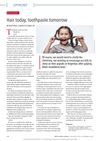
Keratin could help create enamel-regenerating toothpaste in a few years.
 8 citations
,
January 2021 in “Smart materials in medicine”
8 citations
,
January 2021 in “Smart materials in medicine” The new hydrogel is good for wound dressing because it absorbs water quickly, has high porosity, can release drugs, fights bacteria, and helps wounds heal with less scarring.
3 citations
,
July 2025 in “Gels” Engineered protein hydrogels improve medical treatments by mimicking natural body structures.