 November 2019 in “Клітинна та органна трансплантологія”
 Adipose-derived stem cells are useful in aesthetic medicine and dermatology for improving skin and tissue appearance.
June 2010 in “DR-NTU (Nanyang Technological University)” Hair coloring and chlorine change hair strength differently.
August 2016 in “The journal of investigative dermatology/Journal of investigative dermatology” Different types of skin cells create unique support structures that can affect skin cell growth and could help in skin repair.
 16 citations
,
July 2020 in “Advanced functional materials”
16 citations
,
July 2020 in “Advanced functional materials” 3D cell-derived matrices improve tissue regeneration and disease modeling.
17 citations
,
April 2022 in “Bioactive Materials” Continuous microfluidic processes can help scale up microtissue production for industrial and clinical use.
16 citations
,
March 2024 in “International Journal of Molecular Sciences” Natural compounds and biomimetic engineering can improve wound healing by enhancing fibroblast activity.
3 citations
,
August 2024 in “The Journal of Cell Biology” Actin filaments help stabilize and reshape cell membranes.
34 citations
,
September 2019 in “ACS Biomaterials Science & Engineering” Probiotic nanoscaffolds significantly improved burn healing and infection control in mice.
25 citations
,
November 2012 in “Thermochimica Acta” Internal lipids in keratin fibers, like wool and hair, reduce water absorption and release.
 1 citations
,
November 2014 in “Elsevier eBooks”
1 citations
,
November 2014 in “Elsevier eBooks” Future research should focus on making bioengineered skin that completely restores all skin functions.
25 citations
,
November 2022 in “Frontiers in Bioengineering and Biotechnology” Composite biodegradable biomaterials can improve diabetic wound healing but need more development for clinical use.
7 citations
,
July 2025 in “Nature Communications” Piezo1 helps skin grow by managing metabolism and inflammation.
April 2009 in “The FASEB Journal” Keratin biomaterials from human hair help nerve regeneration by activating Schwann cells.
2 citations
,
July 2019 in “Cosmetics” Beautiful hair is flexible and elastic due to its unique double-layered structure and can be enhanced with succinic acid treatment.
July 2025 in “Journal of Investigative Dermatology” Tissue-engineered skin substitutes can model junctional epidermolysis bullosa and may help develop gene therapy.
July 2026 in “Materials Today Bio” DNA hydrogels can help repair tissues and treat tumors in regenerative medicine.
5 citations
,
April 2024 in “Science China Materials”  5 citations
,
September 2017 in “Colloids and surfaces. B, Biointerfaces”
5 citations
,
September 2017 in “Colloids and surfaces. B, Biointerfaces” Tying a knot can measure hair friction, useful for medical applications.
January 2026 in “Elsevier eBooks” 
Regulatory T cells enhance bone formation by influencing cell mechanics.
 May 2024 in “bioRxiv (Cold Spring Harbor Laboratory)”
 KAP-depleted hair causes less immune response and is more biocompatible for implants.
May 2015 in “HAL (Le Centre pour la Communication Scientifique Directe)” APIs' stability is influenced by crystalline forms, pressure, and water.
 March 2026 in “Mendeley Data”
 Basement membrane-like ECM supports fibroblast aggregation and cohesion.
 31 citations
,
November 2016 in “Cell Reports”
31 citations
,
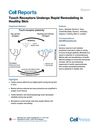
November 2016 in “Cell Reports” Touch sensitivity in mouse skin decreases during hair growth due to changes in touch receptors.
 2 citations
,
September 2020 in “Biomedical materials”
2 citations
,
September 2020 in “Biomedical materials” Recombinant keratin materials may better promote skin cell differentiation than natural keratin.
11 citations
,
January 2025 in “Regenerative Therapy” Tissue-engineered scaffolds help heal difficult wounds by supporting cell growth and repair.
Hydrophobic modifications make human hair less affected by water.
 May 2025 in “Science Advances”
 PIEZO1 helps keep hair follicle stem cells inactive, affecting hair growth.
January 2019 in “Institutional Repositories DataBase (IRDB)” Hair follicles and skin structures were successfully regenerated in the lab using specific cell arrangements and mechanical conditions.