169 citations
,
October 2020 in “Pharmaceutics” Polysaccharide-based nanofibers are promising for better wound healing.

The hydrogel significantly improves healing in diabetic wounds.
262 citations
,
May 2020 in “Advanced Functional Materials” The hydrogel promotes faster healing of infected wounds by enhancing tissue regeneration and preventing infection.
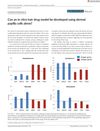 3 citations
,
February 2021 in “Experimental dermatology”
3 citations
,
February 2021 in “Experimental dermatology” Dermal papilla microtissues could be useful for initial hair growth drug testing.
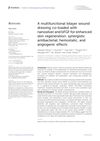 1 citations
,
October 2025 in “Frontiers in Bioengineering and Biotechnology”
1 citations
,
October 2025 in “Frontiers in Bioengineering and Biotechnology” The bilayer wound dressing significantly improves skin healing by preventing bacteria and promoting cell growth.
2 citations
,
May 2025 in “Advanced Science” Microspheric skin organoids can be used for drug testing, identifying Minoxidil as a Wnt pathway activator.
36 citations
,
March 2005 in “Biotechnology and Bioengineering” A new method speeds up insulin amyloid fibril growth, useful for studying diseases.
 2 citations
,
December 2022 in “Journal of Biochemistry and Molecular Biology”
2 citations
,
December 2022 in “Journal of Biochemistry and Molecular Biology” Organoids created from stem cells are used to model diseases, test drugs, and develop personalized and regenerative medicine.
29 citations
,
September 2020 in “Polymers” The PCL/PHB blend allows for slower, more controlled curcumin release than individual polymers.
 3 citations
,
March 2019 in “PubMed”
3 citations
,
March 2019 in “PubMed” Biofibre hair implants are safe, well-tolerated, and provide immediate cosmetic improvement for hair loss.
 May 2026 in “Frontiers in Cell and Developmental Biology”
 Hair follicle organoids can help study hair biology and disorders but need improvements for wider use.
83 citations
,
October 2022 in “Materials Today Bio” Biopolymers are key for creating advanced, effective hemostatic materials.
 2 citations
,
June 2023 in “Gels”
2 citations
,
June 2023 in “Gels” Injectable hydrogels are becoming increasingly useful in medicine for drug delivery and tissue repair.
December 2024 in “Regenerative Therapy” Stem cells and new methods can help heal and regenerate damaged skin.
The hydrogel helps bone growth and healing in jaw and facial defects.
 18 citations
,
September 2013 in “Technology”
18 citations
,
September 2013 in “Technology” The study introduced a new imaging technology to track skin healing and bone marrow cell activity over time.
April 2018 in “Plastic & Reconstructive Surgery Global Open” LGR6+ stem cells may improve bone healing.
6 citations
,
April 2001 in “The Anatomical Record” A new method using hair pores can help align skin grafts better, improving results.
 2 citations
,
January 2023 in “Eastern Journal Of Medicine”
2 citations
,
January 2023 in “Eastern Journal Of Medicine” PRF is preferred for better healing in dental surgeries.
8 citations
,
July 2025 in “Gels” Functionalized hydrogels can help heal tissues and fight infections by delivering beneficial bacteria and antimicrobials.
April 2025 in “Frontiers in Bioengineering and Biotechnology” Gel-SHP helps skin heal faster.
April 2026 in “Biomedical and Biotechnology Research Journal (BBRJ)” 3D culture better preserves key properties of hair follicle cells for regeneration.
 26 citations
,
January 2019 in “Experimental Dermatology”
26 citations
,
January 2019 in “Experimental Dermatology” Researchers created early-stage hair-like structures from skin cells, showing how these cells can self-organize, but more is needed for complete hair growth.
 1 citations
,
June 2024 in “PLoS ONE”
1 citations
,
June 2024 in “PLoS ONE” HAP-cell-sheets improved wound healing in diabetic mice.
January 2002 in “中国人民解放军军医大学学报(英文版)” Human hair keratin scaffold material degrades in muscles mainly through the ubiquitin system with lysosome help.
 1 citations
,
January 2024 in “Advanced science”
1 citations
,
January 2024 in “Advanced science” Fibronectin-attached cell sheets improve wound healing and are safe and effective.
July 2025 in “OPAL (Open@LaTrobe) (La Trobe University)” Ultrasound and GelMA hydrogel with stem cell vesicles improve skin healing and regeneration.
February 2026 in “Apollo (University of Cambridge)” Droplet microfluidics can precisely create microgels for advanced bioengineering uses.
Collaboration among experts is crucial to design hydrogels that improve immune therapies.
 October 2022 in “ACS Applied Materials & Interfaces”
 The hydrogel is versatile and easy to make.