January 2010 in “West China Journal of Pharmaceutical Sciences” Pterocarpus indcus Willd extracts taken orally can reduce hair loss in rats.
July 2026 in “Journal of Medicinal Chemistry” A new drug strategy improves hair loss treatment with better results and safety.
65 citations
,
February 2011 in “Molecular cancer therapeutics” CCT128930 is a promising new drug that effectively targets and inhibits a cancer-related protein, showing potential for cancer treatment.
September 2025 in “Journal of Skin and Stem Cell” Baricitinib shows promise for treating various skin conditions beyond alopecia areata.
 42 citations
,
February 1998 in “The Journal of Steroid Biochemistry and Molecular Biology”
42 citations
,
February 1998 in “The Journal of Steroid Biochemistry and Molecular Biology” PNU 157706 is a more effective treatment than finasteride for conditions caused by DHT, like enlarged prostate and hair loss.
2 citations
,
September 2024 in “Internal Medicine Journal” Upadacitinib helped regrow hair and maintain ulcerative colitis remission.
 September 2024 in “Journal of the American Academy of Dermatology”
 Baricitinib helps long-term hair regrowth in severe alopecia areata patients.
21 citations
,
August 2007 in “Experimental Dermatology” Overexpression of hurpin in mice leads to abnormal skin and higher skin cancer risk.
3 citations
,
October 2013 in “International Journal of Rheumatic Diseases” A young woman with severe symptoms of CPAN improved with intensive treatment but needed a leg amputation.
1 citations
,
January 2017 in “International journal of trichology” Diphenylcyclopropenone (DPCP) effectively treated both alopecia areata and verruca vulgaris.
3 citations
,
February 1943 in “The American journal of digestive diseases/American journal of digestive diseases” Riboflavin helps heal bed sores, inositol aids skin diseases, and calcium pantothenate doesn't prevent gray hair.
12 citations
,
May 2023 in “Molecules” Polygoni Cuspidati Rhizoma et Radix contains compounds that inhibit certain enzymes.
 October 2023 in “International Journal of Cosmetic Science”
 WS Biotin, a new form of D-Biotin, improves water solubility and shows potential for hair and skin care without being toxic at low levels.
 June 2024 in “Neuromuscular Disorders”
 Baricitinib successfully treated myasthenia gravis and alopecia in a patient.
June 2026 in “Clinical Cosmetic and Investigational Dermatology” High-dose baricitinib improved severe alopecia areata in most patients without severe side effects.
 21 citations
,
January 2010 in “JOURNAL OF HEALTH SCIENCE”
21 citations
,
January 2010 in “JOURNAL OF HEALTH SCIENCE” Abietic acid from pine resin can effectively inhibit testosterone 5α-reductase.
The conclusion is that a treatment called cp-asiAR can reduce hair loss and promote hair growth, making it a potential new therapy for androgenetic alopecia.
 July 2026 in “bioRxiv (Cold Spring Harbor Laboratory)”
 ACA2 is crucial for root hair growth by controlling calcium levels in cells.

Sinapic acid and glabridin together help hair growth in androgenetic alopecia.
 27 citations
,
July 1946 in “The journal of nutrition/The Journal of nutrition”
27 citations
,
July 1946 in “The journal of nutrition/The Journal of nutrition” Biotin and inositol are crucial for pig health and growth.
1 citations
,
May 2025 in “Cytotechnology” Icariside II may help treat gastric cancer by stopping tumor growth.
 1 citations
,
July 2022 in “British Journal of Dermatology”
1 citations
,
July 2022 in “British Journal of Dermatology” Baricitinib was effective in treating hair loss in adults with alopecia areata according to patient feedback.
 June 2026 in “Journal of health economics and outcomes research”
 Ritlecitinib is more effective and cost-efficient than baricitinib for severe alopecia areata.
 February 2026 in “Scientific Reports”
 Platycladi Cacumen may help treat hair loss by affecting certain biological pathways.
Ivarmacitinib effectively regrows hair in severe alopecia areata.
July 2024 in “Journal of Investigative Dermatology” Brepocitinib reduces interferon signaling in hidradenitis suppurativa patients.
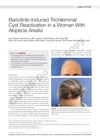
Baricitinib may reactivate trichilemmal cysts in people with a history of these cysts.
 October 2025 in “Electronic Theses and Dissertations Repository (University of Pisa)”
 Baricitinib effectively treated alopecia areata in 73% of patients, with minor metabolic changes and significant changes in inflammatory markers.