 30 citations
,
October 2013 in “Lupus”
30 citations
,
October 2013 in “Lupus” Hair loss in lupus is different from hair loss in alopecia areata and may indicate lupus activity.
 29 citations
,
January 2019 in “Journal of the European Academy of Dermatology and Venereology”
29 citations
,
January 2019 in “Journal of the European Academy of Dermatology and Venereology” Trichoscopy is useful for diagnosing and monitoring systemic lupus erythematosus, with certain hair and scalp changes indicating more active disease.
29 citations
,
February 2019 in “Pediatric dermatology” Trichotillomania shows specific signs like black dots and uneven hair lengths but lacks certain features of alopecia areata.
 26 citations
,
September 2016 in “International Journal of Dermatology”
26 citations
,
September 2016 in “International Journal of Dermatology” Trichoscopy is good for telling apart tinea capitis and alopecia areata in kids.
 26 citations
,
August 2013 in “Australasian Journal of Dermatology”
26 citations
,
August 2013 in “Australasian Journal of Dermatology” Certain scalp patterns can indicate the severity and activity of hair loss in Turkish alopecia patients.
 23 citations
,
July 2018 in “Journal of Cosmetic Dermatology”
23 citations
,
July 2018 in “Journal of Cosmetic Dermatology” Chemotherapy caused hair loss with specific patterns, but most patients had hair regrowth after treatment, while some had lasting hair loss.
19 citations
,
July 2019 in “Journal of Cosmetic Dermatology” A new tool can predict hair regrowth in patchy alopecia areata patients.
14 citations
,
April 2017 in “Dermatology practical & conceptual” Yellow dots are common in severe alopecia areata.
 13 citations
,
January 2014 in “Dermatology”
13 citations
,
January 2014 in “Dermatology” Radiation-induced alopecia after angioembolization usually heals on its own and can look like other hair loss types, but patient history helps prevent misdiagnosis.
 12 citations
,
September 2020 in “Journal of cosmetic dermatology”
12 citations
,
September 2020 in “Journal of cosmetic dermatology” Trichoscopy is useful for diagnosing and monitoring alopecia areata treatment.
 10 citations
,
January 2015 in “Skin appendage disorders”
10 citations
,
January 2015 in “Skin appendage disorders” Low-cost videomicroscopes are not as reliable as standard videodermatoscopes for scalp examination due to lower image quality.
 10 citations
,
March 2014 in “International Journal of Dermatology”
10 citations
,
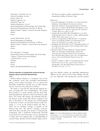
March 2014 in “International Journal of Dermatology” A hand-held dermatoscope helped differentiate between pressure-induced alopecia and alopecia areata in a young patient, who then experienced hair regrowth within a month.
 8 citations
,
January 2020 in “International Journal of Trichology”
8 citations
,
January 2020 in “International Journal of Trichology” Different patterns on the scalp help diagnose types of hair loss without needing a biopsy.
 8 citations
,
November 2021 in “The Journal of Dermatology”
8 citations
,
November 2021 in “The Journal of Dermatology” The article simplifies trichoscopy terms and offers a new diagnostic flowchart.
 8 citations
,
June 2021 in “Acta dermato-venereologica”
8 citations
,
June 2021 in “Acta dermato-venereologica” Trichoscopy is a reliable method for diagnosing hair-pulling disorder.
8 citations
,
January 2020 Alopecia areata causes patchy hair loss, and certain hair features can suggest its presence.
 6 citations
,
March 2015 in “Journal of The American Academy of Dermatology”
6 citations
,
March 2015 in “Journal of The American Academy of Dermatology” Hair dye can make it hard to diagnose scalp conditions correctly.
 6 citations
,
January 2020 in “Postepy Dermatologii I Alergologii”
6 citations
,
January 2020 in “Postepy Dermatologii I Alergologii” Trichoscopy is useful for diagnosing hair-pulling disorder.
 4 citations
,
January 2019 in “Annals of dermatology/Annals of Dermatology”
4 citations
,
January 2019 in “Annals of dermatology/Annals of Dermatology” Changing hairstyles can help hair regrow in children with hair loss from tight braids or ponytails.
 4 citations
,
February 2020 in “Journal of Cosmetic Dermatology”
4 citations
,
February 2020 in “Journal of Cosmetic Dermatology” Trichoscopy helps diagnose hairline recession causes in Egyptian women, with androgenetic alopecia being the most common.
4 citations
,
November 2018 in “Postgraduate Medical Journal” Trichoscopy is a useful, quick, and non-invasive way to diagnose tinea capitis.
 3 citations
,
April 2021 in “Berkala ilmu kedokteran/Journal of the medical sciences”
3 citations
,
April 2021 in “Berkala ilmu kedokteran/Journal of the medical sciences” A fungus called Epidermophyton floccosum can cause scalp infections.
 3 citations
,
May 2019 in “Australasian Journal of Dermatology”
3 citations
,
May 2019 in “Australasian Journal of Dermatology” Hair loss in Cronkhite-Canada syndrome may be caused by autoimmune factors, not just stress or malabsorption.
 3 citations
,
July 2017 in “International journal of medicine”
3 citations
,
July 2017 in “International journal of medicine” Intralesional triamcinolone acetonide effectively treats alopecia areata, as shown by significant improvements in hair regrowth and dermoscopic indicators.
 2 citations
,
June 2023 in “Skin Research and Technology”
2 citations
,
June 2023 in “Skin Research and Technology” Yellow dots and short vellus hairs are the most common signs of Alopecia Areata (AA), and trichoscopy can help diagnose AA and track treatment progress.
2 citations
,
November 2023 in “Skin Research and Technology” RCM and dermoscopy help identify different types of hair loss in children.
2 citations
,
September 2023 in “Journal of the European Academy of Dermatology and Venereology” Trichoscopy is a useful tool for diagnosing different types of female hair loss without needing a biopsy.
 2 citations
,
March 2019 in “Journal of Dermatology”
2 citations
,
March 2019 in “Journal of Dermatology” Trichoscopy helped diagnose and treat a woman with two different types of hair loss.
 2 citations
,
July 2015 in “The Open Dermatology Journal”
2 citations
,
July 2015 in “The Open Dermatology Journal” Trichoscopy is a tool for detailed examination of hair and scalp diseases.
 2 citations
,
May 2014 in “Journal of the Egyptian Women's Dermatologic Society (Print)”
2 citations
,
May 2014 in “Journal of the Egyptian Women's Dermatologic Society (Print)” Dermoscopy helps diagnose different scalp conditions by showing unique signs for each disorder.