1 citations
,
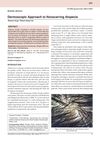
July 2025 in “Indian Dermatology Online Journal” Certain hair and scalp features indicate a worse outcome in alopecia areata.
 1 citations
,
January 2017 in “International Journal of Dermoscopy”
1 citations
,
January 2017 in “International Journal of Dermoscopy” Dermoscopy is useful for identifying and tracking different types of hair loss without scarring.
1 citations
,
February 2025 in “Archives of Dermatological Research” Using Excimer light with topical steroids is the most effective treatment for alopecia areata.
1 citations
,
September 2023 in “Portuguese Journal of Dermatology and Venereology” Trichoscopy can help diagnose and decide when to biopsy folliculotropic mycosis fungoides.
1 citations
,
June 2023 in “Cosmoderma” Trichoscopy is better than the hair pull test for tracking alopecia areata.
 1 citations
,
January 2021 in “Nihon rinsho hifukaikai zasshi”
1 citations
,
January 2021 in “Nihon rinsho hifukaikai zasshi” The document provides ways to tell alopecia areata from other similar hair loss conditions, using visual checks and specific tests.
 1 citations
,
October 2020 in “International Journal of Research in Dermatology”
1 citations
,
October 2020 in “International Journal of Research in Dermatology” The study concluded that short vellus hair and yellow dots were the most common signs of alopecia areata, indicating disease activity and remission.
 1 citations
,
June 2020 in “IP Indian journal of clinical and experimental dermatology”
1 citations
,
June 2020 in “IP Indian journal of clinical and experimental dermatology” Yellow dots were the most common sign of alopecia areata found using trichoscopy.
 1 citations
,
March 2014 in “Turkderm”
1 citations
,
March 2014 in “Turkderm” Trichoscopy helps tell different hair loss types apart using specific scalp and hair patterns.
 1 citations
,
January 2013 in “International Journal of Trichology”
1 citations
,
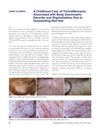
January 2013 in “International Journal of Trichology” A girl with red hair developed hair-pulling and body image disorders after being bullied for her hair color.
Visible lesions are not always needed to diagnose tinea capitis.
 April 2026 in “International Journal of Drug Delivery Technology”
 Trichoscopy is a reliable, non-invasive tool for diagnosing scalp alopecias.
January 2026 in “Indian Journal of Paediatric Dermatology” Trichoscopy effectively diagnoses and monitors treatment in children with tinea capitis.
Histopathological confirmation is crucial for accurately diagnosing challenging alopecia areata cases.
 April 2025 in “Clinical Dermatology Review”
 Trichoscopy is effective for diagnosing hair and scalp disorders without invasive biopsies.
 March 2025 in “Pakistan Journal of Health Sciences”
 Intralesional steroids improve Alopecia Areata, and trichoscopy effectively tracks this improvement.
 February 2024 in “Skin research and technology”
 LC-OCT is a promising tool for diagnosing and monitoring Alopecia areata.
 June 2023 in “International Journal of Research in Dermatology”
 Early diagnosis and treatment of alopecia areata in children is crucial to prevent severe progression.
Non-invasive methods can effectively diagnose and manage alopecia areata.
 January 2022 in “Journal of Dermatology and Dermatologic Surgery”
 Trichoscopy is useful for quickly diagnosing different types of hair loss without needing biopsies.
 October 2021 in “International journal of research in dermatology”
 No link between scalp patterns and alopecia severity in children, but more severe cases often had nail abnormalities.
More research is needed to understand chemotherapy-induced hair loss and its phases.
 August 2017 in “Journal of evolution of medical and dental sciences”
 Trichoscopy is effective for diagnosing different types of non-scarring hair loss.
 May 2017 in “InTech eBooks”
 Trichoscopy and trichogram are useful for diagnosing hair and scalp conditions.
July 2026 in “Cosmoderma” Trichoscopy can identify specific hair patterns in tinea capitis before and after treatment.
June 2026 in “Indian Journal of Postgraduate Dermatology” Trichoscopy helps diagnose unclear hair loss cases effectively.
 May 2026 in “Journal of the Egyptian Womenʼs Dermatologic Society”
 Intralesional methotrexate effectively treats patchy alopecia areata by reducing inflammation.
 February 2026 in “Cureus”
 Trichoscopy helps correctly diagnose alopecia areata, not syphilitic alopecia, in patients with recent syphilis.
December 2025 in “Yassawi Journal of Health Sciences” Trichoscopy is essential for accurately diagnosing and differentiating types of hair loss.
December 2025 in “Y HOC TP HO CHI MINH” The Trichoscope is a valuable tool for diagnosing and monitoring hair loss conditions.