Search
for
Sort by
Research
750-780 / 1000+ resultsresearch Clinical Snippets
A bull with a gene mutation was asymptomatic, synthetic retinoids cause hair loss, and new therapeutic targets were identified for skin diseases.
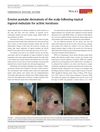
research Erosive pustular dermatosis of the scalp following topical ingenol mebutate for actinic keratoses
Two elderly men developed scalp inflammation after using a gel for skin lesions, which healed with treatment except for some permanent hair loss.
research Read-Through for Nonsense Mutations in Type XVII Collagen‒Deficient Junctional Epidermolysis Bullosa
A new therapy for a skin blistering condition has not been developed yet.
research Fibroblasts and endothelial cells interplay drives hypertrophic scar formation: Insights from in vitro and in vivo models
Fibroblast and endothelial cell interactions are crucial in forming hypertrophic scars.
research Self-Organizing 3D Dermal Papilla Cell Spheroids Yield Therapeutic Extracellular Vesicles that Target Hypertrophic Scar Regression via the miR-26a-5p/CCNE2 Axis
3D cell spheroids can help reduce scars by delivering therapeutic vesicles.
research Sprayable biomimetic double mask with rapid autophasing and hierarchical programming for scarless wound healing
The new sprayable wound mask helps heal wounds without scars.
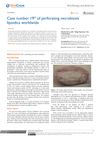
research Case number 19th of perforating necrobiosis lipoidica worldwide
The document reports the 19th global case of a rare skin condition in a patient from Colombia.

research Skin Lesions in a Daclizumab-treated Patient with Multiple Sclerosis
A patient with multiple sclerosis developed skin reactions after Daclizumab treatment, requiring more data on the drug's effects.
research Comparison of rheological properties, follicular penetration, drug release, and permeation behavior of a novel topical drug delivery system and a conventional cream
The new drug delivery system releases the drug better in sebum and targets follicles more effectively than the conventional cream.
research Granulation Tissue that Developed after a Minor Trauma in a Psoriatic Patient on Long-term Etretinate Therapy
Long-term etretinate use may cause delayed wound healing and extra tissue growth after injury.
research Drugs linked to blepharitis, meibomian gland dysfunction, and chalazion: a real-world, population-based pharmacovigilance analysis
Certain drugs can cause eyelid inflammation, so doctors should monitor and educate patients on eyelid care.

research Dermatological problems in the football player
Football players can get many skin conditions from their sport, which need different treatments and can be prevented with good hygiene and protection.

research Penetration Enhancement of Topical Formulations
New methods improve how well skin treatments work by helping drugs get through the skin barrier.

research Acneiform eruptions caused by an epidermal growth factor receptor-tyrosine kinase inhibitor ZD 1839
ZD1839, a cancer drug, can cause mild skin rashes that are treatable without stopping the medication.

research Scarring Alopecia in Localized Dystrophic Epidermolysis Bullosa: A Case Report and a Scoping Review
Localized dystrophic epidermolysis bullosa (DEB) can lead to scarring alopecia, highlighting the need to recognize and address this complication.

research Skin-permeable liposome improved stability and permeability of bFGF against skin of mice with deep second degree scald to promote hair follicle neogenesis through inhibition of scar formation
A new liposome treatment helps heal deep burns on mice by improving hair regrowth and reducing scarring.
research Wolf’s Isotopic Response in a Post Herpes Zoster Patient Forming Superficial Basal Cell Carcinoma
A new skin cancer can develop where shingles once occurred.
research Topical corticosteroids induced hyper-pigmentation: a case report
Misusing topical corticosteroids can cause skin darkening and other side effects.
research Formulation and evaluation of dermatological products for topical delivery / by Mahima Manian
The study successfully developed and evaluated effective topical formulations for skin treatments.
research Case number 19th of perforating necrobiosislipoidica worldwide
The document reports the first case of a rare skin condition in Colombia, the 19th case worldwide.
research DERMATOLOJİK ACİLLER
Early diagnosis and treatment are crucial for skin emergencies and drug reactions.
research The application of local hypobaric pressure — A novel means to enhance macromolecule entry into the skin
Local hypobaric pressure can significantly improve drug delivery through the skin.

research Facial zona zoster following cryotherapy in an immunocompetent patient
Cryotherapy can unexpectedly cause facial zona zoster.
research Nail Changes in Chilblains Mimicking Lichen Planus
Some nail changes in chilblains can look like lichen planus and may be severe and long-lasting.