1 citations
,
January 2018 in “Annals of medical research” No link found between blood groups, Rhesus factor, and ferritin levels in women with hair loss.
 1 citations
,
July 2016 in “Cosmetics”
1 citations
,
July 2016 in “Cosmetics” Black henna tattoos can cause severe allergies to hair and textile dyes, and there's a need for greater public awareness and regulation.
 1 citations
,
January 2010 in “Elsevier eBooks”
1 citations
,
January 2010 in “Elsevier eBooks” Any drug can cause skin reactions, but antibiotics, NSAIDs, and psychotropic drugs are more common, with some reactions being life-threatening.
 June 2026 in “International Journal of Drug Delivery Technology”
 The herbal hair oil is safe and may promote hair growth.
 January 2026 in “Journal of Ayurveda and Integrated Medical Sciences”
 Bhringaraj extract tablets significantly reduce hair fall and are well-tolerated.
 September 2025 in “Cureus”
 19.5% of young college girls have PCOS, highlighting the need for early screening and intervention.
Higher apelin-12 levels may indicate more severe acne.
 April 2025 in “WORLD JOURNAL OF PLASTIC SURGERY”
 Stem cells improve healing of diabetic wounds.
 February 2025 in “Revista Eletrônica Acervo Saúde”
 Thyroid tuberculosis can cause hypothyroidism and should be considered when diagnosing cervical masses.
 February 2025 in “Clinical Cosmetic and Investigational Dermatology”
 Certain blood metabolites are linked to female pattern hair loss, with some increasing risk and others offering protection.
 December 2024 in “International Journal on Science and Technology”
 Herbal hair oils promote hair growth effectively with minimal side effects.
 July 2024 in “Chinese Medical Journal”
 Peripheral blood alive cell treatment is effective and safe for treating hair loss.
June 2024 in “Clinical and Experimental Obstetrics & Gynecology” Blood count parameters are not reliable for predicting recurrent implantation failure.
 June 2024 in “Al- Anbar Medical Journal”
 Acute telogen effluvium can be resolved by addressing causes, but chronic telogen effluvium is harder to treat.
 May 2024 in “International Journal of Science and Research Archive”
 Herbal hair oil made from herbs and coconut oil helps reduce dandruff and hair fall.
 March 2024 in “International journal of pharmaceutical sciences and drug research”
 Androgenetic alopecia is influenced by various factors and can be treated with medications, procedures, and non-drug methods.
Herbal remedies might help with hair loss but need more research for safety and effectiveness.
A thorough diagnostic process and teamwork are crucial for managing complex hyperandrogenism in postmenopausal women.
 February 2024 in “International journal of biology, pharmacy and allied sciences”
 The polyherbal hair oil effectively treats various hair problems and promotes hair health.
 January 2024 in “Brazilian journal of veterinary pathology”
 The dog likely has a condition similar to Canine alopecia X.
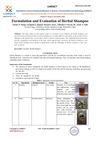 December 2023 in “International Journal of Advanced Research in Science, Communication and Technology”
 Herbal shampoo is safe, effective, and good for hair and scalp health.
 October 2023 in “Journal of the Endocrine Society”
 The desmopressin stimulation test helped identify an adrenal cause for a patient's Cushing's syndrome.
 September 2023 in “Clinical, cosmetic and investigational dermatology”
 A patient with a rare form of lupus improved after treatment for skin ulcers and hair loss on the face and scalp.
 January 2023 in “International Journal of Clinical and Medical Education Research”
 Correct testosterone levels for age to treat prostate cancer, using low dose treatments as necessary.
 June 2022 in “Biomedical reports”
 STK11 gene variations do not predict how well metformin will work for PCOS, but may affect hair loss and excess hair growth.

No single biomarker is reliable enough for diagnosing and assessing SLE.
 May 2021 in “Boletín latinoamericano y del Caribe de plantas medicinales y aromáticas”
 Microsechium helleri extract has antioxidant, anti-inflammatory, antidiabetic, and heart-protective benefits.
 January 2021 in “Journal of Pakistan Association of Dermatology”
 COVID-19 recovery can lead to temporary hair loss called telogen effluvium.
 October 2020 in “Veterinary Dermatology”
 New treatments and diagnostic methods for various animal skin conditions showed promising results.
People with androgenic alopecia are more likely to have metabolic syndrome than healthy individuals.