 4 citations
,
January 2014 in “The Scientific World Journal”
4 citations
,
January 2014 in “The Scientific World Journal” Red deer antler extract helps hair grow by extending the growth phase and increasing cell growth in hair follicles.
 56 citations
,
September 2013 in “Experimental Dermatology”
56 citations
,
September 2013 in “Experimental Dermatology” The guide explains how to study human and mouse sebaceous glands using various staining and imaging techniques, and emphasizes the need for standardized assessment methods.
 8 citations
,
January 2014 in “BioMed Research International”
8 citations
,
January 2014 in “BioMed Research International” Eclipta alba extract was found to be effective in promoting hair growth in hairless mice.
 August 2016 in “Journal of Dermatology”
 A chemical called 5-Bromo-2′-deoxyuridine caused rapid hair loss in mice by killing certain skin cells through a specific cell death pathway.
 8 citations
,
September 2002 in “Genes to Cells”
8 citations
,
September 2002 in “Genes to Cells” Killing specific cells in hair follicles can lead to hair growth problems in mice.
 39 citations
,
June 2013 in “Journal of Cosmetic Dermatology”
39 citations
,
June 2013 in “Journal of Cosmetic Dermatology” Herbal extracts and platelet-rich plasma together may help increase hair growth by making certain cells grow more, through specific cell growth pathways.
 29 citations
,
March 2012 in “Stem Cell Research & Therapy”
29 citations
,
March 2012 in “Stem Cell Research & Therapy” Some stem cells in the body rarely divide, which could help create better treatments for diseases and aging.
 80 citations
,
May 2011 in “Nature Cell Biology”
80 citations
,
May 2011 in “Nature Cell Biology” New methods have greatly improved our understanding of stem cell behavior and roles in the body.
 4 citations
,
January 2015 in “Hair therapy & transplantation”
4 citations
,
January 2015 in “Hair therapy & transplantation” Hair follicle stem cells could be used to treat the skin condition vitiligo.
Biofield Energy Healing significantly increased hair growth by making hair root cells grow more.
 January 2018 in “Open access journal of pharmaceutical research”
 Biofield Energy Healing may increase hair growth by enhancing cell proliferation.
 61 citations
,
September 2008 in “Stem Cells”
61 citations
,
September 2008 in “Stem Cells” Most hair follicle stem cells do not protect their DNA by dividing it unevenly.
 23 citations
,
July 2007 in “The journal of investigative dermatology/Journal of investigative dermatology”
23 citations
,
July 2007 in “The journal of investigative dermatology/Journal of investigative dermatology” Hair follicle bulge cells don't help skin regrow after glucocorticoid damage; interfollicular epidermis cells do.
 10 citations
,
September 1997 in “Molecular carcinogenesis”
10 citations
,
September 1997 in “Molecular carcinogenesis” Mirex seems to promote a unique group of skin cells different from those affected by another tumor promoter, TPA.
 November 2023 in “bioRxiv (Cold Spring Harbor Laboratory)”
 Disrupted cholesterol production impairs hair follicle stem cells, leading to hair loss.
 53 citations
,
March 2014 in “Growth Hormone & IGF Research”
53 citations
,
March 2014 in “Growth Hormone & IGF Research” IGF-1 injections help mice grow more hair by increasing cell growth and blocking a hair growth inhibitor.
 26 citations
,
July 2016 in “PLOS ONE”
26 citations
,
July 2016 in “PLOS ONE” Activating β-catenin in certain skin cells speeds up hair growth in mice.
 24 citations
,
January 2015 in “Annals of Dermatology”
24 citations
,
January 2015 in “Annals of Dermatology” Herbal extracts may help hair grow and could be an alternative to synthetic hair loss treatments.
 333 citations
,
February 2010 in “Cell Stem Cell”
333 citations
,
February 2010 in “Cell Stem Cell” Stem cell niches are crucial for regulating stem cell behavior and tissue health, and their decline can impact aging and cancer.
 44 citations
,
October 2017 in “Scientific Reports”
44 citations
,
October 2017 in “Scientific Reports” Far-infrared radiation improves stem cell growth and movement, helping heart therapy.
 29 citations
,
March 2010 in “Journal of Dermatological Science”
29 citations
,
March 2010 in “Journal of Dermatological Science” Wnt3a activates certain genes in hair follicle cells, including a newly discovered one, EP2, which may affect hair growth.
 20 citations
,
August 2015 in “International Journal of Molecular Medicine”
20 citations
,
August 2015 in “International Journal of Molecular Medicine” Human placental extract may help hair growth by affecting certain cell signals and could be more effective with minoxidil.
 9 citations
,
January 2016 in “International Journal of Medical Sciences”
9 citations
,
January 2016 in “International Journal of Medical Sciences” Increasing Wnt10b levels can help grow new hair follicles in mice.
 508 citations
,
February 2007 in “Cell”
508 citations
,
February 2007 in “Cell” Epithelial stem cells are crucial for tissue renewal and repair, and understanding them could improve treatments for damage and cancer.
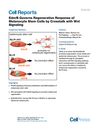 59 citations
,
April 2016 in “Cell Reports”
59 citations
,
April 2016 in “Cell Reports” EdnrB signaling helps melanocyte stem cells regenerate and could be targeted to treat pigmentation issues.
 56 citations
,
May 2017 in “Nature Cell Biology”
56 citations
,
May 2017 in “Nature Cell Biology” Hair can regrow after certain stem cells are lost because other stem cells can take over their role.
 55 citations
,
March 2012 in “Journal of Investigative Dermatology”
55 citations
,
March 2012 in “Journal of Investigative Dermatology” Research on epidermal stem cells has advanced significantly, showing promise for improved clinical therapies.
 40 citations
,
December 2015 in “Stem Cells International”
40 citations
,
December 2015 in “Stem Cells International” Mesenchymal stem cells help improve wound healing by reducing inflammation and promoting skin cell growth and movement.
 24 citations
,
March 2018 in “Pigment Cell & Melanoma Research”
24 citations
,
March 2018 in “Pigment Cell & Melanoma Research” The environment around melanocyte stem cells is key for hair regeneration and color, with certain injuries affecting hair color and potential treatments for pigmentation disorders.
 8 citations
,
December 2015 in “The Journal of Physiology”
8 citations
,
December 2015 in “The Journal of Physiology” The document concludes that stem cell inactivity is actively controlled and important for tissue repair and balance.