9 citations
,
July 2022 in “Journal of Biological Chemistry” WWP2 is crucial for tooth development in mice.
 176 citations
,
January 2003 in “Journal of Investigative Dermatology”
176 citations
,
January 2003 in “Journal of Investigative Dermatology” Bone Morphogenetic Proteins (BMPs) help control skin health, hair growth, and color, and could potentially be used to treat skin and hair disorders.
 August 2023 in “MOJ women's health”
 Brown Adipose Tissue (BAT) could potentially treat Polycystic Ovary Syndrome (PCOS) by controlling energy balance and lipid homeostasis, but more human research is needed.
99 citations
,
March 2013 in “Journal of Investigative Dermatology” Mutations in the ABCB6 gene cause Dyschromatosis Universalis Hereditaria.
16 citations
,
April 2025 in “Journal of the American Academy of Dermatology” Photobiomodulation is safe and effective for treating certain conditions like nerve pain and hair loss.
October 1976 in “BMJ. British medical journal” 3 citations
,
November 2005 in “British Journal of Dermatology” A man with alopecia universalis regrew hair temporarily after a bone treatment.
 March 2026 in “BMC Veterinary Research”
 Bovine amniotic membrane with propolis helped a cat's large skin wound heal quickly and fully.
7 citations
,
January 2015 in “PubMed” Ultrasound biomicroscopy is useful for viewing hair follicles in alopecia areata.
70 citations
,
December 2004 in “Proceedings of the National Academy of Sciences” BMP signaling affects hair color by interacting with the MC-1R pathway.
 April 2021 in “Journal of Investigative Dermatology”
 Photobiomodulation therapy may help treat hair loss in people with darker skin, but more research is needed.
 437 citations
,
August 2014 in “Cell metabolism”
437 citations
,
August 2014 in “Cell metabolism” Turning white fat into brown-like fat could help fight obesity and type 2 diabetes.
7 citations
,
September 2019 in “DOAJ (DOAJ: Directory of Open Access Journals)” Photobiomodulation can help regrow hair in certain types of hair loss.
April 2025 in “Journal of Biophotonics” PBM therapy improves mitochondrial function and promotes tissue regeneration in dental pulp stem cells.
 October 2022 in “Journal of ophthalmology”
 Light therapy may improve eye conditions by stimulating cell activity and increasing oxygen availability.
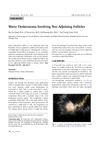 10 citations
,
January 2011 in “Annals of Dermatology”
10 citations
,
January 2011 in “Annals of Dermatology” A rare scalp tumor involving two hair follicles was successfully removed with surgery, with no recurrence after 7 months.
 April 2025 in “WORLD JOURNAL OF PLASTIC SURGERY”
 Stem cells improve healing of diabetic wounds.
6 citations
,
October 2020 in “Frontiers in cell and developmental biology” WWOX deficiency in mice causes skin and fat tissue problems due to disrupted cell survival signals.
 September 2011 in “Clinical Biochemistry”
 The demineralized bone matrix scaffold is better for cell attachment than the mineralized bone allograft.
1 citations
,
October 2023 in “European Journal of Dermatology” Combining hair transplantation with PRP is more effective for treating hair loss than hair transplantation alone.
 24 citations
,
October 2024 in “Process Biochemistry”
24 citations
,
October 2024 in “Process Biochemistry” Optimal conditions for extracting beneficial compounds from Carthamus caeruleus L. rhizomes were identified, improving efficiency.
2 citations
,
November 2023 in “Laboratory Animal Research” Combining stem cell medium and light therapy improves wound healing in diabetic rats.
50 citations
,
February 2007 in “The Journal of Pathology” Somatic BHD mutations are rare in Japanese renal tumors.
10 citations
,
November 2023 in “European Journal of Lipid Science and Technology” Walnut extract may help lower cholesterol and inflammation.
53 citations
,
November 2014 in “International Journal of Oncology” Wedelolactone may help prevent bone damage in breast cancer by blocking certain cell signals.
PMEE may help reverse greying hair by boosting melanin production.
 84 citations
,
October 2014 in “PLoS Genetics”
84 citations
,
October 2014 in “PLoS Genetics” Wnt signaling is essential for forming the skin's spinous layer through a BMP-FGF pathway.
 1 citations
,
February 2018 in “British Journal of Dermatology”
1 citations
,
February 2018 in “British Journal of Dermatology” The CWARTS tool is a promising method for assessing warts and could improve treatment and research.
November 2025 in “Informatica” The method greatly improves low-light sports images' quality and reduces artifacts.
 May 2025 in “Research Square (Research Square)”
 Conditioned medium from treated cells boosts hair growth in mice.