 1 citations
,
April 2023 in “Journal of the Hellenic Veterinary Medical Society”
1 citations
,
April 2023 in “Journal of the Hellenic Veterinary Medical Society” Most dogs with paw inflammation had chronic issues, often due to allergies, and certain breeds were more affected.
1 citations
,
December 2021 Cats likely have a reactive skin condition, while dogs may have a more complex, possibly cancerous one.
 1 citations
,
September 2019 in “BMC veterinary research”
1 citations
,
September 2019 in “BMC veterinary research” Malarone® caused pancreatitis and hair loss in a dog for the first time.
June 2026 in “Annals of Phytomedicine An International Journal” Cassia tora ointment is a safe, affordable treatment for fungal dermatitis in dogs.
 January 2025 in “International Journal of Advanced Biochemistry Research”
 Fluralaner effectively cures canine demodicosis in 28 days.
 January 2024 in “International journal of advanced biochemistry research”
 The dog fully recovered from demodicosis after treatment with Bravecto and supportive care.
 April 2023 in “Clinical theriogenology”
 The dog's skin condition improved after removing a tumor that was causing hormone imbalances.
 January 2023 in “International Journal of Zoology and Animal Biology”
 Canine hypothyroidism can be linked to diabetes, requiring thorough testing for proper diagnosis.
 January 2021 in “Revista brasileira de higiene e sanidade animal”
 A dog with skin lesions was successfully treated for a human-type fungal infection.

Tissue from dog stem cells helped grow hair in mice.
March 2021 in “LA Referencia (Red Federada de Repositorios Institucionales de Publicaciones Científicas)” A dog with a rare skin infection caused by a human fungus was successfully treated with antifungal medication.
6 citations
,
January 2022 in “Veterinary Sciences” Feline cutaneous lymphocytosis is likely reactive, while canine cutaneous lymphocytosis needs more study to understand its nature.
1 citations
,
January 2013 in “INTAS POLIVET” Cephalexin effectively treats canine bacterial dermatitis, showing improvement within 72 hours.
 March 2025 in “Journal of Bio Innovation”
 Microsporum canis causes ringworm in dogs and cats, treatable with topical and oral antifungals.
 June 2018 in “Acta Scientiae Veterinariae”
 Tailored treatment plans are crucial for managing canine dermatomyositis-like disease.
13 citations
,
March 2000 in “Veterinary Dermatology” Dogs have a skin condition like human pseudopelade, causing hair loss that doesn't improve with treatment.
 4 citations
,
July 2015 in “Veterinary Dermatology”
4 citations
,
July 2015 in “Veterinary Dermatology” Two types of 5α-reductase are in dog skin, which might make dutasteride better than finasteride for treating dog hair loss.
1 citations
,
May 2011 in “DOAJ (DOAJ: Directory of Open Access Journals)” The study found genetic diversity in coat color dilution among Czech pointers in Slovakia.
 January 2026 in “International Journal of Veterinary Sciences and Animal Husbandry”
 Ivermectin with supportive therapies effectively treats canine demodicosis.
 July 2024 in “Romanian Journal of Veterinary Sciences”
 Cyclosporine improved skin condition in dogs with sebaceous adenitis.
 January 2021 in “Acta Scientiae Veterinariae”
 Levothyroxine effectively treated a dog's skin and hair problems caused by hypothyroidism.
 August 2019 in “International journal of current microbiology and applied sciences”
 Young dogs in Odisha with dermatitis are most often infected by Microsporum fungus, and Miconazole is the most effective treatment.
 15 citations
,
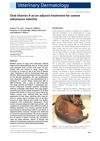
May 2011 in “Veterinary Dermatology”
15 citations
,
May 2011 in “Veterinary Dermatology” Vitamin A might be a safe extra treatment for dogs with sebaceous adenitis, but more research is needed to prove its effectiveness.
 January 2025 in “International Journal of Biology Sciences”
 Combining systemic and topical treatments effectively cured a dog's skin condition.
 January 2024 in “International Journal of Advanced Biochemistry Research”
 Staphylococcus in dogs with skin infections is most sensitive to Linezolid.
January 2013 in “INTAS POLIVET” Vitamin A supplements improved skin and health issues in dogs.
 June 2023 in “jurnal veteriner”
 The combination of Typhonium flagelliforme extract and natural interferons effectively reduces tumor growth in mice.
 24 citations
,
May 2010 in “Veterinary dermatology”
24 citations
,
May 2010 in “Veterinary dermatology” Oral ciclosporin A and topical treatments both reduce hair loss and scaling in dogs with sebaceous adenitis, but using both together is most effective.
July 2025 in “Journal of Investigative Dermatology” Discoid lupus erythematosus involves immune activation and fibrosis around hair follicles, with shared pathways across humans, dogs, and mice, suggesting potential treatments for both humans and animals.
October 2004 in “Veterinary dermatology” Veterinary Dermatology improved its impact and ranking, expanded content, planned online submissions, and emphasized the need for better-designed clinical trials.