 January 2025 in “Pakistan Veterinary Journal”
 Microneedling may help regrow hair in dogs with certain types of alopecia.
 August 2017 in “Companion animal”
 Focal alopecia in dogs has many causes and requires various tests for accurate diagnosis and treatment.
The FGF5 gene variant causes long hair in Akitas, and genetic testing is advised to manage coat length and welfare.
May 2025 in “American Journal of Veterinary Research” Photobiomodulation did not significantly improve hair density in dogs with alopecia X.
Trilostane generally improved symptoms in dogs with Cushing's syndrome, but dosage adjustments were needed over time.
2 citations
,
November 2018 in “Veterinary Dermatology” Poodles' hair changes aren't always linked to calcium, and special staining is needed to detect true calcium deposits.
2 citations
,
December 2021 in “BMC veterinary research” Long-term use of difluprednate eye drops in dogs can lead to hair loss and hormone imbalance.
April 2018 in “Blackwell's Five‐Minute Veterinary Consult Clinical Companion” The document concludes that skin and hair changes in small animals are often due to hormonal imbalances and recommends regular baths and antibiotics for associated infections.
14 citations
,
February 2007 in “Irish Veterinary Journal” A dog with a pituitary tumor developed tertiary hypothyroidism, improved with treatment, but was later euthanized due to neurological issues.
Alopecia in dogs requires identifying the cause for effective treatment.
 January 2024 in “Editora In Vivo eBooks”
 Dogs can transmit a parasite to humans, especially affecting those with weak immune systems, so early diagnosis and treatment are crucial.
 January 2024 in “Editora In Vivo eBooks”
 Cryptosporidiosis in dogs can spread to humans, so prevention is crucial.
 January 2024 in “Editora In Vivo eBooks”
 Giardiasis in dogs poses a public health risk, requiring better diagnosis, treatment, and sanitation.

The document concludes that non-endocrine alopecia in pets varies in treatment effectiveness and often has a poor prognosis, especially in cats.
 34 citations
,
March 2003 in “Veterinary Dermatology”
34 citations
,
March 2003 in “Veterinary Dermatology” Most dogs with alopecia had higher than normal levels of certain hormones, but hair loss might not always be linked to these hormone changes.
 15 citations
,
September 2005 in “The Journal of the American Animal Hospital Association/Journal of the American Animal Hospital Association”
15 citations
,
September 2005 in “The Journal of the American Animal Hospital Association/Journal of the American Animal Hospital Association” Trilostane effectively treated hair loss in Alaskan Malamutes with no adverse effects.
Accurate diagnosis and tailored treatments are crucial for managing hair loss in humans and animals.
 20 citations
,
July 2006 in “Veterinary dermatology”
20 citations
,
July 2006 in “Veterinary dermatology” Melatonin helped some Pomeranian dogs regrow hair, but it wasn't linked to estrogen receptors.
 10 citations
,
July 2014 in “Veterinary dermatology”
10 citations
,
July 2014 in “Veterinary dermatology” Deslorelin may help intact male dogs regrow hair from alopecia X, with a 75% success rate and no side effects.
 7 citations
,
July 1999 in “In Practice”
7 citations
,
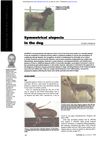
July 1999 in “In Practice” The conclusion is that a systematic approach is key for treating symmetrical alopecia in dogs, but treatment may not always be necessary.
 6 citations
,
February 2009 in “Veterinární Medicína”
6 citations
,
February 2009 in “Veterinární Medicína” Deslorelin effectively treats hair loss in neutered ferrets by reducing hormone levels.
 3 citations
,
May 2018 in “The Journal of the American Animal Hospital Association/Journal of the American Animal Hospital Association”
3 citations
,
May 2018 in “The Journal of the American Animal Hospital Association/Journal of the American Animal Hospital Association” Deslorelin implants successfully treated hair loss in two male Keeshonden dogs.
 21 citations
,
May 2005 in “Journal of the American Veterinary Medical Association”
21 citations
,
May 2005 in “Journal of the American Veterinary Medical Association” The exact cause of growth hormone-responsive alopecia in dogs is unclear.
 48 citations
,
March 1997 in “Veterinary Dermatology”
48 citations
,
March 1997 in “Veterinary Dermatology” Some cats with sudden hair loss and tiredness might have cancer-related alopecia.
 44 citations
,
May 2006 in “The Journal of the American Animal Hospital Association/Journal of the American Animal Hospital Association”
44 citations
,
May 2006 in “The Journal of the American Animal Hospital Association/Journal of the American Animal Hospital Association” Both treatments for pemphigus foliaceus in dogs are effective, but combination therapy has more side effects.
 8 citations
,
February 2005 in “Veterinary dermatology”
8 citations
,
February 2005 in “Veterinary dermatology” Chesapeake Bay retrievers' hair loss is likely a breed-specific, hereditary condition linked to abnormal steroid levels and distinct skin changes.
 3 citations
,
January 2013
3 citations
,
January 2013 Hypothyroidism in dogs is usually caused by immune system issues or gland atrophy, affects middle-aged purebreds most, and is treatable with medication.
 October 2023 in “Russian Journal of Veterinary Pathology”
 Microneedling, oral melatonin, trilostane, and deslorelin acetate implants are the best treatments for alopecia X in dogs.
 September 2023 in “Journal of Parasite Science”
 The dog's skin condition improved significantly after seven days of treatment.
 December 2018 in “Journal of Advances in VetBio Science and Techniques”
 Low testosterone might be a common cause of hair loss in male dogs.