May 2022 in “Brazilian Journal of Health Review” COVID-19 infection can cause temporary hair loss due to stress, treatment drugs, psychological impact, and pandemic-related stress.
October 2024 in “Dermatologica Sinica” Recognizing unusual symptoms in Crohn's disease is crucial for proper treatment.
15 citations
,
June 1992 in “Veterinary Dermatology” Heparin treatment may help manage pemphigus vulgaris in dogs.
January 2024 in “Veterinary Science and Medicine Journal” The Pomeranian recovered well after treatment for pneumonia and demodecosis.
 May 2023 in “Buletin Veteriner Udayana”
 Dogs with dermatitis show significant skin changes and higher white blood cell counts.
17 citations
,
October 2001 in “Veterinary dermatology” The skin issues in the two dogs might be caused by infection or self-injury, not genetics.
Alopecia in dogs requires identifying the cause for effective treatment.
 13 citations
,
November 2005 in “Veterinary Dermatology”
13 citations
,
November 2005 in “Veterinary Dermatology” A dog's skin calcification condition resolved without treatment after a bacterial infection.
 152 citations
,
March 1988 in “Journal of The American Academy of Dermatology”
152 citations
,
March 1988 in “Journal of The American Academy of Dermatology” Superficial granulomatous pyoderma is a unique, mild form of skin disease that often heals without strong medication and responds well to milder treatments.
 January 2021 in “Plant Archives/Plant archives”
 Dogs with ear infections have a higher rate of yeast infection, especially German Shepherds, with seasonal variations observed.
 2 citations
,
December 2013 in “Veterinary dermatology”
2 citations
,
December 2013 in “Veterinary dermatology” Three dogs with a rare skin condition improved with treatment.
 November 2021 in “PARIPEX INDIAN JOURNAL OF RESEARCH”
 Trigona honey effectively treats dermatitis in dogs.
 June 2023 in “Deleted Journal”
 Healthy dogs and cats can carry and spread skin infections without showing symptoms.
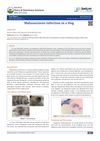 July 2018 in “Journal of Dairy & Veterinary Sciences”
 The dog recovered from a skin infection after treatment with medication.
June 2023 in “Journal of Biosciences and Health” Healthy dogs and cats often carry skin fungi without showing symptoms, which can spread to others.
3 citations
,
January 2018 Bacterial skin diseases in camelids are often caused by moisture, trauma, and infections.
 May 2019 in “Small Animal Dermatology”
 The dog has Color Dilution Alopecia, causing hair loss and increased risk of skin infections.
 9 citations
,
May 2016 in “Veterinary dermatology”
9 citations
,
May 2016 in “Veterinary dermatology” Long-term oral and topical treatments improved skin condition in a goldendoodle with a genetic disorder.
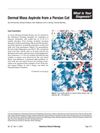 22 citations
,
December 2003 in “Veterinary clinical pathology”
22 citations
,
December 2003 in “Veterinary clinical pathology” The Persian cat has a skin infection caused by a fungus, treatable with antifungal medication.
 January 2024 in “International journal of advanced biochemistry research”
 Fluralaner effectively cured dogs with severe skin issues caused by mites.
 January 2026 in “Buletin Veteriner Udayana”
 The dog was successfully treated for tapeworm infection and improved with supportive therapy.
22 citations
,
January 2020 in “Veterinary dermatology” The conclusion is that certain dog and cat breeds are prone to Malassezia dermatitis, which can be diagnosed with skin tests and treated with antifungal shampoos or medications, and preventing relapses involves managing underlying issues and maintaining good hygiene.
August 2004 in “Veterinary Dermatology” A Brittany spaniel's skin issues from cephalexin improved with treatment, showing drug-induced pemphigus foliaceus.
3 citations
,
March 2021 in “Indonesia Medicus Veterinus” The dog's health improved after treatment with antibiotics and other medications.
 December 2023 in “Journal of comparative pathology”
 A dog had a rare skin cyst, known as a dilated pore of Winer, surgically removed from its neck.
The dog fully recovered and regrew hair after a combination of topical and oral treatments.
 September 2023 in “Jurnal Ilmu Kesehatan Hewan”
 The dog improved significantly after treatment for skin mites and fungi.
 February 2024 in “Buletin Veteriner Udayana”
 The dog with severe hair loss and itching improved after treatment for ehrlichiosis and demodicosis.
2 citations
,
March 1997 in “Veterinary Dermatology” The Doberman had multiple skin tumors, but it's unclear if color dilution increased the risk.
10 citations
,
May 1991 in “Journal of the American Academy of Dermatology”