 August 2023 in “Gastroenterology”
 A 78-year-old man with Cronkhite-Canada syndrome improved significantly after treatment and remains symptom-free.
January 2022 in “Indian dermatology online journal” Pigmented papules on the ear can be a rare skin condition called cutaneous amyloidosis, treatable with topical tretinoin.
7 citations
,
May 1978 in “Acta Dermato Venereologica” A 36-year-old man had unusual skin lesions on his face without hair loss.
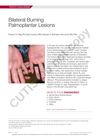
The woman was diagnosed with lichen sclerosus, a rare skin condition, after initial misdiagnosis and ineffective treatments.
June 2015 in “OhioLink ETD Center (Ohio Library and Information Network)” UVB exposure affects retinoid metabolism, which is important for skin cancer progression and treatment.
4 citations
,
March 2020 in “JAAD Case Reports” Vitamin B12 deficiency can cause darkening of all nails.
97 citations
,
January 1999 in “International Journal of Dermatology” Pityriasis rubra pilaris is a rare skin disorder with reddish-orange patches and thickened skin, needing better treatment understanding.
May 2025 in “International Journal of Trichology” Oral Acitretin effectively resolved symptoms in a child with Netherton syndrome.
81 citations
,
February 2014 in “EMBO molecular medicine” Activating Nrf2 in skin cells causes skin disease similar to chloracne in mice.
November 2024 in “Journal of Investigative Dermatology” Blocking the JAK/STAT pathway may help reduce skin sensitivity in Xeroderma pigmentosum.
 April 2015 in “Experimental Dermatology”
 Melanoma risk tools need improvement, certain gene mutations cause skin diseases and could be treated by targeting those mutations, skin wrinkling may relate to lung aging due to genetic factors, and oxidative stress affects hair loss but can be reduced in low oxygen.
 July 2020 in “Nepalese journal of ophthalmology”
 A boy with progeria had eye problems and signs of aging like hair loss and skin wrinkling.
16 citations
,
December 1996 in “International Journal of Dermatology” Vitamin C is essential to prevent scurvy and its symptoms.
June 2025 in “Albus Scientia” MC1R gene variations affect skin, hair color, UV sensitivity, and melanoma risk.
Melanin-rich skin has unique challenges in diagnosing and treating skin diseases.
 5 citations
,
January 2016 in “Skin appendage disorders”
5 citations
,
January 2016 in “Skin appendage disorders” A rare skin condition called linear lichen planopilaris caused itchy red bumps and hair loss on a man's face.
 January 2016 in “Experimental Dermatology”
 New findings suggest potential treatments for melanoma, hyperpigmentation, hair defects, and multiple sclerosis, and show skin microbiome changes don't cause atopic dermatitis.
 5 citations
,
July 2022 in “Orphanet journal of rare diseases”
5 citations
,
July 2022 in “Orphanet journal of rare diseases” RSPO1 mutations in certain patients lead to skin cells that don't develop properly and are more likely to become invasive, increasing the risk of skin cancer.
144 citations
,
December 2017 in “Pigment cell & melanoma research” Melasma is now considered a skin aging disorder caused by sun exposure in people with a genetic tendency, which impacts treatment and prevention approaches.
24 citations
,
July 1994 in “Journal of Investigative Dermatology” 16 citations
,
May 2006 in “The Journal of Dermatology” Peeling skin syndrome was successfully treated with a vitamin D cream.
April 2021 in “Authorea (Authorea)” A 20-year-old woman had stable Progressive Hemifacial Atrophy and Vitiligo after treatment, suggesting a possible link between the conditions.
20 citations
,
October 2005 in “Archives of Dermatological Research” April 1977 in “Pediatric Research” June 2018 in “Chinese Journal of Dermatology” Connective tissue nevi have distinct features, and reflectance confocal microscopy is useful for early diagnosis.
80 citations
,
January 1979 in “Journal of Surgical Oncology” Keratoacanthoma is a common, usually non-dangerous skin tumor that looks like squamous cell carcinoma but rarely becomes severe.
 5 citations
,
February 2015 in “JEADV. Journal of the European Academy of Dermatology and Venereology/Journal of the European Academy of Dermatology and Venereology”
5 citations
,
February 2015 in “JEADV. Journal of the European Academy of Dermatology and Venereology/Journal of the European Academy of Dermatology and Venereology” OCT can non-invasively diagnose follicular keratosis and other hair follicle disorders.
10 citations
,
August 1998 in “Journal of Investigative Dermatology” 3 citations
,
April 2011 in “Journal of the American Academy of Dermatology” A 19-year-old man had a rare skin condition on one side of his face that looked like another skin disease.
 November 2009 in “Medical & surgical dermatology”
 The document concludes that Borrelia afzelii causes a skin condition in France, a gene is linked to hair loss in Caucasian women, and various genetic mutations affect skin diseases.