 2 citations
,
September 2023
2 citations
,
September 2023 Gaining 5-10 kg during the non-growing period boosts cashmere yield and length in goats.
1 citations
,
February 2021 in “Animal biotechnology” Certain changes in the KAP6-1 gene affect the thickness and length of cashmere goat fibers.
 February 2026 in “Pakistan Veterinary Journal”
 Selenium and Vitamin E supplements improved antioxidant levels and cashmere production in goats.
3 citations
,
December 2008 in “Frontiers of Agriculture in China” The Cashmere goat hair keratin gene is crucial for hair structure.
12 citations
,
April 2009 in “Agricultural sciences in China/Agricultural Sciences in China” Hoxc13 gene expression and skin thickness change similarly during cashmere goat hair follicle development.
2 citations
,
August 2023 in “The Journal of Animal and Plant Sciences” Genetic analysis of Cashmere goats identified key genes for wool, reproduction, and high-altitude adaptation.
 1 citations
,
January 2014 in “Sen'i Gakkaishi”
1 citations
,
January 2014 in “Sen'i Gakkaishi” The new method reliably identifies and measures different animal hair fibers in textiles.

Younger goats produce more cashmere and have healthier hair follicles due to better antioxidant capacity.
January 2015 in “Chinese Veterinary Science” Recognizing ultrastructures of cashmere goat hair follicles helps identify and locate follicle layers.
 January 2014 in “Sen'i Gakkaishi”
 Researchers developed a method to identify animal fibers in textiles, which works on processed and blended materials.
January 2012 in “Zhongguo nongye Kexue” The technology can create transgenic cashmere goats with improved wool quality.
 30 citations
,
March 2019 in “Archives animal breeding/Archiv für Tierzucht”
30 citations
,
March 2019 in “Archives animal breeding/Archiv für Tierzucht” The KRTAP15-1 gene affects cashmere fiber thickness in goats.
 20 citations
,
May 2007 in “Asian-Australasian Journal of Animal Sciences”
20 citations
,
May 2007 in “Asian-Australasian Journal of Animal Sciences” KAP8.2 gene variations affect cashmere quality in goats.
11 citations
,
December 2020 in “G3 Genes Genomes Genetics” Chi-miR-130b-3p helps develop hair follicles in goat fetuses by targeting the WNT10A gene.
 1 citations
,
January 2020 in “bioRxiv (Cold Spring Harbor Laboratory)”
1 citations
,
January 2020 in “bioRxiv (Cold Spring Harbor Laboratory)” The research mapped out the cell types and molecular processes involved in developing Cashmere goat hair follicles.
1 citations
,
January 2020 in “International Journal of Agriculture and Biology” Certain miRNAs are linked to Cashmere goat hair quality.
1 citations
,
January 2012 The CRABP I gene in cashmere goats is highly conserved but has unique features at specific amino sites.
1 citations
,
October 2010 in “2010 3rd International Conference on Biomedical Engineering and Informatics” The LEF-1 gene in cashmere goats was successfully cloned and analyzed, showing potential for improving cashmere production.
February 2025 in “Archives animal breeding/Archiv für Tierzucht” miRNA-211 reduces melanin in Cashmere goats by suppressing AP1S2.
November 2024 in “Comparative Biochemistry and Physiology Part D Genomics and Proteomics” Exosomes help hair follicle development in cashmere goats.
September 2020 in “Research Square (Research Square)” Goat skin adapts to seasonal changes through genes that respond to daylight length, affecting hormone levels and potentially making skin cells light-sensitive.
19 citations
,
May 2016 in “Cytotechnology” 3 citations
,
December 2024 in “Journal of Animal Science” LncRNA MSTRG.14227.1 hinders hair follicle development in cashmere goats, affecting cashmere quality.
January 2020 in “bioRxiv (Cold Spring Harbor Laboratory)” DNA methylation controls hair follicle gene expression in cashmere goats.
January 2014 in “China Feed” Higher expression of the keratin-associated protein 8.1 gene in Liaoning cashmere goats is linked to finer cashmere fibers.
January 2009 in “Heilongjiang xumu shouyi” Stem cells are present in goat hair follicles but decrease over time.
January 2016 in “Xumu Shouyi Xuebao”  6 citations
,
March 1998 in “Textile Research Journal”
6 citations
,
March 1998 in “Textile Research Journal” Chemical treatments can change the scale heights of wool and cashmere fibers, affecting their identification.
 6 citations
,
December 1966 in “Textile Research Journal”
6 citations
,
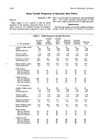
December 1966 in “Textile Research Journal” Animal hair fibers like wool and mohair are strong when dry, but vicuna fibers are very brittle.

Researchers developed a method to identify and measure different animal hair fibers in textiles, successfully distinguishing materials like cashmere from cheaper fibers.