The extract of Guazuma ulmifolia Lam. has limited antioxidant properties and cannot prevent uric acid synthesis.

The document provides 70 multiple choice questions to improve haematology skills.

The document tests knowledge and decision-making in hematology through multiple-choice questions.
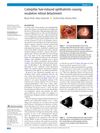 July 2022 in “BMJ Case Reports”
 Early treatment is crucial to prevent severe eye complications from caterpillar hair.
June 2025 in “Veterinary Sciences” Oclacitinib effectively treated a diabetic cat's severe skin issues without raising glucose levels, and surgery fixed eyelid fusion.
 29 citations
,
July 2014 in “PLoS ONE”
29 citations
,
July 2014 in “PLoS ONE” Inactivating β-catenin is essential for chick retina regeneration.
Choose the best brow lift method based on patient needs and goals.
1 citations
,
January 2021 in “Clinical case reports” The Hotz-Celsus surgery successfully fixed inward-turning eyelids in cattle.
June 2022 in “Indian Journal of Ophthalmology/Indian journal of ophthalmology” Early and aggressive treatment is crucial for preserving vision in infants with AEC syndrome.
10 citations
,
August 2002 in “British Journal of Ophthalmology” Surgical excision is the best treatment for SCC, but intralesional cidofovir might be a good alternative.
113 citations
,
June 2010 in “Biological Chemistry” Cathepsin L deficiency causes large, abnormal cell structures and health issues in mice.
 2 citations
,
July 2024 in “Cermin Dunia Kedokteran”
2 citations
,
July 2024 in “Cermin Dunia Kedokteran” Glaucoma can lead to blindness, but it can be managed with surgery and medication.
May 2013 in “Optometry and vision science” The document discusses challenges in eye care, including treating melanoma before macular hole repair, bloody tears resolved by blood pressure control, eyelash regrowth in hair-pulling disorder with medication, a non-invasive method to detect eyelash mites, and the psychological factors affecting contact lens comfort.
 February 2010 in “Journal of The American Academy of Dermatology”
 Surgery on a baby with a skin disorder improved eyelid position and eye health.
 May 2025 in “Cermin Dunia Kedokteran”
 Leukokoria can signal Coats disease or other retinal issues, requiring early detection to prevent severe outcomes.
The C-CAT tool helps assess and improve treatment for central centrifugal cicatricial alopecia.
June 2007 in “Taiwan Journal of Ophthalmology” Young patients with Vogt-Koyanagi-Harada syndrome may have poor vision outcomes despite treatment due to frequent recurrences.
May 2013 in “Optometry and Vision Science” Experience-dependent plasticity offers rehabilitation potential for macular degeneration, partial orthokeratology slows myopia, and axis misalignment affects astigmatism surgery effectiveness.
 January 2025 in “International Journal of Veterinary Sciences and Animal Husbandry”
 The cat fully recovered from the infection after treatment.
August 2002 in “British journal of ophthalmology” Surgical excision is the best treatment for SCC, but intralesional cidofovir might be a viable alternative.
January 2012 in “The Year book of dermatology” 29 citations
,
September 1986 in “Journal of the American Veterinary Medical Association” The cat had a pituitary tumor causing hormone imbalance and related health issues.
January 2016 in “e-Oftalmo CBO Revista Digital de Oftalmologia” CSC is linked to mineralocorticoid receptor damage, stress, and steroid use, with treatments including drugs and laser therapies to prevent eye damage.
1 citations
,
January 1987 in “Veterinary Dermatology” Topical 0.1% tacrolimus improved a rare ear condition in cats.
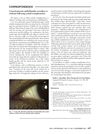 December 2012 in “Canadian journal of ophthalmology”
 Eyelash transplantation can cause eye damage and pain if not done carefully.
13 citations
,
October 2001 in “British Journal of Ophthalmology” Prophylactic pilocarpine may not prevent angle closure in the other eye.
31 citations
,
April 2005 in “American journal of ophthalmology” Latanoprost can cause eyelash drooping as a side effect.
January 2024 in “Skin Appendage Disorders” Eyelash loss can temporarily occur from chemotherapy for retinoblastoma.
January 2006 in “International water power & dam construction” Nevus comedonicus can appear later in life and affect both eyelids.
1 citations
,
January 2014 in “Turkish Journal of Ophthalmology” Prostaglandin treatments for glaucoma can cause rare eye area changes like eyelid deepening and fat pad prolapse.