18 citations
,
February 2017 in “Molecular Medicine Reports” Activating Notch signaling can kill basal cell carcinoma cells.
46 citations
,
May 1995 in “Proceedings of the National Academy of Sciences” A specific gene region can control targeted and responsive gene expression in mice, useful for skin disorder treatments.
 January 2025 in “Dermatology Review”
 Giant keratoacanthoma can look like squamous cell carcinoma, requiring careful diagnosis and surgical removal.
 2 citations
,
January 2024 in “Proceedings of the National Academy of Sciences of the United States of America”
2 citations
,
January 2024 in “Proceedings of the National Academy of Sciences of the United States of America” The research created a detailed map of skin cells, showing that certain cells in basal cell carcinoma may come from hair follicles and could help the cancer grow.
27 citations
,
May 2011 in “Journal of Investigative Dermatology” TCHHL1 is a protein important for hair growth, found in hair follicles.
January 2014 in “Repository KITopen (Karlsruhe Institute of Technology)” Autoimmune diseases need combined therapy of tolerance induction and immunosuppression.
 25 citations
,
November 2017 in “Molecular Medicine Reports”
25 citations
,
November 2017 in “Molecular Medicine Reports” PlncRNA-1 helps hair follicle stem cells grow and develop by controlling a specific cell signaling pathway.
April 2023 in “Journal of Investigative Dermatology” Increased TEMRA cells can predict treatment outcomes in rapidly progressive alopecia areata.
25 citations
,
June 1998 in “Journal of Investigative Dermatology” Murine cytomegalovirus does not cause alopecia areata in these mice.
 7 citations
,
March 2018 in “Asian-Australasian journal of animal sciences”
7 citations
,
March 2018 in “Asian-Australasian journal of animal sciences” OCIAD2 and DCN genes affect hair growth in goats by having opposite effects on a growth signaling pathway and inhibiting each other.
 5 citations
,
February 2008 in “Experimental Dermatology”
5 citations
,
February 2008 in “Experimental Dermatology” Cyclosporin A promotes hair growth in mice and increases a protein linked to hair growth, but it may not work the same way in humans.
October 2014 in “Cancer research” Blocking mTORC1 reduces skin tumor growth in mice.
18 citations
,
January 2013 in “Veterinary Dermatology” K15 is a reliable marker for studying stem cells in dog hair follicle tumors.
April 2017 in “The journal of investigative dermatology/Journal of investigative dermatology” Researchers found that certain miRNAs, which affect immune system regulation, are differently expressed in mice with a hair loss condition compared to healthy mice.
 21 citations
,
October 1980 in “Gastroenterology”
21 citations
,
October 1980 in “Gastroenterology” The report described a unique case of Cronkhite-Canada syndrome with unusual polyps and an association with multiple myeloma.
April 2026 in “Cytotherapy” Immune activation of hair follicle stem cells can help develop new hair regeneration therapies.
October 1998 in “Data Archiving and Networked Services (DANS)” Basal cell carcinoma cases are rising globally.
178 citations
,
April 2011 in “Journal of Clinical Investigation” Basal cell carcinomas in mice can start from hair follicle stem cells and other skin cell types, depending on signaling levels.
Basal cell carcinoma behaves like hair follicles and targeting specific pathways may help treat it.
November 2025 in “The Journal of Immunology” Different γδ T cell types have unique roles in causing alopecia areata.
 December 2017 in “British Journal of Dermatology”
 Targeted therapy for skin cancer is complex due to the role of the hedgehog pathway in both cancer and hair growth.
190 citations
,
July 2006 in “Experimental Dermatology” The hedgehog signalling pathway is key in skin development and basal cell carcinoma, offering insights for prevention and treatment.
January 2018 in “bioRxiv (Cold Spring Harbor Laboratory)” The mutant HR bmh protein mis-localizes in cells, affecting skin and hair development.
88 citations
,
August 1998 in “Carcinogenesis” High levels of ODC and a mutant Ha-ras gene cause tumors in mice.

Dual TCR Treg cells are common in various mouse tissues and show diverse characteristics.
2 citations
,
September 2024 in “PLoS ONE” Bendamustine combined with tucidinostat may effectively treat adult T-cell leukemia.
June 2025 in “Medical Science Journal for Advance Research” Higher levels of MIG and IP-10 may help diagnose and monitor Alopecia Areata.
 14 citations
,
February 2021 in “Experimental Dermatology”
14 citations
,
February 2021 in “Experimental Dermatology” Cannabinoid receptor-1 signaling is essential for the survival and growth of human hair follicle stem cells.
 January 2012 in “Journal of Investigative Dermatology”
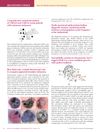
 Some Greek melanoma patients have gene mutations linked to increased cancer risk, a new color feature helps diagnose melanoma, the incidence of a skin condition in the Netherlands is rare, and a gene possibly affects male-pattern baldness.
 3 citations
,
May 2018 in “Reproductive Sciences”
3 citations
,
May 2018 in “Reproductive Sciences” The drug BAY 1158061 is safe, well-tolerated, and shows potential for treating diseases related to prolactin.