Human hair follicle stem cells can be enriched by sticking to type IV collagen.
November 2024 in “Journal of Investigative Dermatology” September 2025 in “PeerJ” FCER1A and RGS1 may help diagnose and treat systemic lupus erythematosus.
 August 2021 in “Research Square (Research Square)”
 StemMACS media is better for growing therapeutic stem cells.
4 citations
,
July 2023 in “Frontiers in Microbiology” HGF combined with ADA is highly accurate for diagnosing tuberculous pleural effusion, especially in younger females.
 2 citations
,
July 2009 in “Circulation Research”
2 citations
,
July 2009 in “Circulation Research” CD133+ progenitor cells have therapeutic potential for diabetic ulcers and heart attack recovery, with manageable risks.
 16 citations
,
February 2022 in “Science Advances”
16 citations
,
February 2022 in “Science Advances” Follistatin and LIN28B together improve the ability of inner ear cells in mice to regenerate into hearing cells.
 4 citations
,
January 2018 in “International Journal of Immunopathology and Pharmacology”
4 citations
,
January 2018 in “International Journal of Immunopathology and Pharmacology” Fat tissue transplant may be an effective new treatment for severe, treatment-resistant hair loss from folliculitis decalvans.
 1 citations
,
January 2022 in “Cell Biology International”
1 citations
,
January 2022 in “Cell Biology International” Changing CDK4 levels affects the number of stem cells in mouse hair follicles.
109 citations
,
April 1998 in “Journal of Investigative Dermatology” HGF/SF injections can stimulate hair growth and increase hair follicle size in mice.
Myeloid cells can turn into skin and hair cells to help heal wounds.
M-CSF-stimulated myeloid cells can turn into skin cells and help heal wounds and regrow hair.
77 citations
,
June 2002 in “Journal of Investigative Dermatology” CD44 variant changes start alopecia areata, but don't maintain it.
4 citations
,
September 2024 in “Cell Reports” Granulocyte colony stimulating factor helps heal wounds without scars.
July 2020 in “Research Square (Research Square)” A 3D co-culture model improved stem cell function and wound healing.
November 2025 in “Biomolecules” FGF22 helps hair follicle stem cells grow and develop.
10 citations
,
August 2023 in “The EMBO Journal” Kdm6b is crucial for skin cell differentiation.
 6 citations
,
September 2009 in “European journal of histochemistry”
6 citations
,
September 2009 in “European journal of histochemistry” CD90 is present on specific cells in dog hair follicles.
1 citations
,
January 2014 in “Chinese Journal of Traditional Medical Traumatology & Orthopedics” The methods can provide high-quality cells for creating artificial hair follicles, blood vessels, and skin.
 6 citations
,
April 2017 in “Experimental dermatology”
6 citations
,
April 2017 in “Experimental dermatology” CD80CD86 deficiency causes hair loss by disrupting regulatory T cells.
 April 2018 in “The journal of investigative dermatology/Journal of investigative dermatology”
 Li2CO3 improved skin disease in a mouse model of Focal Dermal Hypoplasia without toxicity.
January 2026 in “Human Mutation” T cell subsets are crucial in kidney cancer, and a new model predicts patient outcomes using key genes.
 12 citations
,
May 2019 in “Stem cell reviews”
12 citations
,
May 2019 in “Stem cell reviews” Fetal-maternal stem cells in a mother's hair can help with tissue repair and regeneration long after childbirth.
 1 citations
,
July 2022 in “The journal of investigative dermatology/Journal of investigative dermatology”
1 citations
,
July 2022 in “The journal of investigative dermatology/Journal of investigative dermatology” Tofacitinib helps improve skin conditions in people with Down syndrome, especially alopecia areata.
November 2025 in “Journal of Investigative Dermatology” Certain CD8+ T cells attack hair follicles in alopecia areata, suggesting they could be targeted for treatment.
 July 2025 in “bioRxiv (Cold Spring Harbor Laboratory)”
 A new Wnt surrogate specifically targets the Frizzled7 receptor, promoting organoid formation and hair growth.
99 citations
,
April 1998 in “The journal of investigative dermatology/Journal of investigative dermatology” Hair follicles help skin immune recovery after UVB exposure.
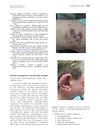
A 72-year-old man was diagnosed with a rare skin form of Rosai-Dorfman disease after years of misdiagnosis.
17 citations
,
April 2023 in “Cell Biology International” RDW is a useful, cost-effective tool for diagnosing and monitoring various diseases.
 September 2017 in “Journal of Investigative Dermatology”
 Certain miRNAs might be involved in a hair loss condition called frontal fibrosing alopecia and could possibly help in its diagnosis.