42 citations
,
December 2011 in “The journal of immunology/The Journal of immunology” RANKL causes lymph nodes to grow by making certain cells multiply.
April 2026 in “Research Square” January 2026 in “Medicina” CD34 is absent in most basal cell carcinoma cells but present in surrounding skin.
 June 2003 in “Obstetrical & Gynecological Survey”
 Examining more lymph nodes can improve survival rates in breast cancer patients without lymph node involvement.
 April 2023 in “Journal of Investigative Dermatology”
 An elderly woman's upper lip lump, thought to be a mucocele, was actually a rare type of lymphoma usually found on legs, treated successfully with chemotherapy and radiation.

Dual TCR Treg cells are common in various mouse tissues and show diverse characteristics.
December 2023 in “Journal of Investigative Dermatology” A specific type of immune cell plays a key role in causing alopecia areata and could be a target for treatment.
September 2019 in “Journal of Investigative Dermatology” IL-17 and certain immune cells are linked to more severe alopecia areata.
April 2023 in “Journal of Investigative Dermatology” IL-17 plays a key role in severe hair loss in chronic alopecia areata.
July 2024 in “Journal of Investigative Dermatology” CD8+ T cells expand significantly in alopecia areata, suggesting new treatment targets.
September 2019 in “Journal of Investigative Dermatology” Innate lymphoid cells type 1 may contribute to alopecia areata.
1 citations
,
August 1983 in “PubMed” CVP therapy showed moderate success in treating advanced non-Hodgkin's lymphoma, but more intensive treatment is needed for better outcomes.
14 citations
,
February 2003 in “Journal of the American Academy of Dermatology” Folliculotropic mycosis fungoides can affect the central nervous system in advanced stages.
 11 citations
,
September 1999 in “Journal of the European Academy of Dermatology and Venereology”
11 citations
,
September 1999 in “Journal of the European Academy of Dermatology and Venereology” Immunomodulatory therapies are effective for treating cutaneous lymphoma, particularly in early stages.
 60 citations
,
September 2015 in “Expert Review of Clinical Immunology”
60 citations
,
September 2015 in “Expert Review of Clinical Immunology” Lymphocytes, especially CD8+ T cells, play a key role in causing alopecia areata, and targeting them may lead to new treatments.
6 citations
,
March 2018 in “The American journal of dermatopathology/American journal of dermatopathology” BerEP4 and CD34 staining can help tell apart tricholemmoma from basal cell carcinoma.
November 2022 in “Journal of Investigative Dermatology” ILC1-like cells can cause alopecia areata by affecting hair follicles.
11 citations
,
September 2019 in “The journal of investigative dermatology/Journal of investigative dermatology” A specific group of skin stem cells was found to help maintain hair follicle cells.
1 citations
,
December 2021 Cats likely have a reactive skin condition, while dogs may have a more complex, possibly cancerous one.
46 citations
,
October 2018 in “JCI insight” CD8+ T cells are involved in alopecia areata and may cause disease relapse.
181 citations
,
December 2017 in “Trends in immunology” Intestinal intraepithelial lymphocytes are crucial for gut immunity and maintaining the mucosal barrier.
 4 citations
,
May 2021 in “The American Journal of Surgical Pathology”
4 citations
,
May 2021 in “The American Journal of Surgical Pathology” Cutaneous Lymphadenoma is a unique skin tumor with specific protein markers and common gene mutations that may cause continuous cell growth.
17 citations
,
January 2010 in “PubMed” CD10 helps distinguish between basal cell carcinoma and benign hair follicle tumors.
9 citations
,
January 2002 in “Dermatology” Reduced CD44 expression may cause abnormal hyaluronate buildup in cutaneous myxoma.
 March 2025 in “OncoTargets and Therapy”
 A specific genetic trait in tumor cells is linked to longer survival without disease in certain lymphoma patients.
1 citations
,
November 2018 in “immuneACCESS” Expanded CD8+ T cells are linked to Alopecia Areata and may cause relapse after treatment.
 April 2026 in “Frontiers in Cell and Developmental Biology”
 CD200- cells in hair follicles have a higher ability to regenerate hair.
 December 2021 in “Research Square (Research Square)”
 M-CSF-stimulated myeloid cells can cause alopecia areata in mice.
 6 citations
,
February 2010 in “Journal of The American Academy of Dermatology”
6 citations
,
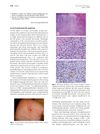
February 2010 in “Journal of The American Academy of Dermatology” A woman had a rare skin condition with recurring painful nodules that heal in 6 weeks, often without needing treatment.
August 2021 in “Journal of Investigative Dermatology” ILC1-like cells can cause alopecia areata by disrupting hair follicle immunity, suggesting a new treatment approach.