 2 citations
,
August 2019 in “BMC Complementary and Alternative Medicine”
2 citations
,
August 2019 in “BMC Complementary and Alternative Medicine” Asiasari radix extract may be a potential treatment for melanoma because it selectively triggers cell death in melanoma cells by affecting p53 regulation.
1 citations
,
April 2010 in “Cancer Research” WYE-130600 may cause skin thickening and irritation.
15 citations
,
September 2012 in “PTR. Phytotherapy research/Phytotherapy research” Ginsenosides Rb₁ and Rd may help prevent hair loss by promoting hair cell growth.
 127 citations
,
July 2002 in “EMBO journal”
127 citations
,
July 2002 in “EMBO journal” Normal skin cell renewal doesn't need RAR signaling, but vitamin A-related skin thickening does.
 4 citations
,
January 2021 in “Journal of Clinical Medical Research”
4 citations
,
January 2021 in “Journal of Clinical Medical Research” c-Kit is important for heart regeneration and cancer development.
 26 citations
,
August 2019 in “Stem Cell Research & Therapy”
26 citations
,
August 2019 in “Stem Cell Research & Therapy” PBX1 helps hair stem cells grow and change by turning on certain cell signals and preventing cell death, which may be useful for hair regrowth treatments.
July 2025 in “Journal of Investigative Dermatology” Monocyte-derived dendritic cells play a key role in UVB-induced skin sensitivity and inflammation.
6 citations
,
May 2013 in “The Journal of Dermatology” Autoimmune reactions may cause both alopecia areata and HAM.
γδTregs may help treat autoimmune diseases like alopecia areata by promoting hair regrowth and reducing immune attacks.
January 2011 in “Junshi yixue” A mouse model for studying scleroderma in chronic graft-versus-host disease was successfully created.
2 citations
,
September 1996 in “Neuroscience letters” Adding fetal calf serum to the medium kept Merkel cells alive and changed their shape.
1 citations
,
August 2015 in “Experimental Dermatology” KIT's role in skin cells is not entirely independent, as other cells can influence its function.
July 2024 in “Journal of Investigative Dermatology” IL-27 may help prevent hair loss in alopecia areata by promoting immunosuppressive T cells.
3 citations
,
January 2017 in “Acta Dermato Venereologica” Lipid-antigen stimulation may play a role in folliculotropic mycosis fungoides.
 September 2024 in “Journal of the American Academy of Dermatology”
 Regulatory γδ T cells help protect hair follicles from alopecia areata and promote hair regrowth.
December 2024 in “International Journal of Molecular Sciences” Platelet-rich fibrin may help reduce nonmelanoma skin cancer cell growth.
 December 2022 in “Research Square (Research Square)”
 The QuantAnts machines can find cancer markers and create CRISPR targets for them.
 88 citations
,
August 2019 in “Nature communications”
88 citations
,
August 2019 in “Nature communications” Researchers found a specific immune receptor in patients that causes severe skin reactions to a drug.
150 citations
,
June 1999 in “Oncogene” 4 citations
,
February 2023 in “Stem Cell Research & Therapy” Mouse skin cells can become sperm-like cells in the lab.
1 citations
,
May 2025 in “BMC Cancer” CDK4/6 inhibitors affect safety and quality of life differently, requiring careful use.
 160 citations
,
April 2012 in “Journal of Cellular and Molecular Medicine”
160 citations
,
April 2012 in “Journal of Cellular and Molecular Medicine” Telocytes might help with skin repair and regeneration.
421 citations
,
September 2003 in “Development” Stem cell behavior varies with stimuli, and lineage changes can happen without affecting stem cell division.
 August 2023 in “Journal of Investigative Dermatology”
 Different body areas have unique skin cell communication patterns, explaining why certain skin diseases occur in specific regions.
 1 citations
,
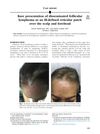
April 2019 in “JAAD case reports”
1 citations
,
April 2019 in “JAAD case reports” A woman with lymphoma had a rare skin rash on her scalp and forehead, which was hard to diagnose but responded well to treatment.
12 citations
,
April 2023 in “Molecular Pharmaceutics” A new patch can deliver stable antibodies over time for potential HIV treatment.
16 citations
,
April 2024 in “Proceedings of the National Academy of Sciences” HDAC4 and HDAC7 are crucial for Th17 cell development and could be targeted to treat inflammatory diseases.
11 citations
,
May 2008 in “British journal of dermatology/British journal of dermatology, Supplement” Identical p53 gene mutations in different cancers suggest the need for careful treatment.
 April 2026 in “Laboratory Animal Research”
 The new Hairless R/J mice model improves imaging for tumor monitoring and cancer therapy evaluation.
 67 citations
,
November 2019 in “Nature Communications”
67 citations
,
November 2019 in “Nature Communications” Oncogenic melanocyte stem cells can develop into melanoma similar to human cases.