 8 citations
,
January 2022 in “Burns and trauma”
8 citations
,
January 2022 in “Burns and trauma” Skin cell-derived vesicles can help heal skin injuries effectively.
 3 citations
,
July 2021 in “Life science alliance”
3 citations
,
July 2021 in “Life science alliance” PNKP is essential for keeping adult mouse progenitor cells healthy and growing normally.
 3 citations
,
December 2020 in “bioRxiv (Cold Spring Harbor Laboratory)”
3 citations
,
December 2020 in “bioRxiv (Cold Spring Harbor Laboratory)” Disrupting YAP signaling in skin cells leads to scar-free healing directed by specific cell signals.
 2 citations
,
September 2018 in “Tissue Engineering Part A”
2 citations
,
September 2018 in “Tissue Engineering Part A” Xeno-free three-dimensional stem cell masses are safe and effective for improving blood flow and tissue repair in limb ischemia.
 1 citations
,
May 2026 in “bioRxiv (Cold Spring Harbor Laboratory)”
1 citations
,
May 2026 in “bioRxiv (Cold Spring Harbor Laboratory)” UT-018 speeds up wound healing and boosts hair growth in mice.
 May 2026 in “Mendeley Data”
 Hair follicle stem cells and their exosomes help repair nerve injuries.
March 2026 in “The Journal of Steroid Biochemistry and Molecular Biology” Deleting vitamin D and calcium receptors in skin cells increases skin cancer risk by reducing DNA repair and stress response.
February 2026 in “Molecular and Cellular Probes” Stem cell and plant exosomes may help heal and regenerate skin.
 January 2026 in “Mendeley Data”
 Hair follicle stem cells and their exosomes help repair nerve injuries.
December 2025 in “Preprints.org” Aging dermal papilla cells can be reprogrammed for potential hair growth and skin repair.
 September 2025 in “Digital Commons - RU (Rockefeller University)”
 Nfib in hair follicle stem cells boosts melanocyte stem cell growth and differentiation.
 August 2024 in “Indian Journal of Skin Allergy”
 Stem-cell therapy shows promise for skin conditions but needs more research.
 January 2018 in “Stem cells in clinical applications”
 Exosomes show promise for tissue repair and regeneration with advantages over traditional cell therapies.
IL-1 signaling is crucial for hair follicle stem cell growth and wound healing.
April 2023 in “Chinese Medical Journal” Human hair follicle stem cells help repair tendon injuries.
1 citations
,
December 2025 in “Stem Cell Research & Therapy” Stem cell-derived exosomes can help repair ear damage and improve balance and hearing.
 6 citations
,
January 2015 in “Journal of regenerative medicine & tissue engineering”
6 citations
,
January 2015 in “Journal of regenerative medicine & tissue engineering” The review concludes that innovations in regenerative medicine, tissue engineering, and developmental biology are essential for effective tissue repair and organ transplants.
15 citations
,
September 2018 in “Applied Biological Chemistry” Matrigel supports cell growth and repair, and thymosin beta 4 aids tissue regeneration and healing.
 773 citations
,
August 2017 in “International Journal of Molecular Sciences”
773 citations
,
August 2017 in “International Journal of Molecular Sciences” The secretions of mesenchymal stem cells could be used for healing without using the cells themselves.
200 citations
,
March 2023 in “Nature Reviews Molecular Cell Biology” Quiescent adult stem cells are crucial for tissue repair and maintenance.
 60 citations
,
June 2019 in “Ageing Research Reviews”
60 citations
,
June 2019 in “Ageing Research Reviews” Fat from the body can help improve hair growth and scars when used in skin treatments.
 30 citations
,
February 2022 in “Stem Cell Reviews and Reports”
30 citations
,
February 2022 in “Stem Cell Reviews and Reports” Stem cell treatments may improve burn wound healing.
 28 citations
,
April 2023 in “Stem cell research & therapy”
28 citations
,
April 2023 in “Stem cell research & therapy” Tiny vesicles from stem cells could be a new treatment for healing wounds.
20 citations
,
March 2014 in “PubMed” Hair follicle stem cell research has advanced in understanding and using these cells for hair growth and skin repair.
9 citations
,
May 2022 in “Frontiers in Cellular Neuroscience” Mesenchymal stromal cell therapies show promise for treating various diseases but need more research and standardization.
 3 citations
,
April 2016 in “Dermatologic Surgery”
3 citations
,
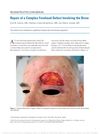
April 2016 in “Dermatologic Surgery” A man's forehead and eyebrow were successfully reconstructed with a skin and hair graft that matched his other eyebrow, without needing frequent trimming.
1 citations
,
February 2024 in “Journal of Microscopy and Ultrastructure” Exosomes from stem cells speed up wound healing.
 November 2023 in “Nature Communications”
 Cells lacking the Bax protein can outcompete others, leading to better tissue repair and hair growth.
 January 2022 in “Biocell”
 Mesenchymal stem cells and their secretions might help treat chronic skin inflammation in atopic dermatitis.
 April 2025 in “bioRxiv (Cold Spring Harbor Laboratory)”
 Older mice heal wounds without scars due to special fibroblasts.