 May 2026 in “AAPS PharmSciTech”
 PEGylated flavonoid Aspasomes improve brain protection and memory in stress-related disorders.

Hair follicle-derived sheets can effectively treat vitiligo by repigmenting skin.
 March 2026 in “Calcified Tissue International”
 The EDA pathway plays a key role in bone development by interacting with other signaling pathways.
 January 2026 in “Frontiers in Bioscience-Landmark”
 Araliadiol protects skin cells from damage by boosting antioxidant defenses.
 October 2025 in “Iraqi postgraduate medical journal”
 Combining laser treatment with steroid cream is more effective for alopecia areata than using the cream alone.
 May 2025 in “Life Studies”
 Lung cancer patients on immunotherapy and chemotherapy often experience severe fatigue, drowsiness, and appetite loss.
 October 2024 in “Irish Journal of Medical Science (1971 -)”
 Electrical stimulation with a low-calorie diet reduces appetite, weight, and blood pressure in obese people with sleep apnea.
 October 2024 in “Irish Journal of Medical Science (1971 -)”
 Continuous glucose monitoring and GLP-1 receptor agonists improve diabetes management, but personalized care and education are crucial.
 September 2024 in “Advanced medical journal”
 Spironolactone is effective and safe for treating acne in women, especially those over 25 with hormonal imbalances.
 May 2024 in “Plant and Soil”
 Root hairs in maize grow mainly in air-filled pores, limiting their role in nutrient uptake and plant anchorage.
 January 2024 in “PloS one”
 Rat hair-follicle stem cells can become heart cells with specific supplements.
 January 2024 in “Regenerative Biomaterials”
 Dissolvable microneedles with Ginsenoside Rg3 can help treat hair loss by improving drug delivery and stimulating hair growth.
 November 2023 in “Regenerative Biomaterials”
 The new adhesive seals wounds quickly, works well in wet conditions, and helps with healing.
 July 2023 in “AYUSHDHARA”
 Aging is a natural process causing physical and mental decline.
 June 2020 in “Journal of Investigative Dermatology”
 The technique effectively shows how human skin and hair cells form into ball-like structures.
 September 2019 in “Actas dermo-sifiliográficas/Actas dermo-sifiliográficas”
 Isotretinoin at low doses effectively treats facial papules in frontal fibrosing alopecia.
 April 2017 in “The journal of investigative dermatology/Journal of investigative dermatology”
 QMSI is a valuable method for studying drug penetration in skin tissues.
 April 2017 in “The journal of investigative dermatology/Journal of investigative dermatology”
 CD101 is highly effective in treating dermatophytosis in guinea pigs.
April 2017 in “The journal of investigative dermatology/Journal of investigative dermatology” Topical Vorinostat shows promise for treating alopecia areata by promoting hair regrowth.
 February 2015 in “Current problems in dermatology”
 The document provides a comprehensive guide for dermatologists to diagnose and treat hair loss.
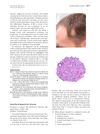
The man has Temporal Triangular Alopecia, a stable, non-scarring hair loss condition best treated with hair transplantation.
 February 2011 in “Journal of Intellectual Property Law & Practice”
 Dosage regime inventions can be patentable in China, but legal uncertainty exists.

The document concludes that scientists created various steroids with different properties, including a more effective semi-synthetic vitamin D.
 January 2010 in “The Year book of perinatal/neonatal medicine”
 Early skin biopsy helps diagnose and manage severe skin conditions in babies.
 September 2009 in “European Urology Supplements”
 IGRT resulted in lower acute toxicity for stage III prostate cancer patients.

The document concludes that a Quality Management System is crucial for maintaining product quality through innovation and proper technology transfer in the pharmaceutical industry.
 July 2008 in “Journal of Intellectual Property Law & Practice”
 Australian court ruled that Bickfords did not infringe on Monster Energy's trade mark because Monster was not sold or known in Australia at the time.
 January 2008 in “Annals of Nutrition and Metabolism”
 Parthenolide promotes hair growth in mice and may influence pathways related to male pattern baldness.
 April 2005 in “Aktuelle Dermatologie”
 Shampoos have evolved to address individual hair and scalp needs, and treatments like Minoxidil and Finasteride help with hair loss.
 September 1998 in “British Journal of Plastic Surgery”
 The document informed plastic surgeons about upcoming educational events worldwide.