 1 citations
,
March 2020 in “Australasian Journal of Dermatology”
1 citations
,
March 2020 in “Australasian Journal of Dermatology” The paper concludes that recognizing bitemporal alopecia areata is important for early treatment and preventing its progression.
July 2023 in “Clinical Cosmetic and Investigational Dermatology” Accurate diagnosis of granular parakeratosis is crucial for effective treatment and improvement.
 January 2016 in “Springer eBooks”
 The document explains how hair loss in men and women, known as Androgenetic alopecia, is categorized using the Hamilton-Norwood system for men and the Ludwig grade system for women.
 November 2022 in “The journal of investigative dermatology/Journal of investigative dermatology”
 The study suggests a link between varicella-zoster virus and segmental vitiligo, with evidence of the virus disrupting skin pigment cells.
1 citations
,
April 2022 in “HCA Healthcare Journal of Medicine” Linear cutaneous lupus erythematosus on the scalp is rare, often affects young Asians, and can be treated with specific medications.
 April 2017 in “Journal of Investigative Dermatology”
 The study found a link between the severity of Lichen Planopilaris seen by doctors and the details seen under a microscope, and created a new way to measure this severity.
 December 2007 in “CRC Press eBooks”
 Alopecia areata incognita causes widespread hair loss without patches and needs a scalp biopsy for diagnosis.
Pseudopelade is likely an independent disease due to its distinct features.
18 citations
,
May 2006 in “Journal of Cutaneous Medicine and Surgery” Linear lichen planopilaris can affect the trunk, not just the face.
April 1996 in “Journal of Dermatological Science”  20 citations
,
May 2007 in “Asian-Australasian Journal of Animal Sciences”
20 citations
,
May 2007 in “Asian-Australasian Journal of Animal Sciences” KAP8.2 gene variations affect cashmere quality in goats.
 June 2023 in “Medeniyet medical journal”
 People with alopecia areata have similar retinal structures but thicker choroidal regions compared to those without the condition.
 193 citations
,
August 2005 in “Journal of Investigative Dermatology Symposium Proceedings”
193 citations
,
August 2005 in “Journal of Investigative Dermatology Symposium Proceedings” Hair loss common in Australia; men affected earlier, more often than Asians; women less concerned.
June 2014 in “The Journal of Dermatology” A patient with a rare chromosome condition also had a rare type of hair loss.
32 citations
,
August 1982 in “Journal of the American Academy of Dermatology” GLPLS and LPP are variants of lichen planus.
56 citations
,
January 1977  August 2024 in “Nihon Ika Daigaku Igakkai Zasshi”
 The study made scar tissue transparent to better understand its structure.
 1 citations
,
January 2023 in “Annals of Dermatology”
1 citations
,
January 2023 in “Annals of Dermatology” The BASP classification helps predict patient behavior and improve treatment for hair loss.
 March 2025 in “Pakistan Journal of Health Sciences”
 Intralesional steroids improve Alopecia Areata, and trichoscopy effectively tracks this improvement.
A new method allows detailed tracking of cell regeneration in crustacean legs.
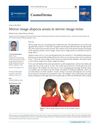
Mirror-image twins can have alopecia areata on opposite sides of their heads.
11 citations
,
March 2004 in “Journal of Comparative Pathology” Norfolk Terriers have a genetic skin defect causing scaling and blisters due to a keratin issue.
The C-CAT tool helps assess and improve treatment for central centrifugal cicatricial alopecia.
5 citations
,
April 2024 in “Science China Materials” 14 citations
,
August 2004 in “Veterinary Dermatology” The horse had a rare type of hair loss caused by immune cells attacking hair follicles.
7 citations
,
January 2011 in “Biochemistry Research International” Hard α-keratin has a universal molecular structure with a specific superlattice arrangement.
 1 citations
,
July 2018 in “Elsevier eBooks”
1 citations
,
July 2018 in “Elsevier eBooks” Triple horizontal scalp biopsies are 98% accurate in diagnosing hair loss, better than single biopsies.
November 2024 in “Journal of Investigative Dermatology” Hair evaluation is crucial for early diagnosis and management of ARCI, as hair loss often indicates severity.
September 2024 in “Indian Journal of Dermatology Venereology and Leprology” 109 citations
,
April 1997 in “Archives of Dermatological Research” Mast cell and nerve fiber interactions in mouse skin change with the hair cycle.