3 citations
,
February 2021 in “Pediatric rheumatology online journal” A girl with lupus and trisomy X has a higher risk of bone problems like avascular necrosis and osteoporosis.
 3 citations
,
January 2016 in “International Journal of Contemporary Pediatrics”
3 citations
,
January 2016 in “International Journal of Contemporary Pediatrics” Children with trichotillomania often pull hair from their scalp and may have other mental health issues.
 1 citations
,
June 2023 in “Psychoneuroendocrinology”
1 citations
,
June 2023 in “Psychoneuroendocrinology” Childhood sexual trauma, especially between ages 5-7, is linked to lower cortisol levels in adult hair, suggesting long-term stress response changes.
 1 citations
,
February 2023 in “Frontiers in Endocrinology”
1 citations
,
February 2023 in “Frontiers in Endocrinology” Childhood growth hormone deficiency can be accurately diagnosed using gene expression data and random forest analysis.
1 citations
,
April 2018 in “Turkish Journal of Dermatology” Childhood hypertrichosis is excessive hair growth not linked to hormones, with types based on location and origin.
1 citations
,
January 2011 in “MOspace Institutional Repository (University of Missouri)” Topical immunotherapy with SADBE and DPCP is most effective for short-term hair regrowth in children with severe alopecia areata.
The new treatment for childhood alopecia is safe and effective by balancing the immune system, nutrition, and hormones.
 June 2025 in “Journal of Endocrinological Investigation”
 Adrenal disorders often cause high blood pressure in young people.
July 2024 in “DergiPark (Istanbul University)” Childhood obesity is linked to early puberty and affects brain function.

Gender-specific analysis could improve treatment for childhood systemic lupus erythematosus.
September 2020 in “Zenodo (CERN European Organization for Nuclear Research)” Childhood alopecia totalis is hard to treat, with few effective therapies available.
January 2019 in “Journal of the American Academy of Dermatology” Childhood cancer survivors need better skin care and sun protection.
 October 2014 in “Archives of disease in childhood”
 Childhood cancer diagnosis leads to long-term physical and emotional health issues in parents.
1 citations
,
November 2024 in “European Journal of Endocrinology” Higher childhood DHEAS levels are linked to advanced puberty and DNA changes.
 1 citations
,
January 2013 in “International Journal of Trichology”
1 citations
,
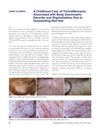
January 2013 in “International Journal of Trichology” A girl with red hair developed hair-pulling and body image disorders after being bullied for her hair color.
 February 2024 in “Infection and drug resistance”
 Tinea capitis in a child was caused by a fungus from cats, highlighting the need for accurate diagnosis and treatment.
 85 citations
,
February 1989 in “Journal of The American Academy of Dermatology”
85 citations
,
February 1989 in “Journal of The American Academy of Dermatology” Children with loose anagen hair have easily pluckable hair due to root sheath problems, and it might improve without treatment.
44 citations
,
December 1975 in “Developmental Medicine & Child Neurology” Sodium valproate effectively controls petit mal seizures in children but is less effective for other types, with minimal side effects.
 36 citations
,
July 1977 in “The Journal of Pediatrics”
36 citations
,
July 1977 in “The Journal of Pediatrics” Minoxidil helps lower blood pressure in kids with severe hypertension, but may cause temporary excessive hair growth.
17 citations
,
October 1980 in “PubMed” Valproic acid is effective for controlling seizures in children, especially as a single treatment, with some side effects.
13 citations
,
May 2014 in “PubMed” Most children with childhood-onset lupus in Baghdad responded well to treatment, but some developed chronic kidney disease or died.
3 citations
,
April 2011 in “Klinische Pädiatrie” Immunosuppression therapy with methylprednisolone effectively treats childhood alopecia areata.
 1 citations
,
October 2024 in “Journal of Nepal Paediatric Society”
1 citations
,
October 2024 in “Journal of Nepal Paediatric Society” Stopping Cyclosporine A led to hair regrowth in a child with alopecia.
1 citations
,
October 2010 in “Pediatrics in review” Early diagnosis of malabsorptive disorders in children is crucial to prevent long-term malnutrition.
 1 citations
,
May 2002 in “Therapeutische Umschau”
1 citations
,
May 2002 in “Therapeutische Umschau” Children's hair diseases include compulsive hair-pulling, easily plucked hair, scalp fungal infections, and head lice, each requiring specific diagnosis and treatment.
July 2026 in “International Journal of Homoeopathic Sciences” A 7-year-old girl with alopecia areata achieved nearly complete hair regrowth with homeopathic treatment.
 February 2026 in “Medical Science and Discovery”
 Early diagnosis and comprehensive treatment can significantly improve trichotillomania in children.
February 2025 in “International Journal of Clinical & Experimental Dermatology” Trichotillomania in children is a sign of emotional distress needing tailored treatment and family support.
 January 2025 in “Case Reports in Hematology”
 Leukemia should be considered in teens with unexplained bleeding.
March 2024 in “International Seven Journal of Health Research” Alopecia areata in children causes hair loss and needs a personalized treatment plan with medical and emotional support.