 19 citations
,
February 2008 in “Archives of Dermatological Research”
19 citations
,
February 2008 in “Archives of Dermatological Research” Mast cells might contribute to hair loss by causing skin thickening.
July 2020 in “Research Square (Research Square)” Higher BMI, IGF-1, and DHEAS levels are linked to advanced bone age in young Chinese girls with early breast development.
 26 citations
,
January 2014 in “Cell Structure and Function”
26 citations
,
January 2014 in “Cell Structure and Function” Human sweat glands contain stem cells capable of self-renewal and forming different cell types.
November 2025 in “Journal of Investigative Dermatology” Keloid fibroblasts cause itch and pain by releasing more histamine.
 9 citations
,
January 2023 in “International Journal of Biological Sciences”
9 citations
,
January 2023 in “International Journal of Biological Sciences” CTHRC1 is essential for healing and preventing heart rupture after a heart attack.
17 citations
,
October 2001 in “British Journal of Ophthalmology” Intralesional cidofovir might be a good alternative treatment.
 July 2016 in “Reumatología Clínica (English Edition)”
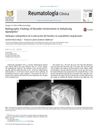
 The patient with Ankylosing Spondylitis had shoulder joint damage and bone changes.
 1 citations
,
September 2023 in “Research Square (Research Square)”
1 citations
,
September 2023 in “Research Square (Research Square)” The new method improves bone repair by enhancing cell loading and stability in bioprinted scaffolds.
34 citations
,
September 2020 in “Clinical, cosmetic and investigational dermatology” Hyaluronic acid increases collagen synthesis safely, while poly-L-lactic acid may cause complications by affecting fibroblasts.
18 citations
,
June 2014 in “Anais Brasileiros de Dermatologia” Clouston Syndrome can be linked to rare sweat gland tumors.
 52 citations
,
April 2013 in “Developmental Cell”
52 citations
,
April 2013 in “Developmental Cell” Brg1 is crucial for hair growth and skin repair by maintaining stem cells and promoting regeneration.
121 citations
,
December 2001 in “American Journal of Dermatopathology” TB and BCC tumors show similar follicular differentiation patterns.
May 2018 in “Dermatologic Surgery” 1 citations
,
January 2018 in “Journal of clinical & experimental dermatology research” Some nail changes in chilblains can look like lichen planus and may be severe and long-lasting.
1 citations
,
May 2025 in “Carbohydrate Polymers” The new chitosan dressing heals wounds better and faster than current products.
 March 2022 in “Indian Journal of Animal Research”
 Dog hair follicle stem cells can turn into fat cells.
 551 citations
,
November 2013 in “Nature”
551 citations
,
November 2013 in “Nature” Certain mature cells in mouse lungs can turn back into stem cells to aid in tissue repair.
The document concludes that various skin conditions have specific treatments and that adequate calcium intake may prevent osteoporosis.
January 2024 in “Animals” SP1 promotes and KROX20 inhibits hair cell growth by affecting the CUX1 gene.
 408 citations
,
January 2017 in “Science”
408 citations
,
January 2017 in “Science” Some wound-healing cells can turn into fat cells around new hair growth in mice.
 22 citations
,
June 2012 in “PLOS ONE”
22 citations
,
June 2012 in “PLOS ONE” Cholesterol-related compounds can stop hair growth and cause inflammation in a type of scarring hair loss.
77 citations
,
September 1983 in “Acta Paediatrica” Dexamethasone effectively normalizes elevated steroid levels in girls with premature adrenarche.
104 citations
,
July 1994 in “The Journal of Cell Biology” Basonuclin helps keratinocytes multiply and prevents them from fully maturing.
April 2019 in “Journal of Investigative Dermatology” Y27632 increases cell growth through EGFR signaling, not ROCK1/2.
 November 2021 in “Chattagram Maa-O-Shishu Hospital Medical College Journal”
 Most patients with Cutaneous Lupus Erythematosus are young females, and dermatologists play a key role in diagnosis.
February 2020 in “Journal of chemical neuroanatomy” Researchers found a way to make rat hair follicle cells start turning into motor neuron-like cells, but couldn't fully turn them into working motor neurons.
10 citations
,
August 2023 in “The EMBO Journal” Kdm6b is crucial for skin cell differentiation.
 October 2023 in “Journal of the American Academy of Dermatology”
 Clascoterone cream could be used for other skin conditions affected by hormones.
 91 citations
,
March 2011 in “Stem Cell Reviews and Reports”
91 citations
,
March 2011 in “Stem Cell Reviews and Reports” Human epidermal neural crest stem cells can become bone and skin pigment cells, making them useful for therapies.
28 citations
,
April 1988 in “Archives of Dermatological Research”