 21 citations
,
January 2020 in “General and Comparative Endocrinology”
21 citations
,
January 2020 in “General and Comparative Endocrinology” Lack or blocking of SRD5a, a key component in hormone creation, can lead to conditions like pseudohermaphrodism and affect hair growth, bone mass, muscle strength, and reproductive health. More research is needed on its regulation from fertilization to adulthood.
 57 citations
,
May 1986 in “Clinics in endocrinology and metabolism”
57 citations
,
May 1986 in “Clinics in endocrinology and metabolism” Androstanediol glucuronide is a reliable marker for hirsutism in women.
 46 citations
,
September 2014 in “Tissue engineering. Part A”
46 citations
,
September 2014 in “Tissue engineering. Part A” Researchers created hair-inducing human cell clusters using a 3D culture method.
January 2018 in “Elsevier eBooks” 5α-reductase-2 deficiency causes ambiguous genitalia at birth and affects male sexual development, but individuals often develop male characteristics at puberty.
 March 2014 in “Chinese Journal of Dermatology”
 Hair loss in androgenic alopecia patients is linked to changes in certain genes that control cell growth and death.
 12 citations
,
May 2001 in “British journal of dermatology/British journal of dermatology, Supplement”
12 citations
,
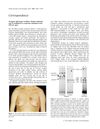
May 2001 in “British journal of dermatology/British journal of dermatology, Supplement” A rare benign skin tumor showed unusual features of sebaceous and sweat glands, important for correct diagnosis.
 10 citations
,
January 2016 in “Annals of Dermatology”
10 citations
,
January 2016 in “Annals of Dermatology” 3D-cultured dermal papilla cells are better at inducing hair follicles than adipose-derived stem cells.

The CD4 protein may play a role in the behavior of certain skin cells, affecting their growth, movement, and differentiation.
 1 citations
,
September 2019 in “Journal of Investigative Dermatology”
1 citations
,
September 2019 in “Journal of Investigative Dermatology” Human hair matrix cells and dermal papilla fibroblasts can form early hair follicle structures but don't produce hair shafts yet.
37 citations
,
April 2013 in “PLoS ONE” Thymosin Beta 4 helps human dental pulp cells develop into tooth-forming cells, suggesting it could aid dental regeneration.
 38 citations
,
April 2017 in “PLOS Genetics”
38 citations
,
April 2017 in “PLOS Genetics” GRHL3 is important for controlling gene activity in skin cells during different stages of their development.
43 citations
,
April 2010 in “Developmental Biology” Sebaceous glands can form new hair follicles when activated, but hair follicle bulges cannot.
2 citations
,
September 2024 in “Animals” Key genes influence melanin in chicken muscles, affecting their value.
 April 2016 in “Journal of Investigative Dermatology”
 Sonic hedgehog signaling is needed for the development of touch-receptor cells in the skin, and the loss of Polycomb repressive complex 2 can lead to more of these cells.
111 citations
,
May 2001 in “Human reproduction update” Insufficient androgen action in male fetuses can cause genital development issues due to genetic mutations or environmental chemicals.
1 citations
,
June 2014 in “Journal of developmental biology” Retinoic acid helps change skin cells and is important for skin development and hair growth.
125 citations
,
August 2003 in “Development” Mice with human-like EGFR had growth issues, skin defects, heart problems, and unusual bone development.
The hydrogel helps bone growth and healing in jaw and facial defects.
July 2025 in “Journal of Investigative Dermatology” Collagen scaffolds in cell therapy can transform skin to be more resilient and pressure-responsive.
 7 citations
,
October 1985 in “Genetics Research”
7 citations
,
October 1985 in “Genetics Research” Beige and leaden pigment genes act within melanocytes, affecting pigment patterns.
 October 2024 in “Journal of the Endocrine Society”
 The case highlights the complexity of diagnosing high testosterone in older women and the need for thorough testing.
Fgf20 helps form hair follicle structures by stopping cell division and increasing cell movement.
5 citations
,
November 2024 in “Advanced Science” A new culture system can grow tooth-like structures from dental cells but can't yet develop roots.
January 2019 in “CLINICAL AND EXPERIMENTAL MORPHOLOGY”  14 citations
,
September 2007 in “Steroids”
14 citations
,
September 2007 in “Steroids” The study concluded that androstendione and DHEA are important for diagnosing high male hormone levels in women with excessive hair growth.
 June 2023 in “Research Square (Research Square)”
 Hyaluronic acid and polycaprolactone improve skin regeneration, with polycaprolactone having a stronger effect on healing and tissue repair.
44 citations
,
January 2015 in “Development” Human Schwann cells can be quickly made from hair follicle stem cells for nerve repair.
October 1984 in “Kidney international” The patient had complex urinary tract issues and ambiguous genitalia, with physical features suggesting a hormonal imbalance.
57 citations
,
April 2009 in “The Journal of Steroid Biochemistry and Molecular Biology” Steroidogenesis inhibitors change but don't stop androgen production in prostate cancer.
 402 citations
,
August 2011 in “Cancer research”
402 citations
,
August 2011 in “Cancer research” Prostate cancer cells can make their own androgens to activate the androgen receptor, and treatments like abiraterone may increase this ability, suggesting new therapies should target the entire steroid-making pathway.