 January 2024 in “American journal of clinical dermatology”
 Ritlecitinib is safe and well-tolerated for treating alopecia areata in patients aged 12 and older.
 January 2024 in “Frontiers in endocrinology”
 The study suggests that hypothyroidism may cause alopecia areata.
 January 2024 in “Archives of dermatological research”
 Both treatments for alopecia areata showed similar modest effectiveness.
Upadacitinib effectively treated a patient with multiple inflammatory conditions.
 August 2023 in “International journal of research in dermatology”
 Janus kinase inhibitors are effective and generally safe for treating hair loss in adults with alopecia areata.
 August 2023 in “Clinical and experimental dermatology and therapies”
 Dupilumab may help hair regrowth in some patients with severe atopic dermatitis, but results vary.
 June 2023 in “Diyala Journal of Medicine”
 Alopecia areata is common in young males and linked to stress.
 May 2023 in “American journal of clinical medicine research”
 Alopecia areata severity and child's age greatly affect the quality of life for children and their parents.
 May 2023 in “Tạp chí Da liễu học Việt Nam”
 Histopathological examination is essential for diagnosing alopecia areata.
 February 2023 in “International Journal of Medical Arts”
 Trichloroacetic acid is a safe and effective treatment for hair loss in alopecia areata patients.
 December 2022 in “Revista Medicina Cutánea Ibero-Latino-Americana”
 JAK inhibitors help treat alopecia areata but have high recurrence after stopping.
Liquid nitrogen cryotherapy is an effective treatment for alopecia areata.
 July 2022 in “Al-Mağallaẗ al-ʻirāqiyyaẗ li-l-ṣaydalaẗ”
 Azelaic acid cream can effectively treat scalp hair loss.
 December 2021 in “Research Square (Research Square)”
 M-CSF-stimulated myeloid cells can cause alopecia areata in mice.
 July 2021 in “Dermatology archives”
 Methotrexate may effectively and safely treat hair loss in children, with notable improvement after 12-15 months.
 July 2021 in “International journal of dermatology, venereology and leprosy sciences”
 Diphenylcyclopropenone is more effective and has fewer side effects than dinitrochlorobenzene for treating alopecia areata.
Alopecia Areata has no cure, treatments are limited, and the condition often recurs, but new therapies like JAK inhibitors show promise.
 January 2021 in “International journal of basic and clinical pharmacology”
 Hydroxychloroquine is less effective than betamethasone oral mini pulse therapy for treating alopecia areata.
 January 2021 in “Turkiye Klinikleri Journal of Dermatology”
 The MPV/PC ratio can help assess disease activity in alopecia areata.
 June 2020 in “Journal of Investigative Dermatology”
 Getting insurance to cover the hair loss treatment tofacitinib is hard because it's not officially approved for that use.
 April 2020 in “IP Indian journal of clinical and experimental dermatology”
 Many children with alopecia areata also have other autoimmune diseases.
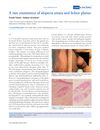 March 2019 in “Nasza Dermatologia Online”
 A man had both alopecia areata and lichen planus, which is uncommon.
 August 2017 in “International journal of research in dermatology”
 0.05% betamethasone dipropionate is the most effective treatment for mild alopecia areata.
 June 2017 in “Journal of clinical and investigative dermatology”
 Red blood cell folate levels are reliable indicators of long-term folate status in alopecia areata patients.
 June 2017 in “Journal of the American Academy of Dermatology”
 Tofacitinib is effective and safe for treating severe alopecia areata and related conditions.
 March 2017 in “The American Journal of Cosmetic Surgery”
 Transplanted hair follicles can resist hair loss from an autoimmune condition better than natural hair.
 January 2017 in “Archives of clinical and biomedical research”
 Enhancing melanin's energy generation may help treat alopecia areata.
Better models and evaluation methods for alopecia areata are needed.
 March 2016 in “West Indian medical journal”
 There is no significant link between alopecia areata and the PON1 enzyme polymorphisms studied.
Some vaccines, like the hepatitis B vaccine, might be linked to the hair loss condition Alopecia Areata, but more research is needed.