 March 2026 in “Journal of Nanobiotechnology”
 A new microneedle treatment can effectively repigment skin in vitiligo.
 February 2026 in “Frontiers in Medicine”
 Topical immunotherapy is still effective for managing alopecia areata, even with new treatments available.
 January 2026 in “Acta Dermatovenerologica Alpina Pannonica et Adriatica”
 Primary cicatricial alopecia causes permanent hair loss by destroying hair follicles, and its exact cause is unknown.
December 2025 in “Rare Metals” Smart biomaterials and dressings show promise in treating chronic skin diseases by improving drug delivery and minimizing side effects.
September 2025 in “Journal of Clinical Medicine” Elevated granulysin levels may indicate disease activity in vitiligo and alopecia areata.
 September 2025 in “Drug Design Development and Therapy”
 Combining platelet-rich products, biomaterials, and bioactive substances may improve skin treatment, but more research is needed.
April 2025 in “Journal of Dermatology for Physician Assistants” Vitiligo and alopecia should be covered by Medicaid and TRICARE as medical, not cosmetic, conditions.
 January 2025 in “Repository of the Academy's Library (Library of the Hungarian Academy of Sciences)”
 Nucleic acids trigger chemokine production in skin cells, affecting skin inflammation.
 December 2024 in “Clinical Cosmetic and Investigational Dermatology”
 Vitiligo often starts young, is linked to family history and stress, and requires comprehensive care including psychological support.

Early and accurate identification of primary scarring alopecias is crucial to prevent permanent hair loss.
 May 2024 in “Frontiers in Immunology”
 Type-2 immunity may influence skin diseases and could be targeted for treatment.
 April 2024 in “Nepal journal of dermatology, venereology & leprology”
 Vitamin D is important for skin health and can help treat and prevent various skin conditions.
 October 2023 in “Journal of Medicine, University of Santo Tomas (JMUST Online)”
 Elderly patients frequently suffer from skin conditions, especially inflammatory ones, highlighting the need for better healthcare.
October 2023 in “Journal of Integrative Medicine and Research” Vitiligo and lupus can occur together, requiring careful treatment to manage both conditions.
 August 2023 in “Revista Ibero-Americana de Humanidades, Ciências e Educação”
 People with skin conditions like psoriasis and eczema have higher anxiety levels.
 June 2023 in “Dermatology and Therapy”
 Using fractional CO2 laser with halometasone cream works better for chronic hand eczema than just the cream, improving symptoms and quality of life with fewer relapses.

People with chronic hives should be tested for thyroid autoimmunity to manage their condition better.

Lifestyle changes can improve skin health and reduce disease symptoms.
 October 2022 in “Dermatology practical & conceptual”
 People with hidradenitis suppurativa are more likely to have bipolar disorder than those with psoriasis or without skin conditions.

Certain gene variations and different levels of BDNF and CRH hormones are linked to vitiligo.
 November 2021 in “International Journal of Research in Medical Sciences & Technology”
 Skin surface chemistry and OCT can improve skin disease diagnosis.
 June 2020 in “International Journal of Research in Dermatology”
 Xerosis and wrinkling are common in elderly skin, but some conditions can be harmful.
 April 2020 in “IP Indian journal of clinical and experimental dermatology”
 Many children with alopecia areata also have other autoimmune diseases.
January 2020 in “JAAD case reports” Hair loss condition FFA was seen before the appearance of skin depigmentation vitiligo in a patient.
 January 2018 in “Elsevier eBooks”
 Different nail disorders are treated by targeting their specific causes and using appropriate medications or protective measures.
March 2017 in “Current dermatology reports” Topical JAK inhibitors can effectively treat alopecia areata and vitiligo by modulating immune responses.
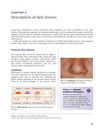
The document explains different types of skin lesions and their characteristics, causes, and related conditions.

Skin stem cells are crucial for maintaining and repairing skin, with potential for treating skin disorders and improving wound healing.
 June 2016 in “CRC Press eBooks”
 Sleep problems and skin issues affect each other; poor sleep can worsen skin conditions, and some skin treatments can improve or harm sleep quality.

Use the least toxic, most specific treatments for skin diseases, considering side effects and individual patient needs.