 December 2022 in “Research Square (Research Square)”
 The document concludes that an automatic system using deep learning can help diagnose skin disorders, but challenges and opportunities in this area remain.
 May 2020 in “Hair transplant forum international”
 The updated NPRT system now covers different types of hair loss in men and women.
 1 citations
,
September 2016 in “Hair transplant forum international”
1 citations
,
September 2016 in “Hair transplant forum international” Dr. Muhammad Ahmad created a simpler system to better describe male pattern hair loss.
26 citations
,
April 2010 in “The American journal of dermatopathology/American journal of dermatopathology” Researchers created a standard system to grade hair damage using microscopic images.
 11 citations
,
December 2018 in “Journal of Dermatology”
11 citations
,
December 2018 in “Journal of Dermatology” Finasteride effectively treats hair loss in Korean men for at least 5 years, with V type responding better.
 November 2009 in “Hair transplant forum international”
 Dr. Bernard Cohen created a new system to classify hair loss using numbers and a detailed scalp map.
7 citations
,
February 2023 in “Journal of Dermatological Treatment” The Scalp Photographic Index (SPI) is a reliable tool for assessing scalp conditions.

The system effectively detects scalp diseases and classifies hair fall stages with high precision.
 4 citations
,
June 2022 in “Clinical, cosmetic and investigational dermatology”
4 citations
,
June 2022 in “Clinical, cosmetic and investigational dermatology” The new SFS Scale predicts hair transplant difficulty using hair and skin types, with thick skin and coily hair being hardest to work with.
July 2024 in “Journal of Investigative Dermatology” Topical corticosteroids are recommended first for treating pediatric alopecia areata due to safety and ease of use.
 2 citations
,
March 2019 in “Lasers in surgery and medicine”
2 citations
,
March 2019 in “Lasers in surgery and medicine” Higher light doses cause more damage to hair follicles, predicting better hair removal results.
 September 2020 in “Hair transplant forum international”
 O'Tar T. Norwood was a key figure in creating a system to classify male baldness and founding hair restoration societies.
 September 2020 in “Medicina Moderna - Modern Medicine”
 A simple, cost-effective method to prepare high-quality PRP is suitable for smaller medical institutions.
 101 citations
,
January 2016 in “Journal of Cutaneous and Aesthetic Surgery”
101 citations
,
January 2016 in “Journal of Cutaneous and Aesthetic Surgery” Different types of hair loss need specific treatments, and while many classification systems exist, each has its flaws; more research is needed to refine these systems and treatments.
 1 citations
,
January 2017 in “Springer eBooks”
1 citations
,
January 2017 in “Springer eBooks” The document explains how hair loss patterns in men and women, known as Androgenetic alopecia, are classified using the Hamilton-Norwood system for men and the Ludwig grade system for women.
 January 2016 in “Springer eBooks”
 The document explains how hair loss in men and women, known as Androgenetic alopecia, is categorized using the Hamilton-Norwood system for men and the Ludwig grade system for women.
 348 citations
,
July 2017 in “Skin appendage disorders”
348 citations
,
July 2017 in “Skin appendage disorders” Platelet-rich plasma shows promise for skin and hair treatments but needs more research and standardization.
 13 citations
,
January 2015 in “Molecular Pharmaceutics”
13 citations
,
January 2015 in “Molecular Pharmaceutics” Minoxidil works well as a high permeability reference drug for biopharmaceutics classification.
 2 citations
,
January 2009 in “The Journal of Korean Medicine Ophthalmology and Otolaryngology and Dermatology”
2 citations
,
January 2009 in “The Journal of Korean Medicine Ophthalmology and Otolaryngology and Dermatology” Korean clinic alopecia patients were mostly 20-30 years old, had rapid onset, and showed different symptoms in men and women, with androgenic alopecia being the most common type.
October 2022 in “Hair Transplantation” Male pattern hair loss is mainly caused by genetics and hormones, especially DHT.
 May 2026 in “Zenodo (CERN European Organization for Nuclear Research)”
 Alopecia treatments are improving, but future therapies need to target underlying causes for better results.
 May 2026 in “Zenodo (CERN European Organization for Nuclear Research)”
 Alopecia treatments are improving, but future therapies need to target underlying causes for better results.
 50 citations
,
December 1998 in “Dermatologic Surgery”
50 citations
,
December 1998 in “Dermatologic Surgery” Hair loss is more common in men aged 18-49 and increases with age.
 October 2021 in “Journal of the European Academy of Dermatology and Venereology”
 There have been major advances in diagnosing and treating hair loss over the last 30 years, with new drugs and improved hair transplant techniques.
 9 citations
,
January 2017 in “International Journal of Trichology”
9 citations
,
January 2017 in “International Journal of Trichology” No current system perfectly classifies male-pattern hair loss, indicating a need for a new system for better diagnosis and treatment.
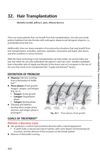 January 2018 in “Georg Thieme Verlag eBooks”
 Hair transplantation is a surgical procedure to move hair to bald areas, requires good donor hair, and results show in about a year.
26 citations
,
December 2022 in “Molecules” Nanotechnology can improve treatments for skin discoloration.
1 citations
,
June 2022 in “Pharmaceutics” Minoxidil's absorption is too variable for it to be a reliable reference drug.
 October 2023 in “Sinkron”
 The system can accurately classify hair diseases with 94.5% accuracy using a CNN.
15 citations
,
August 2020 in “Indonesian Journal of Electrical Engineering and Computer Science” The system can automatically classify scalp conditions with 85% accuracy.