 December 2025 in “International Journal of Research in Dermatology”
 The Ayurvedic treatment safely and effectively restores natural hair color by increasing black hair and reducing grey hair.
July 2023 in “European Journal of Medical and Health Research” Using bond-protecting additives with low-volume oxidants can safely lighten fine hair with less damage.
 13 citations
,
March 2020 in “Frontiers in cell and developmental biology”
13 citations
,
March 2020 in “Frontiers in cell and developmental biology” A substance called TCQA could potentially darken hair by activating certain genes and increasing melanin.

Hair fibers degrade and change color in very basic water.
May 2024 in “Cardiometry” Hair transplants can sometimes restore original hair color in gray or white hair.
40 citations
,
April 2020 in “International Journal of Multicultural Education” Addressing Koreanness in education is crucial for tackling racism and colorism in Korea.
 5 citations
,
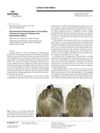
January 2015 in “Skin appendage disorders”
5 citations
,
January 2015 in “Skin appendage disorders” Colored hair-thickening fibers can help hide hair loss in some people with Epidermolysis Bullosa but may cause scalp irritation.
 November 2023 in “Journal of the American Academy of Dermatology”
 Skin of color can spontaneously repigment after a phenol-croton oil chemical peel.
17 citations
,
January 2015 in “Dermatology online journal” A patient's grey hair regained color during treatment with adalimumab.
15 citations
,
September 1970 in “Journal of Animal Science” Copper in the diet helps maintain hair color and mineral balance in calves.
94 citations
,
April 2018 in “Nature Genetics” New genetic locations explain much of hair color variation in Europeans.
14 citations
,
September 2017 in “Hereditas” Genes influence horse coat color and may help understand human skin conditions.
7 citations
,
March 1990 in “Pigment Cell Research” Certain chemicals cause hair graying in black mice but not yellow mice.
 January 1963 in “Stain technology”
 Ziehl-Neelsen's stain helps identify different parts of hair in sheep and goats.
 75 citations
,
January 2009 in “International journal of trichology”
75 citations
,
January 2009 in “International journal of trichology” Hair grays due to oxidative stress and fewer functioning melanocytes.
260 citations
,
January 2020 in “Nature” Stress can cause hair to turn gray by depleting stem cells.
 1 citations
,
September 2024 in “Quality in Sport”
1 citations
,
September 2024 in “Quality in Sport” Hair graying can be delayed or prevented with antioxidants, lifestyle changes, and genetic therapy.
March 2026 in “JAAD reviews.”  July 2025 in “Indian Journal of Forensic Medicine & Toxicology”
 DNA phenotyping can predict physical traits like eye, hair, and skin color, improving forensic investigations.
 September 2025 in “Journal of Science Innovations and Nature of Earth”
 Anthocyanins in berries and purple veggies offer health benefits but need better processing for full use.
2 citations
,
March 2020 in “Developmental cell” Stress can cause hair to turn gray by depleting pigment-producing cells through the release of a stress hormone.
1 citations
,
May 2012 in “Clinical and Experimental Dermatology” Iron can be present in hair color changes without overall iron deficiency.

MITF and WNT3A are key in Dun Mongolian horse pigmentation.
Tailored nonsurgical cosmetic procedures are crucial for safely treating diverse skin types, especially skin of color.
Accurate prediction of eye, hair, and skin color in Latin American populations requires region-specific models and ethical guidelines.
 205 citations
,
September 2018 in “Nutrients”
205 citations
,
September 2018 in “Nutrients” Essential oils from Curcuma species, like turmeric, have compounds that can fight inflammation, cancer, and bacteria, and can also stimulate hair regrowth in bald males.
73 citations
,
December 2015 in “Nature Genetics” Mutations in TBX3 cause horses to have more even hair color instead of Dun camouflage.
25 citations
,
May 2019 in “Cosmetics” 18-MEA and cationic surfactants can restore and maintain hair's hydrophobic nature, improving its beauty and feel.