February 2013 in “Journal of the American Academy of Dermatology” Uncombable hair syndrome causes dry, frizzy hair that can't be combed flat, seen in a young child.
62 citations
,
December 2008 in “Journal of structural biology” Hair curvature in Japanese people is linked to specific cell types and filament arrangements in the hair cortex.
 4 citations
,
April 2019 in “Cosmetics”
4 citations
,
April 2019 in “Cosmetics” Hair stiffness is higher when it has more para-like cortical cells.
 6 citations
,
January 2000 in “Dermatology”
6 citations
,
January 2000 in “Dermatology” A girl's severely tangled hair couldn't be fixed and had to be cut due to a rare condition called plica neuropathica.
 117 citations
,
November 2006 in “Experimental Dermatology”
117 citations
,
November 2006 in “Experimental Dermatology” The article concludes that the wool follicle is a valuable model for studying tissue interactions and has potential for genetic improvements in wool production.
 47 citations
,
June 1996 in “International Journal of Legal Medicine”
47 citations
,
June 1996 in “International Journal of Legal Medicine” Hair analysis for drugs needs a better understanding of how drugs enter hair, considering factors like hair structure and pigmentation.
 31 citations
,
March 2011 in “Dermatologic Surgery”
31 citations
,
March 2011 in “Dermatologic Surgery” The new hairline classification and correction methods can improve the appearance of Asian women with wide or M-shaped foreheads.
 16 citations
,
December 2016 in “Dermatologic Surgery”
16 citations
,
December 2016 in “Dermatologic Surgery” Higher scalp elasticity leads to wider scars after hair transplantation; a new method to measure elasticity may help predict scar size.
 14 citations
,
April 2019 in “Genes”
14 citations
,
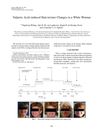
April 2019 in “Genes” Researchers found a genetic region that influences the number of coat layers in dogs.
 13 citations
,
January 2007 in “Epilepsia”
13 citations
,
January 2007 in “Epilepsia” Valproic acid can cause reversible hair curling and persistent hair thinning.
 5 citations
,
June 2016 in “Twin research and human genetics”
5 citations
,
June 2016 in “Twin research and human genetics” Hair diameter and curvature are mostly determined by genetics.
 4 citations
,
June 2022 in “Clinical, cosmetic and investigational dermatology”
4 citations
,
June 2022 in “Clinical, cosmetic and investigational dermatology” The new SFS Scale predicts hair transplant difficulty using hair and skin types, with thick skin and coily hair being hardest to work with.
 1 citations
,
January 2021 in “Skin appendage disorders”
1 citations
,
January 2021 in “Skin appendage disorders” Chemotherapy patients don't all lose their hair due to factors like hair growth rates, age, genetics, and the type of drugs used.
 1 citations
,
October 2012 in “The Journal of Dermatology”
1 citations
,
October 2012 in “The Journal of Dermatology” A Korean girl developed kinky hair without known cause or effective treatment.
 March 2026 in “The Indian Journal of Animal Sciences”
 All Indian dromedary camel breeds have the same KRTAP7 gene affecting hair quality.
 November 2022 in “Research Square (Research Square)”
 Keratin-associated proteins have ancient origins and were used for different purposes before being adapted for hair in mammals.
1 citations
,
March 2025 in “Journal of Society of Cosmetic Chemists of Japan” BECD helps straighten wavy hair by reducing undulation.
September 2025 in “Cosmetics” Lipid content and structure affect water absorption in different hair types.
12 citations
,
July 2015 in “British journal of dermatology/British journal of dermatology, Supplement” Curly hair breaks due to mechanical damage and environmental factors, not chemical makeup, and needs ongoing care to prevent breakage.
 February 2019 in “PubMed”
 The research found that twisting hair fibers can show changes in stiffness and damage, and help tell apart different hair treatments.
 February 2019 in “IP Indian journal of clinical and experimental dermatology”
 Continuous use of hair relaxers and curlers can cause hair loss, dryness, dandruff, thinning, greying, and split ends.
2 citations
,
June 2023 in “International Journal of Women’s Dermatology” Coily/curly hair products cost more than straight hair products, highlighting a need for fair pricing.
 6 citations
,
December 2011 in “Clinical and Experimental Dermatology”
6 citations
,
December 2011 in “Clinical and Experimental Dermatology” A woman developed rare, unexplained curly hair on her scalp and eyelashes.
27 citations
,
September 1988 in “PubMed” Hair follicle shape determines hair type: curly, straight, or in-between.
13 citations
,
March 2017 in “Skin Research and Technology” Formaldehyde damages curly hair more than glyoxylic acid.
 July 2026 in “Preprints.org”
 A cysteamine-derived compound helps hair stay straight in high humidity.
 January 2026 in “Biomedical and Biopharmaceutical Research”
 Pequi and buriti oils improve curly hair's gloss and strength.
35 citations
,
September 2003 in “Archives of dermatology” Tiger tail bands in hair are caused by wavy hair fibers with melanin, unlike straight fibers in normal hair.
97 citations
,
March 2010 in “The American Journal of Human Genetics” A mutation in the KRT74 gene causes tightly curled hair.
 March 2005 in “International Journal of Cosmetic Science”
 A new method helps understand hair shine and various products improve hair care.