3 citations
,
July 2023 in “International Journal of Trichology” DPCP can help regrow hair in some people with severe alopecia.
May 2022 in “Голова и шея.” Checkpoint inhibitor therapy can cause skin issues, from mild rashes to severe reactions.
Loss of the p53 gene alone causes tumors, and losing both p53 and Rb genes speeds up aggressive skin cancer.
56 citations
,
January 2004 in “Journal of the American Academy of Dermatology” Cyclosporine can cause a unique skin condition called "cyclosporine-induced folliculodystrophy."
May 2026 in “Carbohydrate Polymer Technologies and Applications” The formulation effectively promotes hair growth with low systemic exposure.
2 citations
,
April 2023 in “American Journal of Dermatopathology” CCCA may involve the PD1/PDL1 pathway and increased caspase 3, leading to permanent hair loss.
23 citations
,
October 2008 in “Journal of medicinal chemistry” PF-998425 is a new, effective, and non-phototoxic treatment for skin conditions related to androgens.
 April 2025 in “International Journal of Cosmetic Science”
 A new hair perming method avoids damage and lasts longer than traditional methods.
 30 citations
,
April 2010 in “Cell Cycle”
30 citations
,
April 2010 in “Cell Cycle” The gene p53 is crucial for removing damaged cells to allow for healthy tissue renewal.
 January 2016 in “SpringerBriefs in bioengineering”
 Genetic defects and UV radiation cause skin damage and aging.
21 citations
,
May 2014 in “Toxicological Sciences” Toluene diisocyanate exposure can cause immune sensitization by interacting with proteins in hair follicles and sebaceous glands.
7 citations
,
January 2002 in “PubMed” Prolonged UVB exposure causes significant skin changes and damage in rats.
Deleting the MAD2L1 gene in mice led to rapid tumor growth despite chromosomal instability.
132 citations
,
January 1987 in “Annals of Internal Medicine” Methimazole may cause skin defects in babies if taken during pregnancy.
August 2019 in “Anais Brasileiros de Dermatologia”  2 citations
,
October 1990 in “The Lancet”
2 citations
,
October 1990 in “The Lancet” Some people have a genetic variation that makes them less effective at breaking down drugs.
35 citations
,
August 2016 in “Experimental Dermatology” Fullerene C60 shows promise as a new treatment for various skin conditions.
January 2026 in “RSC Medicinal Chemistry” 2,5-DBH shows promise for improving drugs in cancer, brain disorders, and infections.
1 citations
,
March 2004 in “Patty's Toxicology” These chemicals can be toxic and cause health issues like irritation, liver damage, and cancer.
December 2023 in “International Journal of Dermatology” 2 citations
,
April 2021 in “International Journal of Cosmetic Science” The sunscreen with two antioxidants offers quick and lasting skin protection from sun damage.
 39 citations
,
January 2015 in “Annals of dermatology/Annals of Dermatology”
39 citations
,
January 2015 in “Annals of dermatology/Annals of Dermatology” Three new types of a skin blistering disease were found, caused by specific gene mutations.
 January 2004 in “Analytical Sciences: X-ray Structure Analysis Online”
 The document explains how to make a compound called 3.BETA.-Benzoyloxy-4-pregnen-16.ALPHA.,17.ALPHA.-epoxy-6,20-dione and describes its crystal structure.
 14 citations
,
October 2003 in “Annals of Oncology”
14 citations
,
October 2003 in “Annals of Oncology” About half the patients treated with capecitabine and docetaxel developed severe hand-foot syndrome.
Mdm2 is crucial for controlling p53 to maintain healthy cells and prevent tumors.
New steroid derivatives show promise as anticancer agents, even against resistant cells.
 2 citations
,
August 2013 in “British Journal of Dermatology”
2 citations
,
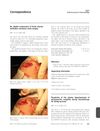
August 2013 in “British Journal of Dermatology” Chemotherapy improved a girl's painful foot condition linked to pachyonychia congenita.
A new genetic mutation was found causing hair and eye issues in a boy.
 April 2017 in “Journal of Investigative Dermatology”
  9 citations
,
November 2021 in “Frontiers in Cell and Developmental Biology”
9 citations
,
November 2021 in “Frontiers in Cell and Developmental Biology” PBX1 helps reduce aging and cell death in hair follicle stem cells by decreasing DNA damage, not by improving DNA repair.