7 citations
,
August 2021 in “Pharmaceutics” Freeze-dried dexamethasone nanoparticles in a hydrogel are stable and effective for treating alopecia areata.
September 2025 in “Chemical Engineering Journal” A new sustainable polyester is tough, recyclable, biodegradable, and aids wound healing, supporting a circular economy.
 1 citations
,
January 2024 in “Scientific reports (Nature Publishing Group)”
1 citations
,
January 2024 in “Scientific reports (Nature Publishing Group)” Human hair was used to make biodegradable plastic films that could be useful for packaging and disposable products.
 June 2025 in “Natural Product Communications”
 Researchers created 10 new compounds similar to cercidin, which could lead to new antibiotics.
 1 citations
,
April 2023 in “Biomaterials advances”
1 citations
,
April 2023 in “Biomaterials advances” Gellan gum hydrogels help recreate the environment needed for hair growth cell function.
 7 citations
,
May 2016 in “European Polymer Journal”
7 citations
,
May 2016 in “European Polymer Journal” The new nanocarriers improve how well water-insoluble drugs dissolve and allow for controlled drug release.
 13 citations
,
July 2017 in “Biopolymers”
13 citations
,
July 2017 in “Biopolymers” Recombinant keratins can form useful structures for medical applications, overcoming natural keratin limitations.
Glycogen helps E. coli cells divide unevenly and organize their contents.
53 citations
,
March 2006 in “Biopolymers” TTD hair is brittle due to fewer sulfur amino acids and unstable disulfide bonds.
51 citations
,
September 2012 in “Biomacromolecules” Disulfide bonds make keratin in hair stronger and tougher.
8 citations
,
May 2025 in “Biomimetics” Cellulose nanofibers are promising for wound dressings due to their healing and drug delivery benefits.
November 2025 in “ACS Omega” The films can help heal wounds by promoting blood vessel growth.
 April 2026 in “Pharmaceutics”
 Cellulose-based skin dressings show promise for wound healing but need more research and clinical trials.
13 citations
,
April 1997 in “Biochemical and Biophysical Research Communications” Insulin-dependent diabetes alters hair's molecular structure, making it useful for studying diabetes effects.
January 2016 in “Frontiers in Bioengineering and Biotechnology” Keratin-based hydrogels can be improved for medical use by adding PEG, making them more soluble and adjustable.
25 citations
,
January 2024 in “Journal of Lipids” Cubosomes improve drug delivery for skin and eye diseases by enhancing adhesion, retention, and release.
2 citations
,
January 2014 Improved methods create smaller, more effective gelatin nanoparticles for skin delivery, and new caffeine nanocrystals enhance absorption and effectiveness.
130 citations
,
December 2022 in “Antioxidants” Natural polysaccharides have strong antioxidant properties that help fight diseases like Alzheimer's, diabetes, and heart disease.
Extracted pectin from immature durian shows potential for use in cosmetics due to its strong antioxidant and protective properties.
24 citations
,
June 2003 in “Journal of Structural Biology” Sheet formation is key to macrofibril structure differences in wool.
39 citations
,
June 2012 in “Journal of Structural Biology” Disulfide bonds are crucial for hair structure during keratinization.
 June 2022 in “Scientific Reports”
 Prevelex, a polyampholyte, can create a cell-repellent coating on microdevices, which can be useful in biomedical applications like hair follicle regeneration.
12 citations
,
March 2022 in “Antioxidants” Encapsulated tamarillo polyphenols in cubosomes improve yoghurt's nutrition and stability.
August 2024 in “International Journal of Biological Macromolecules” New gels using cellulose nanocrystals effectively deliver minoxidil to hair follicles, promoting hair regrowth.
 August 2025 in “ChemPhotoChem”
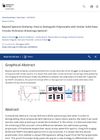
 A new method using solid-state circular dichroism anisotropy can distinguish similar chiral compounds better than traditional techniques.
106 citations
,
December 2015 in “Biomacromolecules” Keratin hydrogels can be customized for better tissue healing.

Polydopamine is promising for personalized medicine and biomedical technology due to its strong adhesion and biocompatibility.
61 citations
,
January 2013 in “International Journal of Biological Macromolecules” Combining DHT and EDC improves the strength and stability of PADM scaffolds for tissue engineering.

Stiffness gradients in alginate gels can guide cancer cell invasion and study cellular behaviors.