 39 citations
,
January 2015 in “International journal for parasitology/International Journal for Parasitology”
39 citations
,
January 2015 in “International journal for parasitology/International Journal for Parasitology” Epidermal keratinocytes start wound healing and inflammation after schistosome infection.
41 citations
,
July 2016 in “Journal of Investigative Dermatology” Dysplastic nevi have unique gene expressions, making them distinct from common melanocytic nevi.
 29 citations
,
April 2020 in “Journal of Tissue Engineering and Regenerative Medicine”
29 citations
,
April 2020 in “Journal of Tissue Engineering and Regenerative Medicine” The experiment showed that human skin grown in the lab started to form early hair structures when special cell clusters were added.
 4 citations
,
December 2020 in “Scientific Reports”
4 citations
,
December 2020 in “Scientific Reports” The plant extract mixture improves skin health by reducing inflammation, boosting collagen, and supporting anti-aging.
 December 2023 in “Communications biology”
 Targeting the HEDGEHOG-GLI1 pathway could help treat keloids.
July 2022 in “Journal of Investigative Dermatology” Arg1+ macrophages may play a role in Alopecia Areata, offering new treatment targets.
April 2021 in “Journal of Investigative Dermatology” Arg1+ macrophages may play a role in causing alopecia areata.
 April 2016 in “Plastic and reconstructive surgery. Global open”
 Tafluprost could be a potential treatment for hair loss by promoting hair growth phase changes.
 144 citations
,
September 2012 in “Genes & development”
144 citations
,
September 2012 in “Genes & development” Aging causes skin stem cells to work less effectively.
9 citations
,
February 2002 in “PubMed” A new gene mutation causes hereditary coproporphyria with reduced enzyme activity.
4 citations
,
December 2016 in “Blood” A new gene mutation may cause cyclic thrombocytopenia by affecting platelet production.
 1 citations
,
April 2023 in “International Journal of Molecular Sciences”
1 citations
,
April 2023 in “International Journal of Molecular Sciences” Botryococcus terribilis Ethanol Extract may reduce inflammation by changing gene expression in cells.
 7 citations
,
January 2021 in “The journal of gene medicine”
7 citations
,
January 2021 in “The journal of gene medicine” Certain genetic differences may affect how likely someone is to get COVID-19 and how severe it might be.
January 2007 in “E-Deusto: conocimiento para ir por delante” The study provided insights into burn healing and scarring, aiding future treatment development.
January 2026 in “Metabolites” Obesity may weaken the immune system and increase cancer risk.
79 citations
,
January 2019 in “International Journal of Molecular Sciences” Burn injuries in mice heal similarly to humans, with inflammation and cell changes normalizing over time.
21 citations
,
December 2023 in “Bioengineering & Translational Medicine” Fibroblast and endothelial cell interactions are crucial in forming hypertrophic scars.
5 citations
,
June 2022 in “Journal of Oncology” Blocking the Hedgehog pathway may help overcome drug resistance in multiple myeloma.
 2 citations
,
May 2021 in “Bioengineering”
2 citations
,
May 2021 in “Bioengineering” Blood stem cells are diverse, influenced by many factors, and understanding them is key for progress in regenerative medicine.
2 citations
,
November 2019 in “International Journal of Dermatology and Venereology” Chronic autoimmune urticaria can be managed with specific therapies and requires improved diagnosis and treatment methods.
15 citations
,
December 2018 in “International journal of environmental research and public health/International journal of environmental research and public health” EGCG may help treat alopecia areata by blocking certain immune responses and reducing specific harmful immune cells.
9 citations
,
September 2024 in “Journal of Clinical Medicine” Hidradenitis suppurativa is linked to autoinflammation and immune system issues.
 August 2025 in “Research Square (Research Square)”
 High TNF-α levels may increase hair loss risk after PRP therapy.
44 citations
,
April 2023 in “Genes & Diseases” Mesenchymal stem cells release substances that help tissue repair, and their effectiveness can be improved by understanding environmental influences.
 100 citations
,
November 1996 in “Molecular Medicine Today”
100 citations
,
November 1996 in “Molecular Medicine Today” Growth factors and cytokines are important for hair growth and could potentially treat hair loss, but more research is needed to overcome challenges before they can be used in treatments.
 3 citations
,
February 2019 in “Animal biotechnology”
3 citations
,
February 2019 in “Animal biotechnology” The PLP2 gene affects cashmere fiber quality in goats and is linked to hair growth and loss.
 68 citations
,
November 2015 in “The Journal of Allergy and Clinical Immunology”
68 citations
,
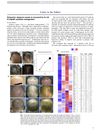
November 2015 in “The Journal of Allergy and Clinical Immunology” Blocking IL-12/IL-23p40 helped reverse severe hair loss in patients.
 28 citations
,
November 2019 in “Gene”
28 citations
,
November 2019 in “Gene” The ITGB6 gene is important for tissue repair and hair growth, and mutations can lead to enamel defects and other health issues.
 19 citations
,
December 2015 in “Journal of Materials Chemistry B”
19 citations
,
December 2015 in “Journal of Materials Chemistry B” Scientists have created a method to deliver specific cells that can regenerate hair follicles, potentially offering a new treatment for hair loss.
 17 citations
,
December 2001 in “Journal of Investigative Dermatology”
17 citations
,
December 2001 in “Journal of Investigative Dermatology” The osteopontin gene is active in a specific part of rat hair follicles during a certain hair growth phase and might affect hair cycle and diseases.