February 2024 in “Al-Azhar International Medical Journal /Al-Azhar International Medical Journal” Betamethasone lotion works better for patchy hair loss.
 May 2026 in “Frontiers in Immunology”
 Bimekizumab effectively treats scalp cellulitis and improves quality of life.
 February 2018 in “The Journal of Sexual Medicine”
 DA-9401 protects against hair loss, improves organ function, and prevents infertility caused by finasteride.
 April 2024 in “Meždunarodnyj vestnik veterinarii”
 Deltsid 7.5 is the most effective treatment for bovine psoroptosis.
13 citations
,
January 2010 in “Immunopharmacology and immunotoxicology” Diphencyprone increases Bcl-2 protein in patients with hair regrowth from alopecia areata.
39 citations
,
January 2017 in “Dermatologic Therapy” Topical calcipotriol may help treat alopecia areata, especially in those with low vitamin D.
 1 citations
,
April 2022 in “Rheumatology”
1 citations
,
April 2022 in “Rheumatology” Juvenile dermatomyositis can worsen quickly and needs strong treatment.
January 2022 in “Drugs of Today”  1 citations
,
January 2005 in “Side effects of drugs annual”
1 citations
,
January 2005 in “Side effects of drugs annual” The document concluded that various dermatological treatments have different effectiveness and side effects, with some causing irritation, allergic reactions, or systemic effects.
December 2025 in “JEADV Clinical Practice” These new skin treatments are safer and more effective with minimal side effects.
37 citations
,
September 2009 in “JEADV. Journal of the European Academy of Dermatology and Venereology/Journal of the European Academy of Dermatology and Venereology” Diphencyprone (DPC) is an effective and safe long-term treatment for alopecia areata, especially with maintenance therapy.
 23 citations
,
December 2004 in “Seminars in oncology”
23 citations
,
December 2004 in “Seminars in oncology” Liposomal anthracyclines are effective and safer for treating multiple myeloma, especially in elderly patients.
 119 citations
,
July 2016 in “Annals of the New York Academy of Sciences”
119 citations
,
July 2016 in “Annals of the New York Academy of Sciences” Vitamin D has potential benefits for cancer prevention, heart health, diabetes, obesity, muscle function, skin health, and immune function, but clinical results are mixed and more research is needed.
 July 2016 in “Dermatologie pro praxi”
 Espumil foam base allows easy preparation of skin medications for hairy areas.
14 citations
,
January 2016 in “Annals of dermatology/Annals of Dermatology” Oral cyclosporine is more effective and safer than betamethasone for treating alopecia areata.
2 citations
,
September 2024 in “Journal of the American Academy of Dermatology”  August 2024 in “JAMA Dermatology”
 Continuous baricitinib is needed to keep hair regrowth in severe alopecia areata.
4 citations
,
September 2025 in “Journal of the American Academy of Dermatology” 19 citations
,
December 1999 in “International Journal of Dermatology” Dihydroxyacetone in self-tanning lotion helped reduce sun-related skin issues in a woman with variegate porphyria.
 39 citations
,
August 2022 in “Cell Death and Disease”
39 citations
,
August 2022 in “Cell Death and Disease” DA-MeHA hydrogel effectively aids stem cell-based skin regeneration.
November 2023 in “Veterinary Dermatology”  6 citations
,
February 2023 in “Advances in Therapy”
6 citations
,
February 2023 in “Advances in Therapy” Baricitinib, a drug for rheumatoid arthritis, atopic dermatitis, and alopecia areata, is generally safe with low risk of major side effects, even in patients with risk factors. It's also effective in promoting hair regrowth in alopecia areata patients.
 1 citations
,
June 2018 in “International Journal of Dermatology”
1 citations
,
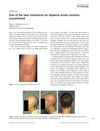
June 2018 in “International Journal of Dermatology” DNCB is highly effective for treating alopecia areata with minimal long-term side effects.
 September 2019 in “Journal of Investigative Dermatology”
 Abrocitinib at 100 mg and 200 mg daily may significantly improve moderate-to-severe atopic dermatitis in patients 12 years and older.
December 2024 in “Dermatology”  April 2023 in “Journal of Investigative Dermatology”
 Long-term Imiquimod treatment causes initial skin inflammation that lessens over time, and topical corticosteroids reduce this inflammation and cytokines in a mouse model of psoriasis.
11 citations
,
February 2022 in “JAAD case reports” Abrocitinib, a JAK inhibitor, may help treat atopic dermatitis and alopecia universalis together.
Diane and Androcur 10 improved acne and seborrhea in most women, and hirsutism and alopecia in about half.
 9 citations
,
August 2002 in “Current Opinion in Pediatrics”
9 citations
,
August 2002 in “Current Opinion in Pediatrics” An 18-year-old girl with pemphigus vulgaris needed strong medication and careful treatment due to ineffective initial therapies and side effects.
 47 citations
,
July 2005 in “British Journal of Dermatology”
47 citations
,
July 2005 in “British Journal of Dermatology” Topical vitamin D3 does not prevent hair loss from chemotherapy.