Search
for
Sort by
Research
30-60 / 1000+ resultsresearch 44180 Influence of Baseline Disease Severity Defined by Investigator’s Global Assessment on Abrocitinib Efficacy for up to 96 Weeks in Patients With Moderate-to-Severe Atopic Dermatitis: Interim Analysis of JADE EXTEND, a Long-Term Extension Study
research Dysmorphic Concern Questionnaire: Greek Translation, Validation and Psychometric Properties
The Greek DCQ is a reliable and valid tool for assessing dysmorphic concern.
research POSTTEST: EXPIRATION DATE: OCTOBER 2011
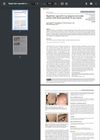
research Rapid hair regrowth in an alopecia universalis patient with deucravacitinib: A case report
A new treatment called deucravacitinib helped a patient with severe hair loss grow their hair back quickly.
research Hair regrowth in a patient with alopecia universalis and psoriasis vulgaris during deucravacitinib therapy
Deucravacitinib helped a man regrow hair significantly.
research Review of Promising Off-Label Use of Deucravacitinib
Deucravacitinib may help treat various immune diseases beyond psoriasis, but more research is needed.
research TOPICAL IMMUNOTHERAPY IN DERMATOLOGY
Diphencyprone (DCP) is an effective treatment for severe alopecia areata and resistant warts, with some risks.
research ODAC Chairs Reveal Challenges, High Drama in a Decade of Service
ODAC members faced intense pressure but prioritized scientific evidence in drug approval decisions.
research Complete hair regrowth in a patient with severe alopecia areata treated with deucravacitinib
Deucravacitinib led to full hair regrowth in a severe alopecia areata patient.
research Adalimumab improves health-related quality of life (HRQoL) in patients with moderate to severe hidradenitis suppurativa (HS): Results from the first 12 weeks of PIONEER II
Adalimumab significantly improves quality of life for patients with moderate to severe hidradenitis suppurativa.
research Delphi Consensus on Attenuated Androgen Use for Long‐Term Prophylaxis in Hereditary Angioedema: AURA Project
The consensus provides guidelines for safely stopping danazol in hereditary angioedema treatment.
research Unconventional medicine in dermatology outpatients in Turkey
About one-third of dermatology patients in Ankara, Turkey use unconventional treatments for skin issues.
research Promotion of Skin Carcinogenesis by Dimethylarsinic Acid in Keratin (K6)/ODC Transgenic Mice
Dimethylarsinic acid speeds up skin tumor growth in certain mice.
research 1378 CHARATERISTICS OF PATIENTS ON NON-DAILY AND DAILY DUTASTERIDE COMPARED TO PATIENTS CYTOREDUCTION NAIVE
Non-daily Dutasteride is more cost-effective and has lower cancer incidence than daily treatment.
research Acrodermatitis Dysmetabolica with Concomitant Acquired Acrodermatitis Enteropathica in a Patient with Maple Syrup Urine Disease
MSUD patients need careful monitoring of amino acids and zinc to prevent severe symptoms.
research A University Center for the Performing Arts
Familial dyskeratotic comedones are a rare, inherited skin condition that is hard to treat but may improve slightly with topical retinoids and urea cream.
research Economic Impact of Home-Use versus Office-Use Diphenylcyclopropenone in Extensive Alopecia Areata
Home-use treatment for severe alopecia areata is as effective as office-use but costs half as much.
research Deteksi Jamur Dermatophyta pada Helm Penumpang Ojek Online di Stasiun Tugu Yogyakarta
Many helmets from online motorcycle taxis in Yogyakarta have harmful fungi.
research Yangxuebushen Decoction prevents cyclophosphamide-induced hair loss by inhibiting hair follicle apoptosis
Yangxuebushen Decoction helps prevent hair loss from chemotherapy.
research Evaluation of the efficacy of intervention in the management of AD chronic disease based on the theory of “prevention of the recrudescence of disease”
The ginseng cicada decoction effectively reduces atopic dermatitis symptoms and improves quality of life safely.

research Efficacy, Safety, and Tolerability of Upadacitinib in Adults and Adolescents With Severe Alopecia Areata: Results From the Randomized, Placebo-Controlled, Double-Blind Phase 3 Program (UP-AA)
Upadacitinib effectively treats severe alopecia areata and is safe.
research A pan-European register-based observational study of abrocitinib and conventional systemic therapies in moderate and severe atopic dermatitis: the DREAM TO TREAT AD study protocol
Abrocitinib is being evaluated for safety and effectiveness in treating moderate to severe atopic dermatitis.
research Severe dermographism after topical therapy with diphenylcyclopropenone for alopecia universalis
A man developed severe skin reactions after using a treatment for hair loss.
research Pharmacological Profile of Yashtimadhu in Urdwajaturu Vikara - A Synergistic View of Ayurveda and Modern Science
Yashtimadhu effectively supports head and neck health with its healing and anti-inflammatory properties.
research Review of Pippalyadi Agad in Cumulative Toxicity of Cosmetics w.s.r. to Dushivisha
Pippalyadi Agad may help counteract harmful effects of toxic cosmetics.
research Efficacy of diphenylcyclopropenone in alopecia areata: a comparison of two treatment regimens
Treating alopecia areata every 3 weeks with diphenylcyclopropenone is more effective than weekly treatments.
research Improvement of Recalcitrant Dissecting Cellulitis of the Scalp After a Trial of Upadacitinib
Upadacitinib significantly improved a man's severe scalp condition when other treatments failed.
research Outbreak of recombinant lumpy skin disease virus in yaks: high mortality and systemic pathogenesis in Qinghai-Tibet Plateau yak herds
A severe virus outbreak in yaks on the Qinghai-Tibet Plateau caused high death rates and requires targeted control measures.