August 2004 in “Veterinary Dermatology” Cats with internal diseases can develop skin issues that may require specific treatments.
16 citations
,
April 1998 in “Journal of Investigative Dermatology” ACTH promotes hair growth in mink, but α-MSH does not.
1 citations
,
October 1996 in “Dermatologic clinics” Adiponectin reduces inflammation and bone loss in joint replacements.
 June 2017 in “Acta Scientiae Veterinariae”
 A cat with a rare pancreatic tumor and diabetes died despite treatment, showing similar symptoms to a human condition.
 September 2019 in “Asian Journal of Pharmaceutical and Clinical Research”
 Teak seed extract is safe and reduces pain in mice.
 April 2017 in “The journal of investigative dermatology/Journal of investigative dermatology”
 HSD11b1 affects skin nerves and increases non-histaminergic itch.
 6 citations
,
October 2012 in “Journal of Heredity”
6 citations
,
October 2012 in “Journal of Heredity” The Itpr3 gene causes a specific hair pattern in mice.
 27 citations
,
January 2012 in “Current Topics in Microbiology and Immunology”
27 citations
,
January 2012 in “Current Topics in Microbiology and Immunology” Mice that can regenerate tissue have cells that pause in the cell cycle, which is important for healing, similar to axolotls.
3 citations
,
March 2023 in “Annals of the New York Academy of Sciences” Mutations in claudin-1 and claudin-3 cause hair loss in baby mice.
29 citations
,
June 2014 in “Experimental Cell Research” EGF–FGF2 helps mouse stem cells grow and become more like nerve cells.
 1 citations
,
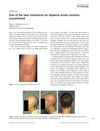
June 2018 in “International Journal of Dermatology”
1 citations
,
June 2018 in “International Journal of Dermatology” DNCB is highly effective for treating alopecia areata with minimal long-term side effects.
 March 2025 in “Buletin Veteriner Udayana”
 The cat's scabies and pneumonia improved significantly with treatment.
October 2021 in “bioRxiv (Cold Spring Harbor Laboratory)” A small BOTOX dose improved sperm production and movement in older mice.
 13 citations
,
August 1995 in “The Journal of Steroid Biochemistry and Molecular Biology”
13 citations
,
August 1995 in “The Journal of Steroid Biochemistry and Molecular Biology” The activity of a specific rat enzyme in the prostate and epididymis is highly dependent on the acidity level.
 3 citations
,
February 2019 in “Disease Markers”
3 citations
,
February 2019 in “Disease Markers” The index to ring finger ratio may indicate disease severity in female ankylosing spondylitis patients, but not in males.
February 1999 in “The anatomical record” Two mouse mutants have defective hair cuticle cross-linking.
 January 2014 in “Journal of Clinical and Investigative Dermatology”
 Young rats are better for testing hair loss treatments after chemotherapy.
 100 citations
,
May 2003 in “Journal of Neuroscience”
100 citations
,
May 2003 in “Journal of Neuroscience” Neuroactive steroids affect cocaine's rewarding effects through the ς1 receptor.
 June 2025 in “Journal of the Pakistan Medical Association”
 2dDR may help regrow hair in male pattern baldness.
14 citations
,
July 2007 in “Lupus” Multiple pregnancies prevent skin disease but worsen kidney disease in certain mice.
 20 citations
,
May 1985 in “British journal of nutrition”
20 citations
,
May 1985 in “British journal of nutrition” Dietary essential fatty acids improved skin and hair conditions and partially corrected fat composition in diabetic mice.
 April 2019 in “Journal of Investigative Dermatology”
 The search scheme SMRI is faster and more secure for retrieving encrypted data from the cloud.
April 2019 in “The journal of investigative dermatology/Journal of investigative dermatology” Spiny mice regenerate skin better than laboratory mice due to larger hair bulges, more stem cells, and different collagen ratios.
 April 2021 in “Journal of Investigative Dermatology”
 Cyclooxygenase-2 overexpression in mice skin causes hair loss like human androgenetic alopecia.
 April 2024 in “Meždunarodnyj vestnik veterinarii”
 Deltsid 7.5 is the most effective treatment for bovine psoroptosis.
 19 citations
,
November 1993 in “Mammalian Genome”
19 citations
,
November 1993 in “Mammalian Genome” A gene mutation in mice causes permanent hair loss and skin issues.
October 2025 in “Brazilian Journal of Veterinary Research and Animal Science” Neotropical porcupines can get co-infected with poxvirus and Toxoplasma gondii.
 1 citations
,
January 2020 in “Benha Journal of Applied Sciences”
1 citations
,
January 2020 in “Benha Journal of Applied Sciences” Certain gene variations may increase the risk and severity of alopecia areata.