6 citations
,
April 2025 in “Food Bioscience” Fish scale collagen peptide speeds up wound healing effectively.
5 citations
,
January 2025 in “BMC Medical Informatics and Decision Making” Computer vision techniques can help detect and assess skin conditions like vitiligo, alopecia areata, and dermatitis.
5 citations
,
January 2021 in “PeerJ” Elephant tail-hair can show past stress levels, matching times when stressful events happened.
3 citations
,
August 2024 in “Applied Sciences” A web platform was created to help diagnose scalp conditions accurately and easily.
 3 citations
,
January 2021
3 citations
,
January 2021 Non-surgical treatments like thread lifts, PRP therapy, HIFU, and radiofrequency effectively rejuvenate and tighten facial skin.
2 citations
,
November 2025 in “Briefings in Bioinformatics” Data-driven methods can effectively identify existing drugs for new uses, especially in cancer, infections, and respiratory diseases.
2 citations
,
July 2024 in “Journal of Clinical Medicine” Telemedicine is effective for managing alopecia areata follow-ups.
 2 citations
,
May 2022 in “Cosmetics”
2 citations
,
May 2022 in “Cosmetics” Further research is needed to understand how the microbiome affects hair loss in Alopecia Areata.
1 citations
,
January 2026 in “JAMA Network Open” Asian women with breast cancer experience the highest rates of long-term hair loss and related distress after chemotherapy.
1 citations
,
July 2025 in “Stem Cell Research & Therapy” Stem cell technology may improve hair loss treatments by providing more effective and personalized options.
 June 2026 in “International Journal of Molecular Sciences”
 Black Ginseng Concentrate may help treat hair loss by improving cell function and reducing stress.
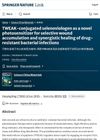 March 2026 in “Science China Materials”
 SeV-Tp speeds up healing of drug-resistant infections by targeting wounds and killing bacteria with light activation.
February 2026 in “Chemical Engineering Journal” PCA hydrogel promotes hair growth by enhancing blood vessel formation and hair follicle stem cell activity.
January 2026 in “Microsystems & Nanoengineering” New technologies replicate human skin for testing without animals.
January 2026 in “Cytokine” January 2026 in “Open Science Framework” AI in alopecia research needs better tools for predicting treatment outcomes and ensuring fairness.
October 2025 in “Animals” Blue light masks improved coat condition and energy in horses with PPID.
August 2025 in “IntechOpen eBooks” Long COVID affects many survivors with ongoing symptoms, needing more research and care.
July 2025 in “Preprints.org” Specific miRNA profiles can help diagnose and treat alopecia areata.
 May 2025 in “Journal of Nanobiotechnology”
 The gel improves hair regrowth and reduces irritation in alopecia areata treatment.
May 2025 in “Phytomedicine” Qu-shi-yu-fa Decoction may help treat hair loss by promoting hair growth and strengthening.
May 2025 in “Preprints.org” Unique microRNA patterns can help diagnose and treat severe alopecia areata.

Regenerative cosmetics can improve skin and hair by reducing wrinkles, healing wounds, and promoting hair growth.

Melatonin and photobiomodulation are effective for treating Alopecia X in German Spitz dogs.
Aesthetic rehabilitation techniques can improve life quality and wellbeing for disabled patients.
March 2024 in “Nutrients” Alopecia Areata is linked to specific gut bacteria and metabolites, indicating a complex gut microbiome.
 March 2024 in “International Journal of Cosmetic Science”
 Dandruff is linked to increased T cells and weakened immune protection in hair follicles.
 May 2023 in “Stem cell research & therapy”
 New method efficiently isolates hair growth cells from newborn mouse skin.
 July 2021 in “Open access journal of biomedical science”
 A lotion with natural extracts significantly sped up hair growth in women with hair loss from chemotherapy.
 February 2019 in “Obstetrics and gynaecology cases - reviews”
 Women with excessive hair growth tend to have shorter index and ring fingers compared to others.