 May 2026 in “Research Square”
 Children with alopecia areata often face more stress and depression, especially related to separation, which can affect their condition.
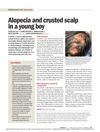 March 2026 in “Open MIND”
 Early treatment of scalp infections can prevent permanent hair loss.
 November 2025 in “Open Repository of the University of Porto (University of Porto)”
 Minoxidil and spironolactone can improve hair growth, but responses vary and side effects are common.
 November 2025 in “Archiv für Pathologische Anatomie und Physiologie und für Klinische Medicin”
 Sporadic trichoblastic neoplasms generally don't recur or spread, with one case showing a specific genetic fusion.
 October 2025 in “Iraqi postgraduate medical journal”
 Combining laser treatment with steroid cream is more effective for alopecia areata than using the cream alone.
 September 2025 in “Dermatology and Therapy”
 Activated PRP effectively increases hair density and reduces hair loss in alopecia.

Baricitinib is more effective than methotrexate for severe alopecia areata.
 February 2025 in “Plastic and Aesthetic Research”
 Minoxidil and finasteride effectively promote hair regrowth within 3 months.

Intradermotherapy with minoxidil is as effective as topical application for treating hair loss.
 January 2025 in “International Journal of Dermatology Sciences”
 Nail changes in alopecia areata are common and may indicate severity and genetic risk.
 January 2025 in “Advances in Clinical Medicine”
 Platelet-Rich Plasma shows promise for treating low back pain but needs more research.

Stem cell therapy shows promise for treating hair loss in androgenetic alopecia.
 February 2024 in “PloS one”
 Tofacitinib and adalimumab are promising treatments for cicatricial alopecia with few side effects.
 January 2024 in “Dermatology Review”
 Combining PRP with hydroquinone is more effective for treating melasma than using hydroquinone alone.
 June 2023 in “Dermatology and therapy”
 The Middle East and Africa need better data, treatment consensus, and support for Alopecia Areata.

Both treatments for localized alopecia areata are equally effective.
 February 2023 in “International Journal of Medical Arts”
 Trichloroacetic acid is a safe and effective treatment for hair loss in alopecia areata patients.

Scalp lesions in discoid lupus are more common in women and linked to other autoimmune diseases.
 January 2022 in “Al-Azhar Medical Journal”
 Higher antigliadin antibody levels are linked to alopecia areata severity.
 December 2020 in “TURKDERM”
 A 3-year-old boy was diagnosed with a rare, non-scarring hair loss condition called temporal triangular alopecia.

Topical calcipotriol successfully treated hair loss in three patients with Alopecia Totalis.
 May 2018 in “European Journal of Dermatology”
 Adjusting the medication tacrolimus resolved a boy's red nail beds after a stem cell transplant.
 January 2017 in “Dermatology Review”
 Skin issues from chronic graft-versus-host disease greatly affect daily life, needing teamwork between blood and skin doctors.
 January 2015 in “Przegla̧d dermatologiczny”
 308 nm excimer light therapy may help hair regrowth in alopecia areata with delayed results and no serious side effects.
 November 2014 in “British Journal of Dermatology”
 Male hair loss is mainly due to thinner hair, not less hair.
 March 2012 in “Journal of The American Academy of Dermatology”
 Temporal triangular alopecia usually starts in early childhood and treatment with Minoxidil has limited effectiveness.
 April 2019 in “Journal of emerging technologies and innovative research”
 Early treatment of Female Pattern Hair Loss is important to stop it from getting worse, and various treatments can help, especially in mild to moderate cases.
 4 citations
,
January 2021 in “Skin appendage disorders”
4 citations
,
January 2021 in “Skin appendage disorders” Trichodynia is a painful scalp condition not directly linked to the amount or type of hair loss and may involve psychological factors, with treatments showing mixed results.
Adding a topical agent to IPL improves hair reduction and satisfaction without extra side effects.
 May 2023 in “Bali Medical Journal”
 Higher sebum levels are linked to more severe male baldness.