15 citations
,
February 2011 in “Experimental Dermatology” Betamethasone dipropionate reduced skin thickness, fish oil increased it, and combined treatment had no significant effect.

Early combination therapy can effectively regrow hair in frontal fibrosing alopecia.
April 2024 in “Journal of clinical medicine” Effective treatment guidelines for frontal fibrosing alopecia are still unclear.
January 2026 in “Journal of Dermatological Science” DcR3 helps heal wounds and regrow hair by changing macrophages to a repair-focused type.
3 citations
,
August 2022 in “Pharmaceuticals” Solidified SEDDS improve drug stability and bioavailability better than liquid SEDDS.
 21 citations
,
October 2017 in “Journal of the European Academy of Dermatology and Venereology”
21 citations
,
October 2017 in “Journal of the European Academy of Dermatology and Venereology” Various potential triggers may be causing the rise in frontal fibrosing alopecia, and avoiding these could help stop the disease's increase.
1 citations
,
August 2018 in “Journal of the American Academy of Dermatology” A young woman developed facial bumps before hair loss, which is unusual for her condition.
 April 2026 in “Zenodo (CERN European Organization for Nuclear Research)”
 Cationic conditioning systems improve hair combability and sensory feel.
 1 citations
,
November 2023 in “iScience”
1 citations
,
November 2023 in “iScience” A protein called desmoglein 3 is important for keeping hair follicle stem cells inactive and helps in their regeneration.
19 citations
,
November 1979 in “Archives of dermatology” Tretinoin may be effective for treating Fox-Fordyce disease.
 April 2026 in “Zenodo (CERN European Organization for Nuclear Research)”
 Cationic conditioning systems improve hair combability and sensory feel.
 9 citations
,
June 2003 in “Veterinary dermatology”
9 citations
,
June 2003 in “Veterinary dermatology” Boxer dogs may have a genetic skin condition that worsens seasonally and can be treated with certain medications.
 119 citations
,
November 2014 in “Trends in Cell Biology”
119 citations
,
November 2014 in “Trends in Cell Biology” Fibroblast growth factor receptor signaling controls cell development and repair, and its malfunction can cause disorders and cancer, but it also offers potential for targeted therapies.
 17 citations
,
August 2018 in “Journal der Deutschen Dermatologischen Gesellschaft”
17 citations
,
August 2018 in “Journal der Deutschen Dermatologischen Gesellschaft” Researchers found that dissecting folliculitis of the scalp is linked to obesity, severity increases with duration and number of nodules, and early treatment is important to prevent scarring.
7 citations
,
July 2021 in “The Journal of Dermatology” Facial care products are not linked to causing frontal fibrosing alopecia.
September 2025 in “International Journal of Molecular Sciences” Unmodified fullerene C60 promotes hair growth and may help treat hair loss.
March 2017 in “Dermatologic Surgery” November 2024 in “International Journal of Women’s Dermatology” Frontal fibrosing alopecia in Bogotá mainly affects postmenopausal women, with possible links to hormonal changes and sunscreen use.
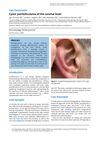 March 2026 in “Dermatology Online Journal”
 Cystic panfolliculoma is a rare, harmless tumor that can be confused with other skin tumors.
4 citations
,
November 2020 in “Acta Dermato Venereologica” Tofacitinib effectively improved severe skin symptoms in a patient with Hypohidrotic Ectodermal Dysplasia.
16 citations
,
July 1996 in “Journal of Investigative Dermatology”  4 citations
,
March 2013 in “InTech eBooks”
4 citations
,
March 2013 in “InTech eBooks” Confocal Laser Scanning Microscopy (CLSM) is a useful tool for studying how drugs interact with skin and diagnosing skin disorders, despite some limitations.
 June 2024 in “British Journal of Dermatology”
 Black women with CCCA are more likely to have uterine fibroids.
 5 citations
,
March 2014 in “Journal of The American Academy of Dermatology”
5 citations
,
March 2014 in “Journal of The American Academy of Dermatology” The study suggests hormonal factors may play a role in Frontal Fibrosing Alopecia and that treatments like oral antiandrogens and steroids could be beneficial.
17 citations
,
November 2022 in “Biomedicine & Pharmacotherapy” 'DPC therapy' could be an effective and affordable option for hair regrowth.
 71 citations
,
October 2008 in “The journal of investigative dermatology/Journal of investigative dermatology”
71 citations
,
October 2008 in “The journal of investigative dermatology/Journal of investigative dermatology” HFMs can help study hair growth and test potential hair growth drugs.
 33 citations
,
January 2015 in “Journal of Cosmetic Dermatology”
33 citations
,
January 2015 in “Journal of Cosmetic Dermatology” Familial frontal fibrosing alopecia affects premenopausal women too, and early diagnosis is important, but no proven medication exists yet.
 22 citations
,
January 2014 in “Biological & Pharmaceutical Bulletin”
22 citations
,
January 2014 in “Biological & Pharmaceutical Bulletin” Ginsenoside F2 may help prevent hair loss and promote hair growth better than finasteride.
 October 2023 in “arXiv (Cornell University)”
 Human hair keratins might be good for filtering out harmful substances like diclofenac and PFBS from water.
4 citations
,
April 2019 in “DOAJ (DOAJ: Directory of Open Access Journals)” 5-α-reductase inhibitors, intralesional steroids, and hydroxychloroquine are the most effective treatments for frontal fibrosing alopecia.