 1 citations
,
March 2021 in “Journal of Dermatology Research and Therapy”
1 citations
,
March 2021 in “Journal of Dermatology Research and Therapy” Women with cicatricial hair loss may have a higher risk of hypertension.
 1 citations
,
June 2020 in “bioRxiv (Cold Spring Harbor Laboratory)”
1 citations
,
June 2020 in “bioRxiv (Cold Spring Harbor Laboratory)” Fetal skin has unique immune cells different from adult skin.
 1 citations
,
January 2016 in “Journal of Nepal Paediatric Society”
1 citations
,
January 2016 in “Journal of Nepal Paediatric Society” A child with rickets and hair loss might have a rare type of rickets that doesn't improve much with usual vitamin D and calcium treatment.
 1 citations
,
October 1996 in “Journal of Cutaneous Medicine and Surgery”
1 citations
,
October 1996 in “Journal of Cutaneous Medicine and Surgery” Gene therapy shows promise for treating skin disorders and cancer, but faces technical challenges.
 April 2026 in “Frontiers in Cell and Developmental Biology”
 Hair follicles in mice help detect and respond to germs.
 March 2026 in “Anti-Aging Eastern Europe”
 PCOS treatment should be personalized based on individual symptoms and health goals.
 December 2025 in “Scientific Reports”
 Gut microbiota and metabolic pathways may play a key role in PCOS development.
 October 2025 in “International Journal of Innovative Research in Technology”
 Certain natural ingredients and lifestyle changes can help manage PCOS symptoms by balancing hormones and improving insulin sensitivity.
 August 2025 in “PLoS ONE”
 Improving access to hidradenitis suppurativa care can reduce social disparities.

Baricitinib is more effective than methotrexate for severe alopecia areata.
 January 2025 in “bioRxiv (Cold Spring Harbor Laboratory)”
 Rhamnose may help hair growth and pigmentation, making it a potential treatment for hair loss.
 January 2025 in “Balkan Medical Journal”
 Baricitinib helps regrow hair in severe alopecia areata and is safe, but more research is needed.
 January 2025 in “Вопросы современной педиатрии”
 Janus kinase inhibitors effectively treat alopecia areata but may cause relapses and have long-term safety concerns.
 January 2025 in “Acta Dermatovenerologica Alpina Pannonica et Adriatica”
 JAK inhibitors can help regrow hair in alopecia areata but have potential long-term risks and require careful monitoring.
 January 2025 in “International Journal of Dermatology Research”
 Higher MPV and CRP levels may indicate more severe alopecia areata.
 January 2025 in “Journal of Rawalpindi Medical College”
 Alopecia Areata affects both genders almost equally, mostly on the scalp, with common signs like yellow dots and exclamation mark hairs, especially in young people.
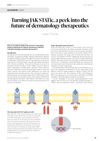 August 2024 in “New Zealand Medical Student Journal”
 JAK inhibitors show promise for treating skin diseases effectively and safely.
 April 2024 in “Cell death and differentiation”
 Cell death shapes skin stem cell environments, affecting inflammation, repair, and cancer.
 April 2024 in “Journal of pharmacy & pharmacognosy research”
 A compound from Calophyllum inophyllum L. leaf may help treat non-small cell lung cancer.
 September 2023 in “medRxiv (Cold Spring Harbor Laboratory)”
 Long-COVID has diverse, long-term health impacts, especially in young people.
 August 2023 in “bioRxiv (Cold Spring Harbor Laboratory)”
 Too much β-catenin activity can mess up the development of mammary glands and make them more like hair follicles.
 August 2023 in “International journal of research in dermatology”
 Janus kinase inhibitors are effective and generally safe for treating hair loss in adults with alopecia areata.
 July 2023 in “Письма в Вавиловский журнал генетики и селекции”
 Extracellular nucleic acids help start inflammation needed for tissue repair, but must be properly regulated.
 June 2023 in “Dermatology and therapy”
 Doctors in the Middle East need better treatments and more knowledge about new therapies for hair loss condition Alopecia Areata.
 May 2023 in “Dermatology and therapy”
 The document concludes that identifying the cause of eyebrow and eyelash loss is key to treating it and improving quality of life.
 April 2023 in “Medizinische Genetik”
 New research has found 14 genes linked to the risk of developing alopecia areata, improving understanding and treatment options.

The study aims to create a model to improve personalized and preventive health care.
 March 2023 in “Seminars in reproductive medicine”
 PCOS often leads to sleep problems, especially obstructive sleep apnea, affecting overall health.
 January 2023 in “National Journal of Physiology, Pharmacy and Pharmacology”
 Tofacitinib effectively reduced hair loss in alopecia areata patients without adverse effects.
 December 2022 in “Revista Medicina Cutánea Ibero-Latino-Americana”
 JAK inhibitors help treat alopecia areata but have high recurrence after stopping.