 19 citations
,
January 2015 in “Journal of Clinical and Diagnostic Research”
19 citations
,
January 2015 in “Journal of Clinical and Diagnostic Research” The main causes of diffuse hair loss in women are telogen effluvium and androgenetic alopecia, often related to stress and iron deficiency.
April 2018 in “Recent advances in pathology and laboratory medicine” Iron deficiency may cause hair loss, but more research is needed.
 February 2023 in “Siriraj Medical Journal”
 Not all cases with typical signs of Alopecia Areata are actually diagnosed as such.
September 2025 in “International Journal of Medical Informatics” A machine learning model can predict scarring in lichen planopilaris using factors like vitamin D levels and diagnostic delay.
 September 2024 in “Portuguese Journal of Dermatology and Venereology”
 CCCA and LPP may be related hair loss conditions influenced by genetics and environment, needing early treatment.
April 2024 in “Journal of clinical medicine” Effective treatment guidelines for frontal fibrosing alopecia are still unclear.
 October 2022 in “JAAD international”
 Most patients with autoimmune blistering diseases experienced some hair loss, which may be underreported and linked to disease severity.
 September 2022 in “JAAD Case Reports”
 COVID-19 may worsen hair loss in people with a certain type of scarring alopecia, but early treatment can help improve symptoms and hair regrowth.
December 2025 in “Chinese Medical Journal” Experts recommend starting systemic treatment for alopecia areata when the condition is severe or causes significant distress.
 June 2026 in “JAAD reviews.”
 Low-dose oral minoxidil may help with various hair loss types, but more research is needed.
February 2026 in “World Academy of Sciences Journal” Lymphoma should be considered in unusual scalp hair loss cases, as treatment can work but may lead to severe complications.
 March 2025 in “Cosmetics”
 Combining treatments works best for early hair loss, while transplants are best for severe cases.

Topical treatments like minoxidil and corticosteroids are effective for hair loss, with JAK inhibitors promising for alopecia areata.
August 2025 in “Cosmetics” Cosmeceuticals like sunscreens may trigger frontal fibrosing alopecia, but more research is needed.
53 citations
,
January 2013 in “Journal of toxicologic pathology” The project created a standardized system for classifying skin lesions in lab rats and mice.
 3 citations
,
December 2022 in “Cells”
3 citations
,
December 2022 in “Cells” Cannabinoids like CBD and THC may help treat non-cancer skin diseases, but more research is needed.
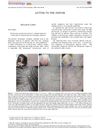 July 2021 in “Australasian Journal of Dermatology”
 The trichoscopy-assisted hair pull test is useful for diagnosing different types of hair loss.
 13 citations
,
January 2012 in “International Journal of Trichology”
13 citations
,
January 2012 in “International Journal of Trichology” Eating too many paradise nuts for cancer prevention caused a woman to lose all her hair due to selenium poisoning.
 14 citations
,
January 2006 in “Australasian journal of dermatology”
14 citations
,
January 2006 in “Australasian journal of dermatology” Alopecia areata can look like frontal fibrosing alopecia, making diagnosis hard.
 June 2023 in “British journal of dermatology/British journal of dermatology, Supplement”
 A woman's rare hair loss condition improved on its own, suggesting this type might recover like common cases.
 13 citations
,
February 2007 in “British Journal of Dermatology”
13 citations
,
February 2007 in “British Journal of Dermatology” EF and PXE not closely related.
 22 citations
,
January 2018 in “Experimental Dermatology”
22 citations
,
January 2018 in “Experimental Dermatology” The meeting focused on understanding, diagnosing, and finding treatments for irreversible hair loss diseases.
 July 2023 in “The Egyptian Journal of Hospital Medicine ”
 The conclusion is that emotional support and a variety of treatments are important for alopecia areata, but more research is needed.
 7 citations
,
March 2025 in “Archives of Dermatological Research”
7 citations
,
March 2025 in “Archives of Dermatological Research” Trichoscopy helps better understand and manage alopecia areata, improving patient outcomes.
 September 2016 in “Journal of Dermatology and Dermatologic Surgery”
 A woman's severe hair loss was caused by scalp psoriasis, not the initially thought condition, and treatment improved her psoriasis but couldn't restore her lost hair.
 January 2020 in “Revista da Sociedade Portuguesa de Dermatologia e Venereologia”
 Frontal fibrosing alopecia in Brazil mostly affects postmenopausal women, often linked with hypothyroidism and eyebrow hair loss.
 May 1993 in “Medical Clinics of North America”
 Surgical hair replacement is a viable option for male pattern baldness when done with proper planning and realistic expectations.
 3 citations
,
April 2012 in “Osteoporosis International”
3 citations
,
April 2012 in “Osteoporosis International” A woman experienced hair loss after taking strontium ranelate for osteoporosis.
 27 citations
,
July 2013 in “Journal of Dermatological Science”
27 citations
,
July 2013 in “Journal of Dermatological Science” The conclusion is that androgenetic alopecia and senescent alopecia have unique gene changes, suggesting different causes and potential treatments for these hair loss types.
 2 citations
,
April 2017 in “Plastic and Aesthetic Nursing”
2 citations
,
April 2017 in “Plastic and Aesthetic Nursing” Platelet-rich plasma therapy shows promise for hair regrowth in alopecia patients.