 40 citations
,
May 1987 in “The Lancet”
40 citations
,
May 1987 in “The Lancet” Minoxidil helps some bald men, but most lose hair again when stopping.
 20 citations
,
March 1994 in “Clinical and Experimental Dermatology”
20 citations
,
March 1994 in “Clinical and Experimental Dermatology” Too much topical minoxidil can cause excessive hair growth, but stopping treatment reverses it.

More minoxidil applied topically leads to better hair growth in male pattern baldness.
 19 citations
,
October 2017 in “European Journal of Pharmaceutics and Biopharmaceutics”
19 citations
,
October 2017 in “European Journal of Pharmaceutics and Biopharmaceutics” The gel made of minoxidil and hydroxypropyl-β-cyclodextrin improves hair growth and is good for long-term use.
March 2026 in “Journal of medical & health sciences review.” Both 5% minoxidil foam and liquid effectively treat hair loss, with foam slightly preferred.
 2 citations
,
March 1985 in “Journal of The American Academy of Dermatology”
2 citations
,
March 1985 in “Journal of The American Academy of Dermatology” Minoxidil solution used on the scalp did not lower blood pressure in patients without hypertension.
January 2012 in “Sichuan Medical Journal” 2% minoxidil effectively increases hair count in women with androgenetic alopecia without severe side effects.
Minoxidil shampoo showed slight hair growth but needs longer testing for clear results.
 January 2025 in “JAAD International”
 Bicalutamide added no extra benefit over minoxidil alone for female-pattern hair loss.
 March 2025 in “Archives of Dermatological Research”
 Combining stem cell secretome and minoxidil leads to the best hair growth in androgenetic alopecia.
 July 1987 in “Reactions (Auckland)”
 Oral minoxidil may slow male pattern baldness and cause body hair growth, but hair loss can happen after stopping it.
September 1990 in “Journal of Dermatological Science”  2 citations
,
January 2012 in “Hair therapy & transplantation”
2 citations
,
January 2012 in “Hair therapy & transplantation” DDAIP-HCl significantly increases minoxidil absorption into the skin.
 February 2023 in “International Journal of Pharmaceutics”
 A new version of minoxidil, a hair loss treatment, was made using nanotechnology. This version, called minoxidil cubosomes, works better and causes fewer skin reactions than the old version. It also penetrates and stays in the skin better, promoting hair regrowth. It's safe and could be a good alternative to current treatments.
2 citations
,
January 1986 in “Dermatology” Minoxidil helps regrow hair lost due to androgenetic alopecia.
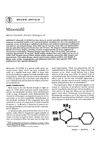 11 citations
,
January 1980 in “Southern Medical Journal”
11 citations
,
January 1980 in “Southern Medical Journal” Minoxidil effectively treats severe hypertension but has notable side effects.
1 citations
,
August 2022 in “Journal of Dermatological Treatment” Dutasteride is the most effective for hair loss but may cause sexual and mental side effects.
 22 citations
,
February 2008 in “Journal of Neurochemistry”
22 citations
,
February 2008 in “Journal of Neurochemistry” Minoxidil prevents serotonin loss from MDMA by affecting potassium channels and increasing Akt phosphorylation.
 January 2011 in “Kufa Medical Journal”
 Minoxidil solution applied on skin can effectively promote hair growth and increase hair thickness in male mice.
 19 citations
,
November 2017 in “Journal of Pharmaceutical Sciences”
19 citations
,
November 2017 in “Journal of Pharmaceutical Sciences” A new gel containing minoxidil can treat hair loss effectively, potentially reducing side effects and improving treatment.

Low-dose oral minoxidil is effective for treating hair loss with personalized plans and safety monitoring.
 April 2017 in “Journal of Investigative Dermatology”
 Using a stimulating cream shampoo before applying Minoxidil increases its penetration into hair follicles and scalp.
 January 2023 in “Skin appendage disorders”
 Low-dose oral minoxidil may help treat hair loss but is not FDA-approved and can cause side effects like unwanted hair growth and heart issues.
February 2026 in “Expert Opinion on Pharmacotherapy” Low-dose oral and topical minoxidil are recommended for managing hair loss in transplant patients, with specific dosing and timing guidelines.

Combining minoxidil, finasteride, and growth factors improves hair growth and reduces hair loss.
September 2006 in “대한피부과학회지” Using finasteride and minoxidil together improves the frontal hairline best in male hair loss.
 20 citations
,
November 1987 in “Archives of Dermatology”
20 citations
,
November 1987 in “Archives of Dermatology” The document concludes that topical minoxidil therapy is safe and effective in promoting hair growth for male pattern baldness.
 5 citations
,
October 1988 in “Clinics in Dermatology”
5 citations
,
October 1988 in “Clinics in Dermatology” Minoxidil promotes hair growth but exact mechanism is unknown.
 July 2024 in “Journal of Investigative Dermatology”
 Most women continued using oral minoxidil for hair loss despite mild to moderate side effects.