 44 citations
,
June 2009 in “Biomaterials”
44 citations
,
June 2009 in “Biomaterials” Skin cell clumping for hair growth is improved by a protein called fibronectin, which helps cells stick and move better.
 12 citations
,
January 2018 in “Biomaterials Science”
12 citations
,
January 2018 in “Biomaterials Science” Softer hydrogel surfaces help maintain hair growth-related functions in skin cells.
4 citations
,
May 2015 in “Macedonian Veterinary Review” Canine stem cell aggregates can effectively replace natural dermal papillae for hair research.
 March 2026 in “Mendeley Data”
 Basement membrane-like ECM supports fibroblast aggregation and cohesion.
 25 citations
,
August 2010 in “Acta Biomaterialia”
25 citations
,
August 2010 in “Acta Biomaterialia” Researchers developed a method to grow hair follicle cells for transplantation using a special chip.
 1 citations
,
January 2019 in “Elsevier eBooks”
1 citations
,
January 2019 in “Elsevier eBooks” Electrospun matrices help regenerate skin and hair follicles using PCL and collagen scaffolds.
30 citations
,
November 2020 in “Journal of Advanced Research” Conditioned medium from keratinocytes can improve hair growth potential in cultured dermal papilla cells.
 7 citations
,
June 2021 in “Cell Proliferation”
7 citations
,
June 2021 in “Cell Proliferation” Low oxygen levels improve the function of hair and skin cells when they are in direct contact.
 2 citations
,
April 2021 in “International Journal of Molecular Sciences”
2 citations
,
April 2021 in “International Journal of Molecular Sciences” The study concluded that changing the culture conditions can cause sika deer skin cells to switch from a flat to a 3D pattern, which is important for creating hair follicles.
 1 citations
,
September 2019 in “Journal of Investigative Dermatology”
1 citations
,
September 2019 in “Journal of Investigative Dermatology” Human hair matrix cells and dermal papilla fibroblasts can form early hair follicle structures but don't produce hair shafts yet.
 September 2025 in “bioRxiv (Cold Spring Harbor Laboratory)”
 Basement membrane supports fibroblast aggregation, aiding hair follicle development.
18 citations
,
July 2012 in “Cell Biology International Reports” Human mesenchymal stem cells can become dermal papilla cells, aiding hair growth.
 16 citations
,
August 2019 in “Cell Proliferation”
16 citations
,
August 2019 in “Cell Proliferation” Keratinocytes help keep hair follicle cells and skin cells separate in 3D cultures, which is important for hair growth research.
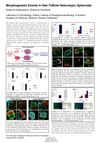
Researchers developed a method to create artificial hair follicles that may help with hair loss treatment and research.
 December 2016 in “Paleontological Journal”
 Hair growth can be induced by transplanting certain cells, but these cells lose their properties during culturing. The best cell interaction happens in a liquid medium under gravity, and using collagen doesn't help. Future research could focus on using growth factors to stimulate these cells.
 42 citations
,
February 2017 in “Scientific Reports”
42 citations
,
February 2017 in “Scientific Reports” Researchers found a way to create cells from stem cells that act like human cells important for hair growth and could be used for hair regeneration treatments.
 November 2015 in “Hair transplant forum international”
 Early attempts at using cloned cells for hair transplants failed, but 3D cell growth showed some promise.
July 2026 in “Cell Transplantation” Fibroblasts in hair follicles play a key role in hair loss, suggesting they could be a target for treatment.
36 citations
,
September 1996 in “PubMed” DP and DS cells are different from DF cells in structure and function.

Chirality influences the structure, strength, and biological uses of peptide-based hydrogels.
Encapsulating hair follicle cells in a special gel boosts their activity.
 August 2021 in “Josai University Repository of Academia (Josai University)”
 The nanoparticles improved minoxidil's skin absorption, making them promising for skin treatments.
 61 citations
,
June 2014 in “Scientific Reports”
61 citations
,
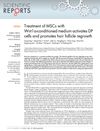
June 2014 in “Scientific Reports” Wnt1a-conditioned medium from stem cells helps activate cells important for hair growth and can promote hair regrowth.
 2 citations
,
October 2017 in “Revista Da Associacao Medica Brasileira”
2 citations
,
October 2017 in “Revista Da Associacao Medica Brasileira” Removing p16INK4a from skin cells can lead to faster and more clumped growth, which might help with hair growth.
 32 citations
,
April 2014 in “The journal of investigative dermatology/Journal of investigative dermatology”
32 citations
,
April 2014 in “The journal of investigative dermatology/Journal of investigative dermatology” Loss of keratin K2 causes skin problems and inflammation.
 46 citations
,
September 2014 in “Tissue engineering. Part A”
46 citations
,
September 2014 in “Tissue engineering. Part A” Researchers created hair-inducing human cell clusters using a 3D culture method.
 78 citations
,
October 2012 in “Biomaterials”
78 citations
,
October 2012 in “Biomaterials” Larger spheroids improve hair growth, but size doesn't guarantee thicker hair.
 3 citations
,
February 2021 in “Experimental dermatology”
3 citations
,
February 2021 in “Experimental dermatology” Dermal papilla microtissues could be useful for initial hair growth drug testing.
 3 citations
,
February 2009 in “Chinese Journal of Traumatology (english Edition)”
3 citations
,
February 2009 in “Chinese Journal of Traumatology (english Edition)” Human hair cells can be used to grow new hair on rat ears, suggesting a possible treatment for hair loss.
 25 citations
,
April 2008 in “Archives of Dermatological Research”
25 citations
,
April 2008 in “Archives of Dermatological Research” Encapsulated human hair cells can substitute for natural hair cells to grow hair.