 8 citations
,
April 2019 in “ACS Biomaterials Science & Engineering”
8 citations
,
April 2019 in “ACS Biomaterials Science & Engineering” The new SIS-PEG sponge is a promising material for skin regeneration and hair growth.
September 2019 in “Journal of Investigative Dermatology” PCE-DP brightens skin and promotes hair growth by enhancing cell growth and reducing melanin uptake.
July 2018 in “Chinese Journal of Dermatology” The two-step enzyme digestion method is the best for isolating axillary dermal papilla cells.
September 2019 in “The journal of investigative dermatology/Journal of investigative dermatology” PPARγ signaling modulation can protect hair follicle stem cells from chemotherapy-induced damage.
 July 2023 in “Media Dermato Venereologica Indonesiana”
 Corticosteroids effectively treated a 60-year-old man's skin condition.
 136 citations
,
June 2006 in “Journal of Dermatological Science”
136 citations
,
June 2006 in “Journal of Dermatological Science” PDGF isoforms can promote and sustain hair growth.
 30 citations
,
April 2017 in “Experimental Dermatology”
30 citations
,
April 2017 in “Experimental Dermatology” Hair follicle stem cells and skin cells show promise for hair and skin therapies but need more research for clinical use.
September 2012 in “대한피부과학회지” Desmocollin 1 helps maintain skin structure during fetal development.
 15 citations
,
November 2016 in “Journal of The American Academy of Dermatology”
15 citations
,
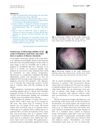
November 2016 in “Journal of The American Academy of Dermatology” Exclamation mark hairs suggest early scalp disease, while white dots indicate it's chronic.
October 2017 in “Our Dermatology Online” DCP in isopropanol is better tolerated for treating alopecia areata.
 January 2024 in “Biomaterials Research”
 The new 3D system helps test hair growth treatments effectively.
November 2025 in “Journal of Investigative Dermatology” PCFCL may have unrecognized subtypes and needs more research.
 10 citations
,
January 2018 in “Postępy Dermatologii i Alergologii”
10 citations
,
January 2018 in “Postępy Dermatologii i Alergologii” Treating alopecia areata every 3 weeks with diphenylcyclopropenone is more effective than weekly treatments.
October 2021 in “QJM: An International Journal of Medicine” ADSC injections improve hair density, thickness, and reduce inflammation in female pattern hair loss.
2 citations
,
February 2012 in “PubMed” Gp₄G promotes hair growth and improves skin health.
4 citations
,
September 2015 in “JAAD case reports” Substance P may play a role in the inflammation seen in keratosis follicularis spinulosa decalvans.
1 citations
,
January 2008 in “SKINmed Dermatology for the Clinician” Treatment with prednisolone and dapsone stopped new blisters and partially healed previous ones.
1 citations
,
July 2006 in “Journal of Investigative Dermatology” A 4kb fragment of the desmocollin 3 promoter targets gene expression to specific skin and hair follicle areas.
 51 citations
,
May 2021 in “Nature Communications”
51 citations
,
May 2021 in “Nature Communications” High proliferation and cell delamination drive early skin development, while later stages may not rely on cell division orientation.
 8 citations
,
January 2016 in “Journal of Veterinary Medical Science”
8 citations
,
January 2016 in “Journal of Veterinary Medical Science” Lab-made tissues from dog fat stem cells can help grow hair by releasing a growth factor.
33 citations
,
March 1994 in “PubMed” High ODC and low K1 and K10 may indicate early skin tumors in mice.
 July 2026 in “Research Data Repository, Duke University”
 DMAP scaffolds help tissue regeneration by activating B cells and humoral immunity.
 8 citations
,
July 2019 in “Cell Proliferation”
8 citations
,
July 2019 in “Cell Proliferation” Researchers found a way to turn skin cells into cells that can grow new hair.
 October 2023 in “Indian dermatology online journal”
 The young woman has a benign, hereditary skin condition with no signs of a more serious syndrome.
 211 citations
,
April 2013 in “Development”
211 citations
,
April 2013 in “Development” More dermal papilla cells in hair follicles lead to larger, healthier hair, while fewer cells cause hair thinning and loss.
4 citations
,
May 2015 in “Macedonian Veterinary Review” Canine stem cell aggregates can effectively replace natural dermal papillae for hair research.
January 1995 in “Revista de arqueología” 1 alpha,25-dihydroxy-vitamin D3 and calcipotriol speed up cell differentiation in hair follicles.
96 citations
,
September 1996 in “PubMed” Desmocollin 1 and 3 have distinct patterns in human tissues, with Dsc1 in specific skin and hair layers and Dsc3 in various epithelial layers.
 1 citations
,
March 2023 in “Frontiers in Cardiovascular Medicine”
1 citations
,
March 2023 in “Frontiers in Cardiovascular Medicine” A specific gene variant is linked to heart disease, increased heart muscle, curly hair, and thick skin on palms and soles.
January 2014 in “Journal of Central South University(Science and Technology)” PPCM microspheres can effectively release finasteride over 42 days.