4 citations
,
December 2020 in “Tissue Barriers” Loricrin affects skin immune function and homeostasis.
 13 citations
,
November 2021 in “Frontiers in Immunology”
13 citations
,
November 2021 in “Frontiers in Immunology” Melatonin could be an effective treatment for Alzheimer's Disease and rosacea.
6 citations
,
January 2025 in “Molecules” Combining polymers and lipids may improve antioxidant delivery for wound healing, but practical challenges remain.
 January 2025 in “RSC Advances”
 The new delivery method for finasteride using nanoparticles may improve hair growth without skin issues.
 July 2023 in “Journal of Cosmetic Dermatology”
 Ethosomes could improve how well skin treatments work, but more research is needed on their safety and stability.
December 2022 in “Molecular Pharmaceutics” Latanoprost-loaded nanotransfersomes could help treat hair loss by promoting hair growth.
9 citations
,
January 2023 in “Langmuir” Solubility in skin changes with hydration, affecting chemical absorption.
39 citations
,
August 2022 in “Pharmaceutics” Combining letrozole and quercetin in spanlastics may improve breast cancer treatment.
4 citations
,
May 2025 in “International Journal of Nanotechnology and Nanomedicine” Nanocarriers show promise for improving skin drug delivery in treating skin conditions.
39 citations
,
February 2024 in “Small” Microneedles are becoming essential tools in medicine for sensing, drug delivery, and communication.
 May 2023 in “Frontiers in Endocrinology”
 Thyroid disease can cause skin, hair, and nail problems, and treating the thyroid condition often improves these symptoms.
37 citations
,
August 2019 in “Frontiers in Microbiology” Staphylococcus epidermidis A/C strains are more antibiotic-resistant and infection-adapted, while B strains thrive in hair follicles.
15 citations
,
July 2014 in “The journal of investigative dermatology/Journal of investigative dermatology” iPSCs can help treat genetic skin disorders by creating healthy skin cells from a small biopsy.
 32 citations
,
September 1989 in “Medical Clinics of North America”
32 citations
,
September 1989 in “Medical Clinics of North America” Skin problems are common in lupus, important for diagnosis, and can be triggered by sunlight.
13 citations
,
November 2022 in “Future Journal of Pharmaceutical Sciences” Liposome-based cosmeceuticals improve treatment effectiveness for skin and hair conditions.
 6 citations
,
June 2013 in “Toxicological Research”
6 citations
,
June 2013 in “Toxicological Research” Topical Valproate is safe for human skin and unlikely to cause irritation.

Customized dermatological treatments effectively address gaps in standard products, especially for complex cases.
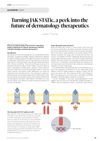 August 2024 in “New Zealand Medical Student Journal”
 JAK inhibitors show promise for treating skin diseases effectively and safely.
 April 2017 in “Journal of Investigative Dermatology”
 Targeted siRNA therapy may be a promising treatment for KID syndrome by reducing mutant gene expression and improving cell communication.
9 citations
,
January 2016 in “Journal of Controlled Release” Local hypobaric pressure can significantly improve drug delivery through the skin.
 36 citations
,
January 2012 in “International Journal of Trichology”
36 citations
,
January 2012 in “International Journal of Trichology” Losing eyelashes or eyebrows can be a sign of many different health problems and needs a careful approach to treat effectively.
 November 2024 in “Nanomaterials”
 The nanocrystalline suspension effectively delivers dutasteride over time with minimal inflammation.
Type XVII collagen helps control skin cell growth and may have anti-aging effects.
8 citations
,
January 2018 in “Journal of Analytical Methods in Chemistry” A new method accurately measures a drug in skin for cancer therapy research.
 April 2025 in “Clinical and Translational Discovery”
 The ketoconazole gel improved hair growth and is a promising treatment for hair loss.
70 citations
,
June 2023 in “International Journal of Molecular Sciences” Air pollution harms skin health and can worsen skin diseases.
1 citations
,
February 2024 in “Pharmaceutics” Nanovesicles improve drug delivery through the skin, offering better treatment outcomes and fewer side effects.
18 citations
,
February 2025 in “Macromolecular Rapid Communications” Thermo-responsive polymers in nanoparticles enable targeted drug delivery and advanced therapies by releasing drugs at specific temperatures.
Microneedles could revolutionize pediatric medicine by offering painless drug delivery, but more development is needed.
 57 citations
,
October 2021 in “Journal of ethnopharmacology”
57 citations
,
October 2021 in “Journal of ethnopharmacology” Indian herbal medicine shows promise for treating skin diseases but needs more research to prove effectiveness.