 1 citations
,
October 2013 in “The Journal of Dermatology”
1 citations
,
October 2013 in “The Journal of Dermatology” Hair loss in a drug reaction case involved both a common shedding phase and an immune attack on hair follicle stem cells.
 1 citations
,
February 1993 in “Nursing Standard”
1 citations
,
February 1993 in “Nursing Standard” Many drugs, not just chemotherapy, can cause reversible hair loss.
 June 2026 in “Eurasian Journal of Medicine”
 Baricitinib effectively regrew hair in a woman with alopecia universalis after other treatments failed.
April 2026 in “Therapeutic Advances in Drug Safety” Finasteride is high-risk for cognitive disorders, while Carbidopa/Levodopa, Topiramate, and Clonazepam are moderate-risk.
February 2026 in “Case Reports in Dermatology” Finasteride can cause melasma, especially in people with darker skin.
 January 2026 in “Frontiers in Pharmacology”
 Certain drugs can cause male infertility, so fertility counseling and sperm preservation are advised.
 November 2025 in “Frontiers in Pharmacology”
 64 drugs can cause hair loss, needing better monitoring and updated labels.
January 2025 in “Case Reports in Gastrointestinal Medicine” Topical minoxidil can cause severe liver failure.
 July 2024 in “Skin Appendage Disorders”
 Certain medications, including some immune drugs, contraceptives, and hair loss treatments, are often linked to hair loss.
 November 2023 in “Circulation”
 Minoxidil can cause a rare but serious condition that leads to fluid buildup around the heart and drug-induced lupus.
 June 2023 in “British journal of dermatology/British journal of dermatology, Supplement”
 Some multiple sclerosis treatments may trigger hair loss conditions like alopecia areata.
 January 2022 in “International Journal of Science and Research (IJSR)”
 Certain medications can cause hair loss, which varies in severity and can be treated with specific drugs.

A girl lost her hair due to being given the wrong medication because of a pharmacy's computer error.
January 2014 in “Astrocyte” Some drugs may cause hair loss in women.
April 2012 in “Informa Healthcare eBooks” Some drugs for inflammation may cause psoriasis-like hair loss.
 August 1994 in “Drugs & Therapy Perspectives”
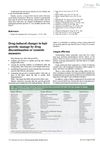
 Some drugs can cause hair loss or growth, but hair usually returns to normal after stopping the drug.
 3 citations
,
April 2019 in “Clinical Therapeutics”
3 citations
,
April 2019 in “Clinical Therapeutics” Computational tools identified 29 drugs that could potentially target 19 genes involved in chemotherapy-induced hair loss, which could lead to more effective treatments.
January 2026 in “Regenerative Biomaterials” Advanced hydrogels can autonomously deliver drugs to treat radiation skin injuries, but challenges remain for clinical use.
18 citations
,
June 2017 in “Oncotarget” Digoxin is linked to a higher risk of anemia in patients with atrial fibrillation and heart failure.
 July 2025 in “Pharmaceuticals”
 Phenobarbital-loaded chitosan nanoparticles are promising for preventing hair loss from chemotherapy.
 20 citations
,
October 2018 in “American Journal of Clinical Dermatology”
20 citations
,
October 2018 in “American Journal of Clinical Dermatology” Some drugs can cause skin and hair color changes, often reversible when the drug is stopped.
December 2011 in “Thorax” People from iodine-deficient areas are more likely to develop hypothyroidism when treated for multi-drug resistant tuberculosis.

A rash from semaglutide may be due to propylene glycol, not the drug itself.
11 citations
,
October 2020 in “PLoS ONE” Cooling can protect hair follicles from chemotherapy damage by reducing drug uptake.
 3 citations
,
April 2021 in “Biomolecules & Therapeutics”
3 citations
,
April 2021 in “Biomolecules & Therapeutics” The protein ER71/ETV2 helps regrow hair after chemotherapy by improving the growth of new blood vessels.
 July 2025 in “SKIN The Journal of Cutaneous Medicine”
 Oral minoxidil can help regrow hair lost from antibody-drug conjugate treatment.
 1 citations
,
January 2023 in “Cutis”
1 citations
,
January 2023 in “Cutis” You might not need to stop cancer treatment if you get a rare skin reaction from EGFR inhibitors, as skin treatments can help manage it.
April 2025 in “Journal of Pharma Insights and Research.” Females had more chemotherapy side effects than males, with many being preventable.
 19 citations
,
July 2015 in “Journal of Ginseng Research”
19 citations
,
July 2015 in “Journal of Ginseng Research” Korean Red Ginseng may protect against hair loss caused by chemotherapy.
 4 citations
,
July 2018 in “The Journal of Allergy and Clinical Immunology: In Practice”
4 citations
,
July 2018 in “The Journal of Allergy and Clinical Immunology: In Practice” Four new substances—minoxidil, ferrimanitol ovalbumin, clarithromycin, and glucosamine-hydrochloride—can cause occupational asthma.