 September 2025 in “Journal of the American Academy of Dermatology”
 Low-dose oral minoxidil does not significantly affect blood pressure in patients with hair loss and hypertension.
 59 citations
,
July 2020 in “Journal of The American Academy of Dermatology”
59 citations
,
July 2020 in “Journal of The American Academy of Dermatology” Oral minoxidil promotes hair growth but may cause side effects; needs monitoring.
March 1990 in “Journal of Dermatological Science” 23 citations
,
March 2021 in “Gels” Microemulsions can improve minoxidil delivery and effectiveness for hair loss treatment.
 May 2023 in “JAMA network open”
 After a New York Times article talked about using low-dose oral minoxidil for hair loss, more people started getting this drug prescribed, but this trend didn't last long.
August 2025 in “Skin Appendage Disorders” Low-dose oral minoxidil might help with hair loss during chemotherapy, but more research is needed.
 2 citations
,
April 2016 in “Journal of The American Academy of Dermatology”
2 citations
,
April 2016 in “Journal of The American Academy of Dermatology” Dutasteride more effective than finasteride for hair growth; SM04554 safe and potentially effective for hair loss.
February 2026 in “Journal of Dermatological Treatment” CG2001 is safe and well-tolerated for treating hair loss, with fewer side effects than oral finasteride.
 32 citations
,
March 1987 in “Journal of The American Academy of Dermatology”
32 citations
,
March 1987 in “Journal of The American Academy of Dermatology” Using minoxidil on balding men's scalps can increase hair growth, according to a 12-month study.
 17 citations
,
June 2012 in “Australasian Journal of Dermatology”
17 citations
,
June 2012 in “Australasian Journal of Dermatology” Finasteride and low-dose dutasteride combo improves hair growth and reduces hair loss with no major side effects.
February 2026 in “European Urology”  January 2026 in “Magazine Portal Bibliotech Digital (Universidad Nacional de Colombia)”
 Minoxidil and finasteride effectively treat hair loss but may cause side effects; combining them improves results.
January 2022 in “Indian journal of drugs in dermatology” Oral minoxidil helps with hair growth but needs more research to fully understand its effectiveness and safety.
August 2024 in “Food Bioscience” Bifidobacterium longum BB536 metabolites may help treat hair loss by repairing and promoting hair cell growth.
 December 2023 in “Annales Pharmaceutiques Françaises”
 The UV–Vis Spectrophotometry method effectively measures minoxidil in rat skin for alopecia treatment.
 March 2026 in “Lithuanian University of Health Sciences”
 Finasteride, dutasteride, and oral minoxidil are effective for treating hair loss, with spironolactone as an option for women.
 February 2024 in “Journal of Molecular Structure”
 The new minoxidil and salicylic acid hydrogel improves alopecia treatment.
 5 citations
,
January 2020 in “Skin appendage disorders”
5 citations
,
January 2020 in “Skin appendage disorders” Oral dutasteride works better for hair loss, but has more sexual side effects; intralesional dutasteride is a possible alternative.
1 citations
,
March 2000 in “CRC Press eBooks” 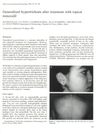 20 citations
,
March 1994 in “Clinical and Experimental Dermatology”
20 citations
,
March 1994 in “Clinical and Experimental Dermatology” Too much topical minoxidil can cause excessive hair growth, but stopping treatment reverses it.
 February 2025 in “Expert Opinion on Drug Safety”
 Topical minoxidil may cause more side effects than currently listed, needing updated safety information.
 19 citations
,
January 2015 in “Skin Pharmacology and Physiology”
19 citations
,
January 2015 in “Skin Pharmacology and Physiology” Minoxidil foam effectively promotes hair growth and reduces hair loss in men.
P-3074 effectively blocks scalp DHT better than oral finasteride.
 July 2024 in “Journal of Dermatological Treatment”
 Botanical extracts and Minoxidil improved hair condition in a boy with a genetic disorder.
May 2008 in “10th European Congress of Endocrinology” January 2021 in “Journal of clinical & experimental dermatology research” The new 5% minoxidil formulation without propylene glycol effectively promotes hair growth with fewer side effects and better user satisfaction.
 November 1991 in “PubMed”
 Minoxidil, a topical solution, was found to slow balding in most cases and increase hair density in some, but only a few saw significant cosmetic improvement.
2 citations
,
September 2024 in “Journal of the American Academy of Dermatology” Deuruxolitinib significantly helps regrow scalp hair in adults with moderate to severe alopecia areata.
 July 2024 in “International Journal of Dermatology Venereology and Leprosy Sciences”
 Minoxidil can help regrow hair in people with alopecia areata.