Search
forProducts matching "dutagen"
Tracking 1 products like 155 Dutagen 0.5mg from by companies like Inhouse Pharmacy. View product »
Sort by
Research
480-510 / 1000+ results
research USE OF UPADACITINIB IN 2 CASES OF REFRACTORY SYSTEMIC LUPUS ERYTHEMATOSUS
Upadacitinib may help treat difficult cases of systemic lupus erythematosus.
research Efficacy of dutasteride on androgenetic alopecia recalcitrant to finasteride
research Farmácia Aliança - Maia
Dutasteride is more effective than finasteride for hair growth, and sublingual apomorphine quickly improves Parkinson's symptoms.
research Simultaneous Quantification of Dutasteride and Silodosin Using a Stability-Indicating RP-HPLC Approach
The method accurately and quickly measures silodosin and dutasteride in mixtures.
research A comparative study on therapeutic efficacy between topical dinitrochlorobenzene and topical betamethasone in alopecia areata
DNCB is more effective than betamethasone for hair regrowth but has more side effects.
research Topical Application of Thymidine Dinucleotide to Newborn Mice Reduces and Delays Development of UV-Induced Melanomas
Putting thymidine dinucleotide on newborn mice's skin can delay and reduce skin cancer.
research DGAT1 Modulates Hair Cycling and Is Essential for Retinoid Homeostasis in the Skin
The enzyme Dgat1 is essential for healthy hair and skin by controlling retinoid levels.
research Biologics in the management of childhood atopic dermatitis
Biologics, especially Dupilumab, are effective and safe for treating severe childhood eczema.
research Treatment of Refractory Segmental Vitiligo and Alopecia Areata in a Child with Upadacitinib and NB-UVB: A Case Report
Upadacitinib and narrowband UVB effectively treated a child's vitiligo and alopecia areata.
research Finasteride nano-transferosomal gel formula for management of androgenetic alopecia: ex vivo investigational approach
The new gel formula could improve the delivery of a hair loss treatment through the skin and might be an alternative to taking it by mouth.
research Knowing the minimal detectable dose can facilitate the interpretation of a hair test result: II. Case example with ibutamoren (MK-677), a growth hormone secretagogue
research 308 nm–Excimer light together with topical betamethasone valerate in treating alopecia areata
Using Excimer light with topical steroids is the most effective treatment for alopecia areata.

research Tofacitinib Loaded Squalenyl Nanoparticles for Targeted Follicular Delivery in Inflammatory Skin Diseases
Tofacitinib nanoparticles can safely and effectively treat alopecia areata by targeting hair follicles.
research Efficacy of Intralesional and Oral Dutasteride in the Treatment of Androgenetic Alopecia: A Systematic Review
Oral dutasteride works better for hair loss, but has more sexual side effects; intralesional dutasteride is a possible alternative.
research Comparative study of the efficacy of finasteride 1 mg/d on different age groups with androgenetic alopecia using phototrichogram analysis. A single-center retrospective analysis
Finasteride 1 mg/day effectively treats hair loss in men aged 18-41 and over 41; DEET lotion works better than herbal insect repellents; combined tattoo removal technique shows no extra benefits.
research Efficacy, safety and tolerability of dutasteride in male patients with male pattern hair Loss
research BH02 (P100) Critically appraised topic: is dupilumab a cause or a treatment for alopecia areata? A case series and literature review to guide discussions in clinical practice
Dupilumab can both trigger and treat alopecia areata, often leading to hair regrowth.
research Intracrinology and The Skin
DHEA stimulates skin oil glands and could help postmenopausal women, with potential for acne and excessive hair growth treatments.
research Comparison between Topical Minoxidil 5% Alone versus Combined with Dutasteride (Topical 0.02% through Microneedling or Oral 0.5 mg) in Treatment of Androgenetic Alopecia
Combining Minoxidil with topical Dutasteride via microneedling is the most effective and safe treatment for hair loss.
research Doxetaxel: new indication. Prostate cancer: a few more weeks.
Docetaxel slightly extends prostate cancer survival but has significant side effects and high cost.
research The therapeutic use of topical contact sensitizers in benign dermatoses
Topical contact sensitizers can treat certain skin conditions by changing the immune response.
research Efficacy, safety and dose response of STS01, a topical controlled release nanoparticle formulation (dithranol/Prosilic), in adults with mild to moderate patchy alopecia areata: A randomised, double-blind, multicentre, phase 2 trial
STS01 1% effectively promotes hair regrowth with minimal side effects.
research 5-Alpha-Reductase Inhibitors and Combination Therapy
Finasteride and dutasteride are effective for long-term treatment of enlarged prostates but have sexual side effects and a risk of high-grade prostate cancer.
research Transcutol containing vesicles for topical delivery of minoxidil
Transcutol-containing vesicles improve minoxidil's skin penetration and hair growth promotion.
research LB1777 A novel ex vivo model of human hair follicle immune privilege collapse reveals the potential of farudodstat, a DHODH inhibitor, as a therapeutic for alopecia areata treatment
Farudodstat may help treat alopecia areata by protecting hair follicles.
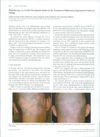
research Phototherapy as a Useful Therapeutic Option in the Treatment of Diphenylcyclopropenone-induced Vitiligo
Light therapy can effectively treat vitiligo and hair loss caused by a specific medication.
research Ritlecitinib: Efficacy of a Novel Therapy for Severe Alopecia Areata in Patients Aged 12 Years and Older
Ritlecitinib is effective and safe for treating severe alopecia areata in people aged 12 and older.
research Protective effect of DA-9401 in finasteride-induced apoptosis in rat testis: inositol requiring kinase 1 and c-Jun N-terminal kinase pathway
DA-9401 helps protect rat testis from finasteride damage.
research Alopecia Areata Associated with Dupilumab: National Database Study
Dupilumab users have a higher risk of developing alopecia areata.