2 citations
,
January 2025 in “Brazilian Journal of Medical and Biological Research” Vitamin D3 speeds up skin healing by helping skin stem cells grow and develop.
25 citations
,
September 2005 in “Journal of the American Academy of Dermatology” Rapp-Hodgkin syndrome, AEC, and EEC are different expressions of the same genetic disorder caused by TP63 gene mutations.
226 citations
,
August 2006 in “Molecular and Cellular Biology” EGF signaling affects gene expression in skin cells, influencing hair growth and potentially cancer.
November 2022 in “Journal of Investigative Dermatology” ILC1-like cells can cause alopecia areata by themselves.
29 citations
,
December 2022 in “Journal of Nanobiotechnology” Stem cell vesicles reduced eczema symptoms in mice safely.
 28 citations
,
February 2010 in “British journal of dermatology/British journal of dermatology, Supplement”
28 citations
,
February 2010 in “British journal of dermatology/British journal of dermatology, Supplement” WNT10A mutations cause varied symptoms in patients with odonto-onycho-dermal dysplasia.
75 citations
,
June 2005 in “Archives of Dermatology” Etanercept may not prevent alopecia areata from coming back.

The CD4 protein may play a role in the behavior of certain skin cells, affecting their growth, movement, and differentiation.
 January 2017 in “IMC Journal of Medical Science”
 A rare endocrine disorder, APS 1, was diagnosed in a 26-year-old man in Bangladesh.
58 citations
,
May 2004 in “British Journal of Dermatology” Diphenylcyclopropenone treatment helps hair growth in alopecia areata by promoting blood vessel growth and cell survival.
November 2022 in “Journal of Investigative Dermatology” Cell-based therapy using specific immune cells may help treat alopecia areata by promoting hair regrowth.
 4 citations
,
August 2019 in “General and Comparative Endocrinology”
4 citations
,
August 2019 in “General and Comparative Endocrinology” Male yak hair growth is influenced by DHT synthesis, which is promoted by 5α-red1 and AR during growth phases, while E2 may inhibit growth through ERα.
 5 citations
,
March 2005 in “Journal of The American Academy of Dermatology”
5 citations
,
March 2005 in “Journal of The American Academy of Dermatology”  14 citations
,
October 2000 in “Genomics”
14 citations
,
October 2000 in “Genomics” Rat dermal papilla cells have unique genes crucial for hair growth.
August 2024 in “JAAD Case Reports” Upadacitinib successfully regrew hair in a child with alopecia universalis and specific genetic mutations.
1 citations
,
November 2023 in “Journal of Spinal Cord Medicine” IT PEP may help recovery after spinal cord injury, but more research is needed.
23 citations
,
December 2013 in “Journal of Investigative Dermatology Symposium Proceedings” Genetic discoveries are leading to new treatments for alopecia areata.
 October 2023 in “Pediatric dermatology”
 Middle Eastern patients with epidermolysis bullosa show specific genetic mutations linked to different types of the disease.
 September 2024 in “Journal of Cosmetic Dermatology”
 Ectoin helps prevent cortisone-induced skin problems and supports skin health.
April 2023 in “Journal of Investigative Dermatology” Increased TEMRA cells can predict treatment outcomes in rapidly progressive alopecia areata.
 2 citations
,
April 2023 in “JEADV. Journal of the European Academy of Dermatology and Venereology/Journal of the European Academy of Dermatology and Venereology”
2 citations
,
April 2023 in “JEADV. Journal of the European Academy of Dermatology and Venereology/Journal of the European Academy of Dermatology and Venereology” JAK-inhibitors for alopecia areata are generally safe with mostly mild side effects and a low rate of treatment withdrawal.
 April 2016 in “Journal of Investigative Dermatology”
 Double-stranded RNA activates a pathway that causes a skin protein to be expressed in the wrong place.
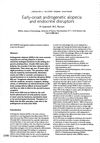 January 2011 in “Journal of biological research”
 Endocrine disruptors may cause early hair loss.
 January 2025 in “Clinical Cosmetic and Investigational Dermatology”
 Pediatric alopecia areata is more immune-active than adult cases, suggesting age-specific treatments and potential use of JAK inhibitors.
3 citations
,
July 2017 in “Journal of Investigative Dermatology” SSEA-4 can distinguish between eccrine and apocrine sweat gland ducts.
 2 citations
,
August 2012 in “Journal of the American Academy of Dermatology”
2 citations
,
August 2012 in “Journal of the American Academy of Dermatology” Two patients with the same genetic mutation had both blistering skin and easily pulled out hair.
6 citations
,
April 2023 in “Current Issues in Molecular Biology” A specific gene variant may increase the risk of developing Alopecia Areata.
 June 2024 in “British Journal of Dermatology”
 A rare case of a transplant patient developing a skin condition linked to HPV-49.
 4 citations
,
December 2013 in “The Journal of Dermatology”
4 citations
,
December 2013 in “The Journal of Dermatology” A new mutation in the K6b gene caused a girl's late-appearing nail condition.
 October 2011 in “Journal of dermatology”
 A man with a rare skin condition and a new gene mutation developed high calcium levels due to his treatment.